
An old string cinch gave Sarge a rub behind his left elbow in the spring of 2024. Not a bloody sore, just a bare, angry patch about two inches across, with the hair rubbed off down to the skin. I found it on a Saturday afternoon in April when I ran my hand under the girth after a ride and felt the heat coming off that spot. I had been riding him three times a week and blaming the saddle. The saddle was not the problem. What was touching him was. I switched to the Weaver Equine Felt Lined Smart Cinch in April 2024, the rub healed over about three weeks of rest, and it has not come back since. Getting there took two failed fixes and one vet visit. A fleece cinch cover bunched and slid forward every time I tightened the girth, and by the end of a two hour ride it had rolled into a wad. I cinched one hole looser and pulled it up again after mounting, which helped a little and solved nothing. My vet looked at the patch at a spring check and called it a plain friction rub, not an infection, and told me to change what was rubbing him. That was the whole diagnosis.
I am 61, retired from dispatching school buses, and I keep Sarge at home on eleven acres outside Viroqua, Wisconsin. He is a 16 year old bay Quarter Horse gelding, 15.1 hands, about 1,100 pounds, with wide withers that make saddle fit a real problem. He is the only horse I own. My saddle is a secondhand Western trail saddle with full Quarter Horse bars that I bought used about twelve years ago, and the leather has gone dark with age. I ride the Kickapoo Valley Reserve and nearby county trails about three times a week from April to November, and my longest regular ride is about four hours. I measured Sarge before I ordered, tape around the heart girth and up to the top of the cinch channel, the way the sizing charts tell you to do it. I measured twice and got the same number both times, which is the only reason I ordered with any confidence. If you skip that step and order by habit, you will get a cinch that hangs too low or pinches, and neither one is a fair test of anything. I have used the Weaver Equine Smart Cinch for about two and a half years. I also rode in a friend's mohair cinch for three weeks one August, and I have watched hair cinches on other horses at the barn. This is a practical comparison, not a laboratory test. Three things matter to me: whether the cinch rubs, how it holds up, and how much work it takes to keep clean.
| Weaver Equine Felt Lined Smart Cinch | Mohair Cinch | |
|---|---|---|
| Outer material | Poly webbing top with a 1/2 inch polyester felt liner | Hand tied mohair, a natural animal fiber |
| Hardware | Non rust stainless steel hardware | Often leather ties or no metal hardware at all |
| Breathability | Felt can hold warmth and dampness if it is not dried after a sweaty ride | Mohair breathes well and moves sweat away from the skin |
| Care after a ride | Brush the felt out, air dry, wipe the webbing with a damp rag | Careful washing, can stretch, takes longer to dry |
| Shape retention | Poly webbing holds its shape and does not stretch out | Mohair can stretch with heavy use and may need re blocking |
| Hard to fit horses | Sold in a 28 inch size, so measure your horse first | Often custom made to measure |
| Trail grime | Wipes clean, felt brushes out once it is dry | Hair picks up burrs and hay and needs more picking |
| Wet weather | Felt stays damp if it is packed away wet | Mohair handles wet better but still takes time to dry |
| Feel against the horse | The 1/2 inch felt liner gives a soft, consistent surface | Natural fiber with some give to it |
| Traditional look | Practical, low profile | Traditional look and feel |
Where Weaver Equine Felt Lined Smart Cinch Wins
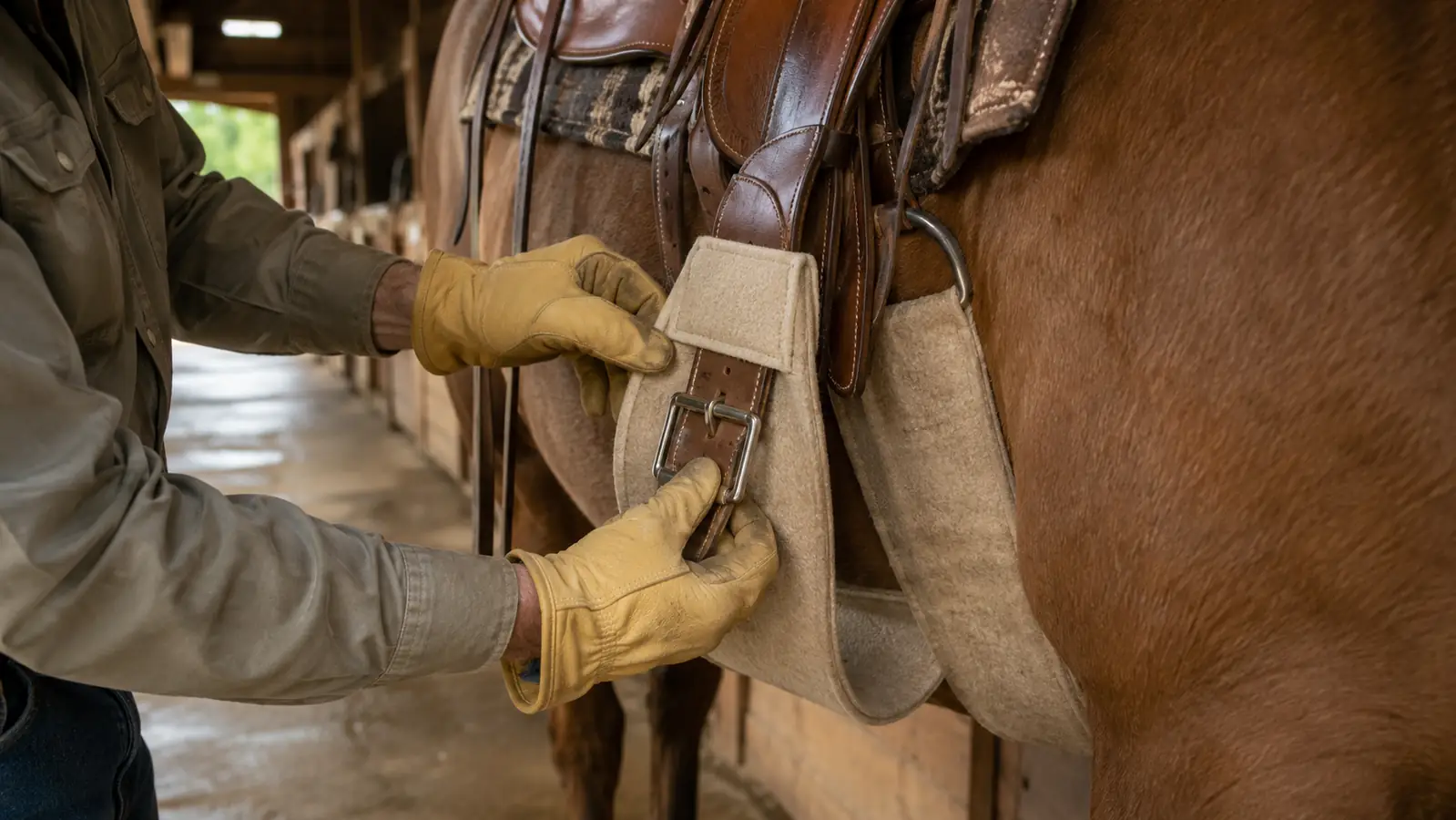
The first place the Weaver Equine Felt Lined Smart Cinch wins for me is care. I brush the felt out after every ride with a stiff brush, the same one I use on saddle pads, and hang the cinch on a hook on the tack room wall next to the halter. If it comes off sweaty I let it air dry before it goes on the hook. That is the entire routine, and it takes about thirty seconds. The poly webbing top wipes down with a damp rag when it picks up mud, and the non rust stainless steel hardware has not rusted or seized in two and a half years, including a wet week in June when I left the cinch hanging in the aisle overnight by mistake. I did get lazy once. I packed it damp in the trailer after a rainy ride home from the reserve and it smelled like a wet dog for two days. I brushed it out, set it in the sun on the porch rail, and it came back fine. A felt liner will hold moisture if you let it. A mohair cinch is not hard to care for either, but it asks more of you: careful washing, drying flat so it does not dry out of shape, and watching for stretch. On a week where I ride three times and the weather is wet, I want the cinch that is ready the next morning. This one is.
The second win is consistency. The poly webbing holds its shape and has not crept or stretched the way I have seen hair cinches go after a hard season. The 1/2 inch polyester felt liner gives Sarge a soft, even surface behind the elbow, and in two and a half years and a couple hundred rides that liner has not balled up, worn through, or gone hard. The whole cinch weighs about 1.5 pounds, light enough that I can hang it on one finger while I check the buckle with the other hand. I bought it because of a rub and I have stayed with it because the rub has not come back. That is not proof it will work for every horse. A cinch is one part of saddle fit, and if your saddle is bridging or sitting too far forward, no cinch on the market will fix it. But if your horse is sensitive behind the elbow and you have been using a string cinch or a hard girth, the felt liner is a sensible change. It is also easy to keep clean, which matters more than most people admit. A dirty cinch rubs. Mine gets brushed before it gets hung, every single time, and that habit has been the difference between a horse that stands quiet at the trailer and one that dances while I tighten the girth.
Where Mohair Cinch Wins
Mohair wins on breathability. That is the honest answer and I am not going to pretend otherwise. Mohair is a natural fiber and it moves sweat away from the skin better than a felt liner does. If you ride in real heat, if your horse sweats hard under the girth, or if you live somewhere humid, a mohair cinch can be kinder over a long day. I borrowed one from a friend for three weeks in late August, the stretch where the afternoons sit in the high eighties and the deer flies are at their worst. Sarge sweats hard on those rides. He came back less damp under the girth with the mohair than he does with the felt, and the hair cinch had dried by the time I unloaded him at home, which surprised me. The felt liner on the Smart Cinch is soft, but felt is still felt. If you pack it away wet it stays damp, and a damp cinch can start a rub as quickly as a dirty one. I have not had that problem because I hang mine to dry, but I can see how somebody in a hurry at the end of a long day would.
Mohair also wins on fit for hard to fit horses. A lot of mohair cinches are made to measure, and that matters when your horse sits outside the usual range. Sarge has wide withers and a short back, and I have spent enough evenings moving shims around under that secondhand saddle to know that one size does not fit all. The Smart Cinch comes in a 28 inch size, so you measure your horse, you check the number against the sizing chart, and if the answer is not 28 inches you look elsewhere. That is not a knock on the cinch. It is just what an off the rack piece of tack is. A custom mohair cinch gives a rider options that a stock size does not, and for a horse that is genuinely hard to fit, that option is worth real money. Mohair also has a traditional look that some riders prefer. That is not a performance reason, but it is a real one. There is something to be said for gear that looks like it belongs on a horse, and a hair cinch looks like it belongs.
If a rub behind the elbow is why you are reading this, start with the cinch that ended Sarge's.
The Weaver Equine Felt Lined Smart Cinch has a 1/2 inch polyester felt liner, a poly webbing top, and non rust stainless steel hardware. It weighs about 1.5 pounds. Measure your horse before you order.
Amazon Check Today's Price on Amazon →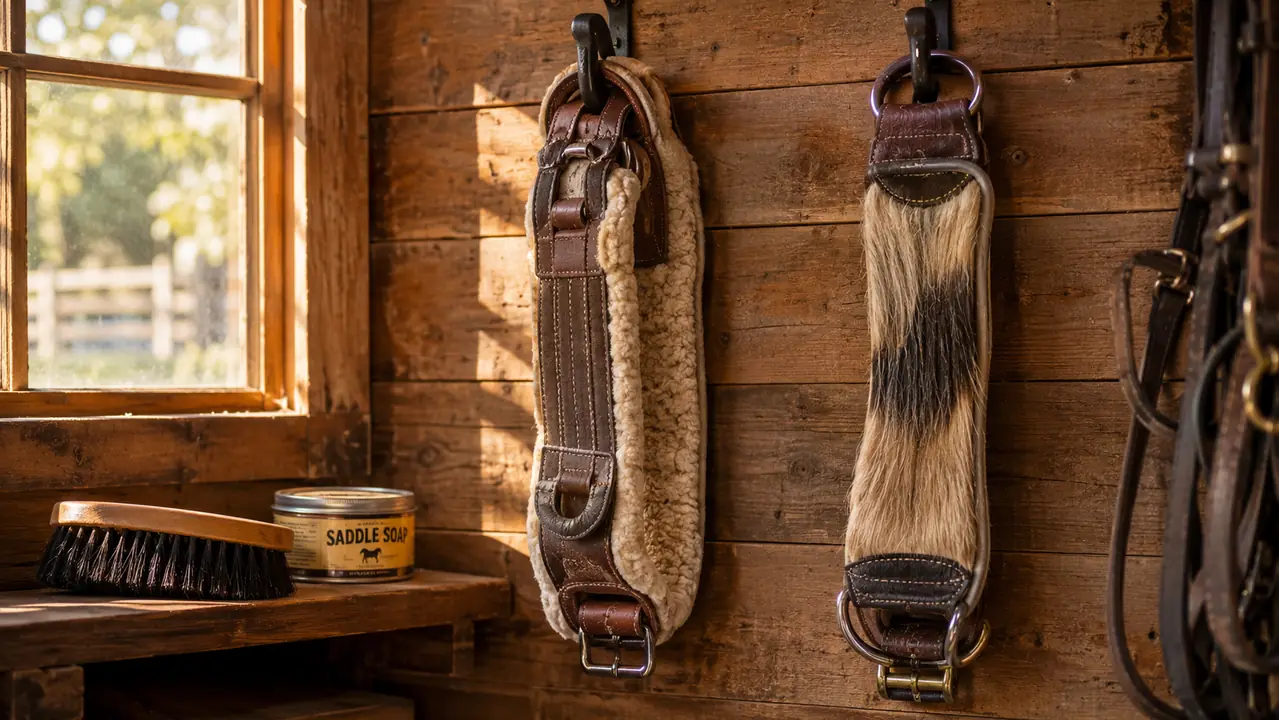
Who Should Buy Which
Buy the Weaver Equine Felt Lined Smart Cinch if you want a cinch that is easy to care for, if your horse has had a rub from a string cinch or a hard girth, or if you ride in mixed weather and do not want to baby your tack. It suits a rider who will brush the cinch off after every ride and hang it up, which is thirty seconds of work. It also suits a horse whose measurement lands on the 28 inch size, so put a tape on your horse before you order anything. I would not buy it expecting it to fix a saddle that does not fit. No cinch can do that. If your horse is sore over the back or behind the shoulder, or if he has started to flinch when you saddle him, get a saddle fitter out and have your vet look at the horse. Tack is not a substitute for either one, and I have wasted money learning that lesson more than once.
Buy a mohair cinch if you ride in heat, if your horse sweats heavily under the girth, or if your horse is hard to fit and you need a custom size. It is also the better choice if you like traditional tack and do not mind the extra care. It is not a fussy piece of equipment, but it is not a wipe and go piece either. Wash it carefully, dry it flat, watch for stretching, and do not leave it balled up in a bucket overnight. If you are not willing to do that on a regular basis, the Smart Cinch is the more forgiving choice, and there is no shame in picking the forgiving one. I have a barn to run and a husband who does not ride, and my tack has to work around that.
What I would tell a friend is this: start with the problem you actually have. If the problem is a rub behind the elbow and your saddle fits reasonably well, the felt lined Smart Cinch is the simplest fix I have found, and it is the one hanging on my wall. If the problem is heat and sweat, or a horse that cannot be fitted off the rack, a mohair cinch earns its extra care. If the problem is saddle fit, neither cinch is the answer. Fix the saddle first, then worry about the cinch. I wish somebody had told me that twenty years ago. It would have saved me a lot of time, a lot of guessing, and at least one Saturday I spent rinsing a fleece cover in the yard.
The cinch I hung on the hook and stopped thinking about.
Two and a half years, three rides a week, and no rub behind the elbow since. The Weaver Equine Felt Lined Smart Cinch is the one I reach for. Measure your horse, check the fit, and give it a try.
Amazon Check Today's Price on Amazon →