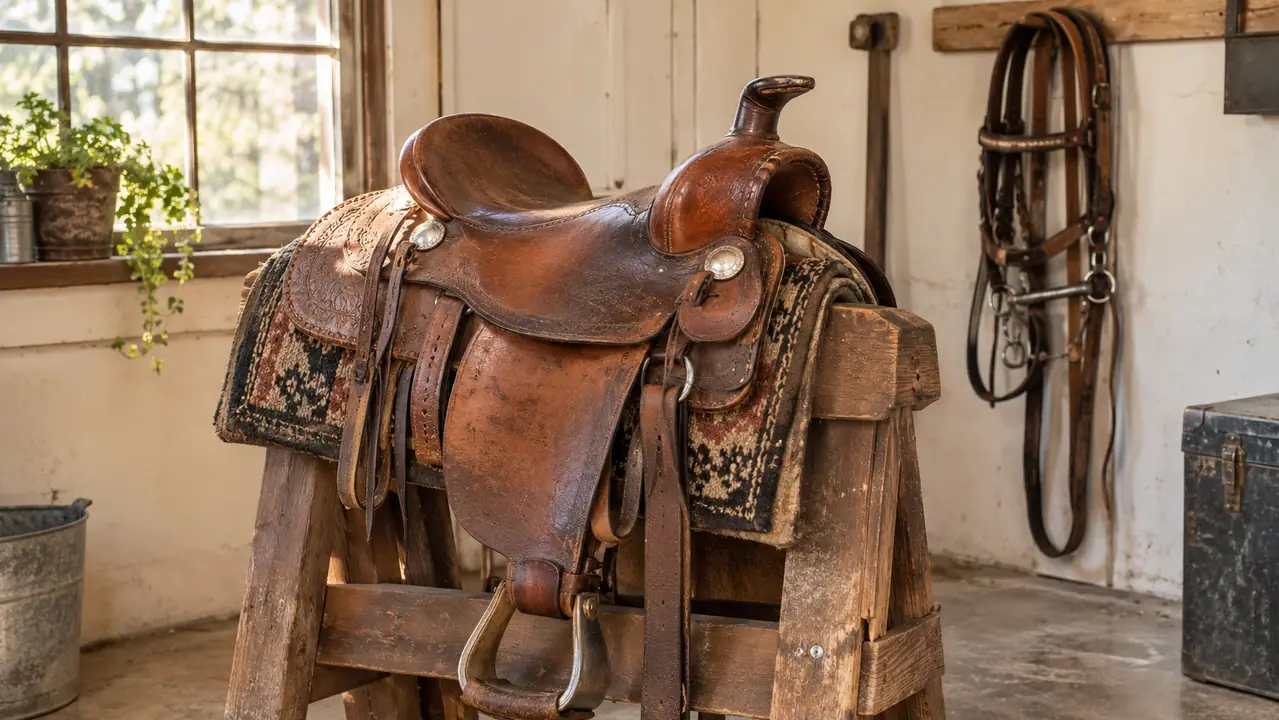
Two hours into a ride, the ache starts in a place nobody at the barn talks about. Not the horse. Me. My hips, my tailbone, and that deep bruise that shows up the day after a long one. I ride a secondhand Western trail saddle I bought used about twelve years ago, full Quarter Horse bars, leather gone dark with age. A saddle fitter looked at it once and told me to stop shopping, that it sat well on Sarge. She was right. It has never once been kind to me.
In spring of 2025 I spent the money on a Weaver Equine gel seat pad, mostly out of stubbornness. I did not want a new saddle. I wanted my own seat to stop hurting by mile eight. Eighteen months later the pad lives on the saddle on the rack in the tack room, and it goes on before I do. Here is what that stretch of riding taught me, including the parts that are less flattering than a product page.
The Quick Verdict
A gel seat pad that does one job well: it softens a hard Western seat on long rides. It does nothing for saddle fit and nothing for your horse.
Amazon Check Today's Price →Fix the seat you sit on before you buy another saddle
The Weaver Equine pad straps onto the top of the saddle, under the rider. Your horse's back is not part of this equation. Your hips are.
Amazon Check Today's Price on Amazon →How I've Used It
Sarge is a 16-year-old bay Quarter Horse gelding, 15.1 hands, about 1,100 pounds, with withers wide enough that saddle shopping is a small nightmare. We ride about three times a week from April through November, mostly the Kickapoo Valley Reserve and the county trails near home. A normal ride is two hours. The long ones run close to four.
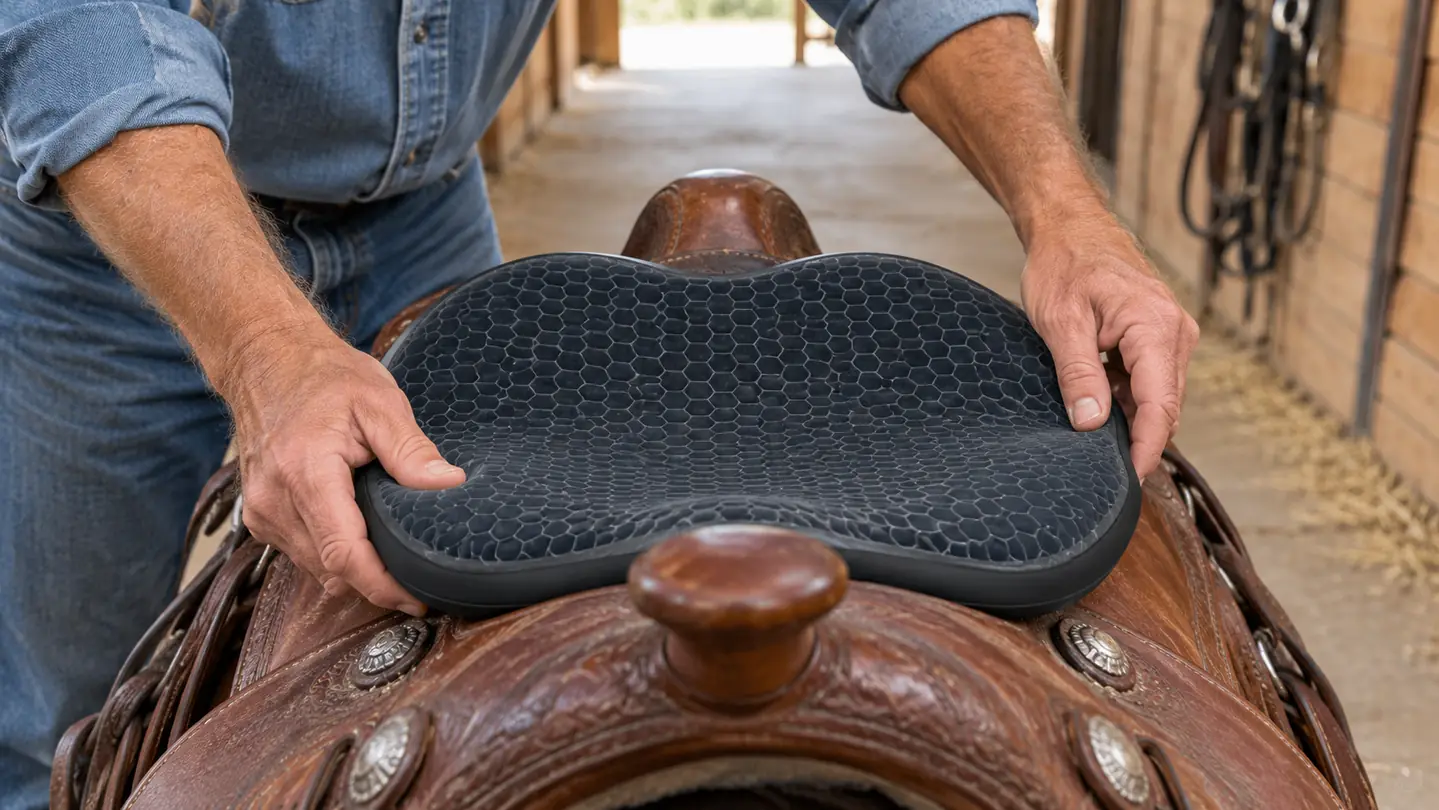
The pad lays across the seat of the saddle and fastens with a strap closure. Then I get on top of it. That is the whole installation, and it takes about as long as it sounds. I center it on the seat, pull the strap snug so it does not walk, and swing up. My saddle is a 16 inch seat and the pad sits down inside the seat without hanging over the cantle or bunching up at the horn.
The first month I did not notice a dramatic moment. Nobody does. What I noticed was that I stopped thinking about my hips around the ninety minute mark, which is when I used to start shifting around and standing in the stirrups at every walk break. I also noticed the day after a long ride felt less like a recovery day. That was the whole change. It was enough to keep the pad on the saddle.
What This Pad Does, and What It Does Not Do
This is a seat pad. It straps to the top of the saddle and goes under the rider. It never touches the horse. It is not an under-saddle pad, it is not a saddle pad in the sense your grandmother used the word, and it will not change one thing about how your saddle fits your horse. I want that in plain language up front, because the listing title mentions spine protection and it is very easy to read that as something for the animal.
That distinction matters more than anything else in this review. Gel under your seat changes pressure on you. Saddle fit is a separate problem with a separate solution. If your horse is flinching, hollowing his back, or coming up sore after rides, put this article down and call a saddle fitter and your vet. No pad of any kind fixes a tree that bridges or a gullet that pinches, and buying one hoping it will is how people end up with a sore horse and a lighter wallet.
What it does, it does plainly. The gel insert is shock absorbing and it spreads your weight across more of the seat instead of concentrating it on two points. The cover is breathable mesh, built for airflow, and the listing describes the materials as heat resistant so the gel is not cooking in the sun all afternoon. On a long day that combination is the difference between a saddle you tolerate and a saddle you forget about. I have done both, and forgetting about it is better.
I will tell you what I tried before this, because I tried everything cheap first. A folded wool army blanket under my seat, which slid and bunched and made the saddle feel like it was built for somebody else. A foam stadium cushion cut down to size, which was hot and went flat inside of a month. A sheepskin seat cover, which was soft and lovely and did nothing at all for the pressure, because soft is not the same as supportive. Three attempts, three disappointments, all of them cheaper than doing it right the first time.
It is not a saddle fit fix. It is a seat fix. I wish somebody had said that to me plainly two years ago.
What the Listing Says, and What That Means in the Barn
The pad measures 13 inches by 24 inches and about half an inch thick, and it weighs 2 pounds. In practice that means it covers the seat and the cantle area and stops short of the skirts, which is exactly what you want from a seat pad. Half an inch sounds like nothing. Under a seatbone it is not nothing, and it does change how deep you sit in the saddle. More on that below.
The body is nylon with a mesh cover and a strap closure. Nylon is the reason this thing has survived eighteen months of Wisconsin weather, sweat, and being carried around in the truck. It wipes clean and it does not hold water the way a fleece or wool cover does. Nothing about it needs conditioner or special soap, which for a piece of tack that lives outdoors half the year is a genuine advantage.
Weaver Equine builds it for 15, 16, and 17 inch western seats, and that covers most of what people actually ride. If you are on a 14 inch seat, or a treeless saddle, or an endurance model with a funny cantle, measure before you order. Mine is a 16 and it fits the way the listing describes, contouring inside the seat rather than sitting up on top of it like a folded blanket.
The warranty line reads satisfaction guaranteed. Treat that as a pleasant sentence rather than a plan. I have never had to test it, and I would not buy this expecting a replacement five years down the road. What you are buying is a two pound piece of nylon and gel, and it is priced like one.
Eighteen Months In
The pad has been used hard and stored badly. It hangs on the saddle in an unheated tack room from November to April, and it spends summers on a rack where the afternoon light comes in. The nylon has not cracked. The mesh has not separated from the body of the pad. The gel has not gone flat, which was my real worry, because a flattened gel pad is just a thin piece of plastic with extra steps.
What has changed is the surface feel, slightly. It has lost that new slickness and taken on the matte look of something that gets sat on three times a week. Functionally I cannot tell any difference between the pad today and the pad in June of 2025. If it is breaking down, it is doing it slowly enough that my hips have not filed a complaint.
I keep a small notebook in the truck, mostly for ride times and which trails are washed out, and I went back through it before writing this. In the summer of 2025 I logged four rides over three and a half hours. Last summer I logged eleven, including a five hour loop out of the Reserve in September that I would not have attempted two years ago. That is not a scientific measurement of anything. It is just the number that convinced me the pad was earning its place on the saddle rather than riding along as a passenger.
I clean it maybe twice a season with a damp cloth, and that is the entire maintenance routine. It does not get saddle soaped. It does not get conditioned. The one thing I do religiously is lift it off the saddle after a hot ride so the underside can dry instead of sitting in its own moisture overnight. That is not in any instructions. It is just what thirty years of tack tells you to do.
The Annoyances Nobody Mentions
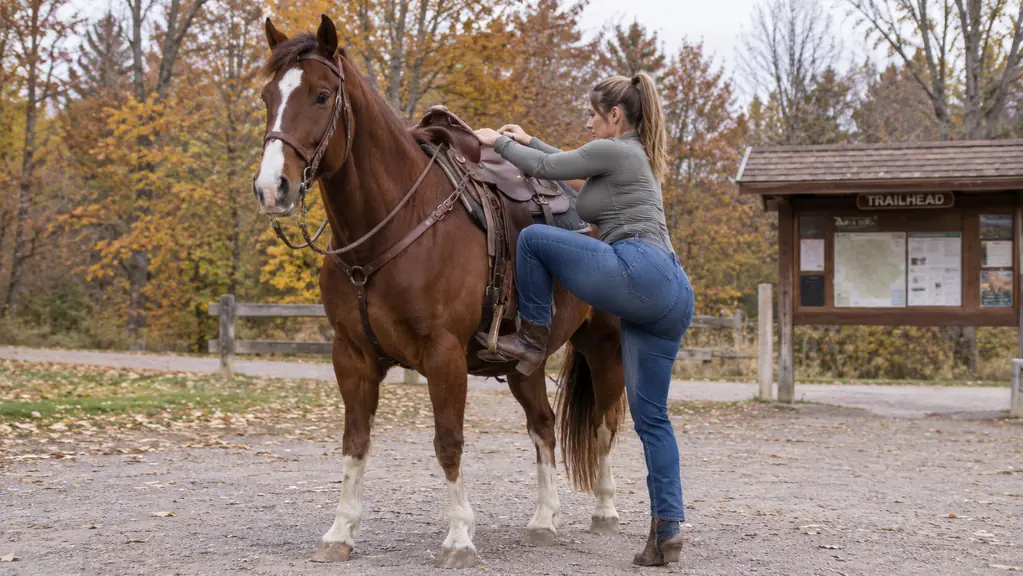
Half an inch of anything changes your relationship with a saddle. On a deep-seated trail saddle you may find yourself sitting a little higher and a little further back than you are used to, and for the first couple of rides that feels odd. I noticed it most at a trot. It sorted itself out inside a week, but if you are fussy about feel, expect an adjustment period and do not schedule a long ride for the first day.
The pad can walk. Not badly, and not every ride, but on a long day with a lot of mounting and dismounting I have had to shove it back to center once or twice. The strap closure does its job; it is the rider shifting around that does the moving. Check it before you swing up, every time, because a pad that has slid off center is worse than no pad at all.
The worst it ever got was a ride in June, when I got off three times to open and close a gate on a county trail and then mounted from the ground each time instead of finding a ditch or a stump. By the third mount the pad had crept maybe an inch and a half to the left. I felt it immediately, and it is a strange feeling, like sitting on a saddle that is slightly out of true. Now I mount from something high when I can, and I check the pad every time regardless.
On a genuinely hot afternoon, anything non-porous under your seat is going to be warm. The mesh cover helps, and it is noticeably better than the bare leather seat was, but it is not air conditioning. If you ride in real heat, plan to lift the pad off afterward and let it and the saddle breathe before you put the cover on.
And it adds a little bulk under your thigh. Not enough to change how I ride, but enough that a friend who tried it on her close contact saddle handed it back within a mile. It is built for Western seats for a reason, and the listing says so plainly if you read past the title.
What I Liked
- Noticeably less hip and tailbone ache on rides over two hours
- Straps onto the saddle seat and stays put with a quick check before mounting
- Breathable mesh cover and heat resistant materials keep it from turning into a hot plate
- Nylon body wipes clean and needs no soap, conditioner or special care
- Still holding its shape after eighteen months of three-ride weeks
- Fits 15, 16 and 17 inch western seats, which covers most trail saddles
Where It Falls Short
- Does nothing for saddle fit or the horse's back, which the title can make confusing
- Adds a half inch of height, and you will feel it for the first few rides
- Can shift off center on long days with a lot of mounting and dismounting
- Not the right choice for a close contact, treeless or small-seat saddle
- The satisfaction guaranteed warranty is thin protection for the cost
Who This Is For
This is for the rider whose horse is comfortable and whose own seat is not. If you are on a Western saddle with a hard, older seat, if you ride two hours or more at a stretch, and if the soreness you bring home lives in your hips, your tailbone or your lower back rather than in your horse, this pad addresses that specific problem without changing anything about your horse's tack. It suits the 45 and up crowd especially, because the things we put up with at thirty we stop putting up with at sixty. It also suits anyone riding a borrowed or rented saddle for a week, since it drops onto any 15 to 17 inch western seat and comes right back off.
A fair number of people will get more out of this than they expect, and not for the reason they think. The gel does not make you a better rider. It buys you another hour before your body starts negotiating with you, and another hour in the saddle is how anyone gets better at anything.
Who Should Skip It
Skip it if your horse is the one with the problem. A gel seat pad under the rider does not touch the horse, and buying one to treat a sore back is money spent on the wrong end of the equation. Get a fitter out and get your vet involved, in that order. Skip it if you ride English, treeless, or anything with a seat smaller than 15 inches. Skip it if you are chasing a permanent fix for a saddle that has never fit you; this is a comfort layer, not a repair, and it will not make a bad saddle good.
I will also say this. If your saddle is fine and your hips still hurt, the pad is a reasonable first step, but it is not the only one. A friend of mine finally admitted her problem was that she was gripping with her knees the whole ride, which no pad on earth was going to fix. Mine was age and a hard seat. Yours may be neither. The pad is cheap enough to try and honest enough to tell you quickly whether it is helping, and that is about all you can ask of a piece of tack.
And skip it if what you actually need is to ride less or lose a little weight. I say that with no judgment, because I have had that conversation with myself in the barn aisle. A pad is a tool. It is not a substitute for addressing the thing underneath.
Eighteen months, three rides a week, and it is still on the saddle
If your hips are what hurt after a long ride, this is the simplest thing I have bought for my own comfort in years. Straps on in seconds. Nothing about your horse changes.
Amazon Check Today's Price on Amazon →