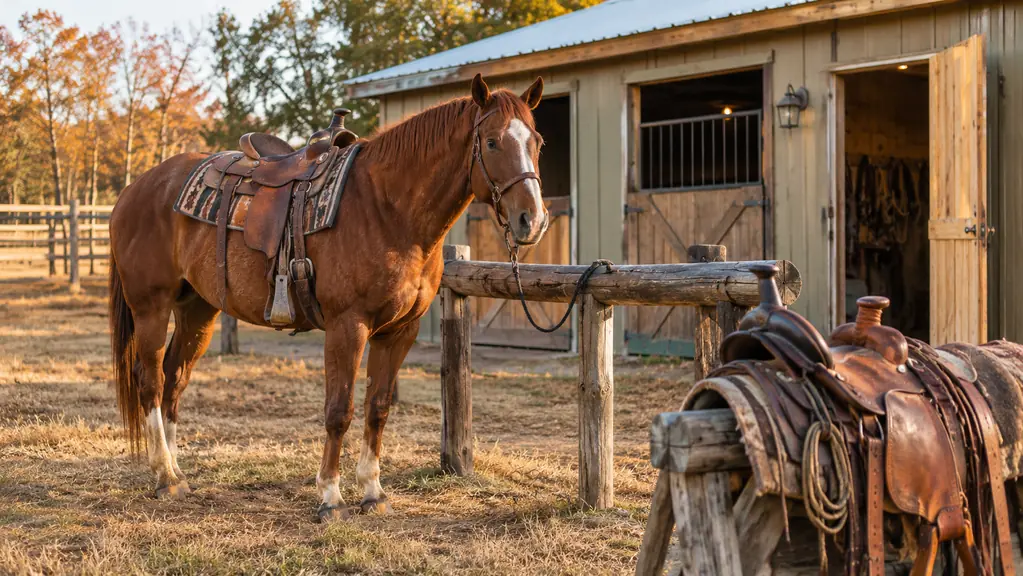
I unsaddled Sarge on a Tuesday in April 2024 and found a bare patch the size of a silver dollar behind his left elbow. The hair was gone and the skin underneath was pink. He did not flinch when I touched it, which somehow made it worse. He is a 16-year-old Quarter Horse gelding with withers wide enough that saddle fit has never been simple, and I had been riding him in the same string cinch for years without thinking about it once. A rub builds over a hundred rides before you ever see it.
My first instinct was to blame the saddle, and I spent a week reading about bar angles and gullet width. My second instinct was to blame myself, which was no more useful. Then I did what I should have done first. I took the cinch off, held it up in the barn light, and looked at it. The webbing had gone stiff and the edges had rolled over, and that rolled edge had been sitting in the same soft spot behind his elbow three times a week. I ordered the Weaver Equine Felt Lined Smart Cinch that same week.
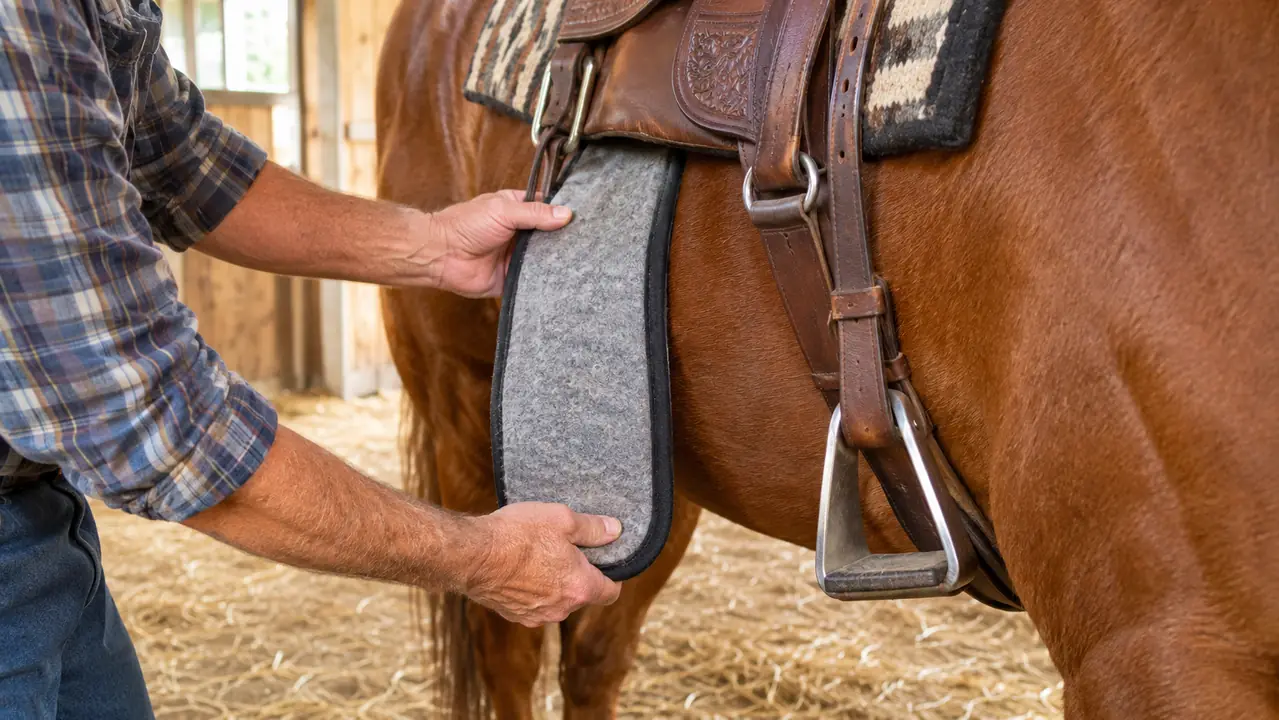
I gave the spot three weeks off first. No saddle, just hand walking and turnout, and it closed over clean. Then I went looking for a cinch with something softer against the horse. What sold me on the Weaver Equine cinch was the construction rather than the name. It has a poly webbing top with a half inch polyester felt liner against the horse, and non-rust stainless steel hardware that would not pit out after a Wisconsin winter. It weighed about a pound and a half in my hand. I hung it on a hook in the tack room and told myself I would give it one season and see.
The first ride with it was a short loop on the county trails, about an hour, and I checked the horse twice. No slipping, no bunching, no rolling at the edges. The felt sits flat and stays flat. I want to be careful here and not oversell it. A cinch does not fix a saddle that does not fit, and nobody should read this as me saying mine does. What it did was stop the specific damage the old cinch was doing. Sarge came back from that first ride with no heat and no tenderness in the spot that had been touchy for months, and that was enough for me.
Three weeks of rest closed the rub. Two and a half years of steady riding later, it has not come back.
Nothing Between Your Horse's Hide and a Rolled Edge But Half an Inch of Felt
The cinch I put on Sarge in April 2024 is still the one on that saddle. Poly webbing top, half inch polyester felt liner, non-rust stainless steel hardware, and a warranty Weaver Equine calls Always Guaranteed. Measure your own horse around the barrel before you order, because no listing can do that part for you.
Amazon Check Today's Price on Amazon →Two and a half years later it is still the cinch on that saddle. My routine is not elaborate. After every ride I take it off, let it dry if it needs to, and brush the felt out with a stiff brush so hair and grit do not work their way in. Then it goes on the hook by the door. I have never put it in a washing machine and I never will. The felt has flattened a little where it loads against the horse, which is what felt does, and it has not worn through or come loose at the hardware.
Here is what it will not do. It will not tell you your saddle is sitting wrong. Sarge has wide withers and a short back, and a cinch cannot correct a tree that does not match that. If your horse is sore over the loin or behind the shoulder rather than just where the cinch sits, stop reading tack notes and get a saddle fitter out. I had mine out in 2023 and it was the best money I spent that year. I also would not call this a cure for a horse that is already rubbed raw. Mine needed three weeks off before anything went back on him.
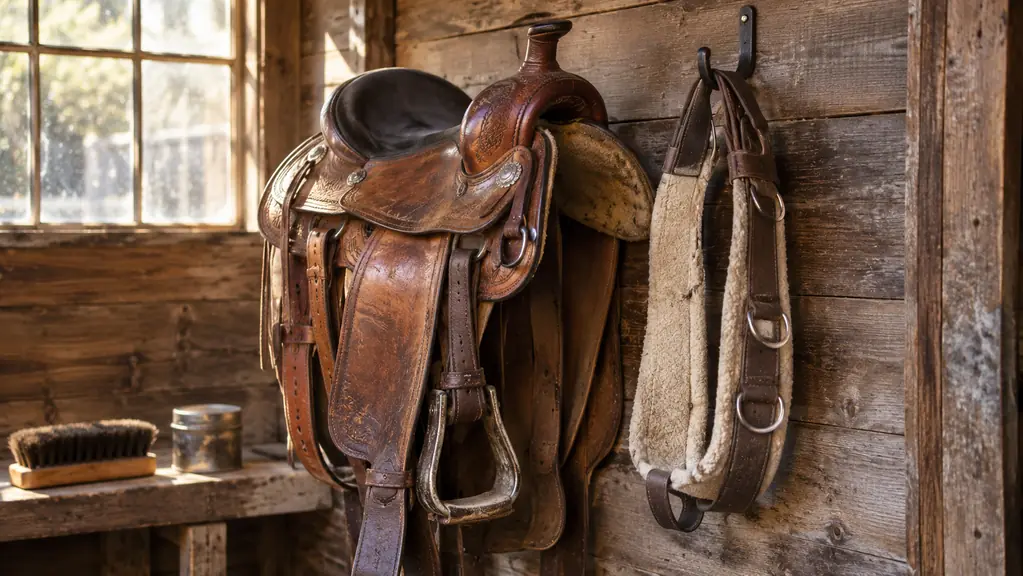
The other honest note is care. Felt holds onto whatever it touches, so if you leave it against a dirty pad and never brush it out, you have built yourself a sandpaper belt. That is on you, not on Weaver Equine. In July, on a four hour ride, the liner gets damp underneath and I wipe it down when we get back to the trailer. It has never once rubbed him again, and the spot behind that elbow has grown hair back that matches the rest of him. Dale says he cannot find the old mark anymore, and Dale does not hand out compliments about horse gear.
If you ride a Western saddle three or four times a week and you have a horse with a wide barrel that gets a little touchy about being groomed along the belly line, this is worth the swap. It is also the sort of thing I would buy for a younger horse before a rub ever starts, now that I know what one costs in time off. My old string cinch is still in the barn as a spare. It has not been on a horse since.
What I'd Tell You If We Were Sitting at My Kitchen Table
If you came out to the farm and asked me about this over coffee, I would skip the part where I sound like a catalog and tell you the three things that mattered. First, measure the horse. Take a soft tape around the barrel where the cinch sits, just behind the front legs, and compare it to the size on the listing, because a cinch that is too short will rub and one that is too long will not sit where it should. Second, change one thing at a time. I changed the cinch and left the saddle, the pad and the riding schedule alone, so when the rub healed I knew exactly what to credit. Third, give the skin time. Three weeks with no saddle felt like forever in April and it is a blink now.
I am not a trainer and I am not a vet, and the Weaver Equine cinch is not medicine. It is a piece of tack with a half inch layer of felt where the pressure goes, and that turned out to be the difference between a horse with a bald spot and a horse with a whole hide. If your horse has a rub that is open, hot or weeping, call your vet before you call anyone about gear. Once it is healed and the hair is coming back, then go shopping.
Two and a Half Years, One Cinch, No Rubs
Same felt lined cinch since April 2024, brushed out after every ride, hanging on the same hook by the tack room door. Measure your horse, compare that number to the size chart, and give the skin time to heal before you ride again.
Amazon Check Today's Price on Amazon →