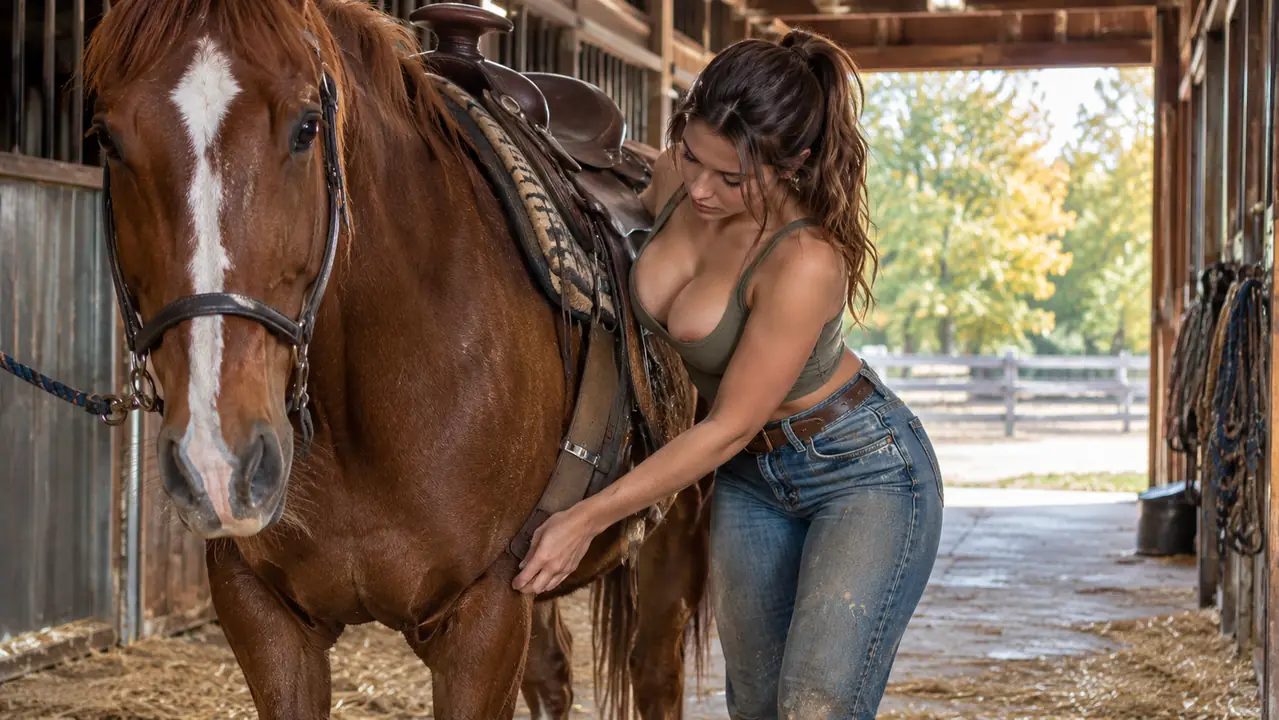
The first time I saw the rub behind Sarge's left elbow, I felt like a fool. He is a 16-year-old bay Quarter Horse gelding, 15.1 hands, about 1,100 pounds, with the wide withers that make saddle fit a real problem. I have ridden trail and pleasure for more than 30 years, and I am not a trainer or a vet. I should have caught it sooner. The hair was gone in a patch about the size of a silver dollar, and he flinched when I ran my hand along the girth line. The old string cinch was the obvious suspect. I switched to the Weaver Equine Felt Lined Smart Cinch in April 2024 and have used it about two and a half years since.
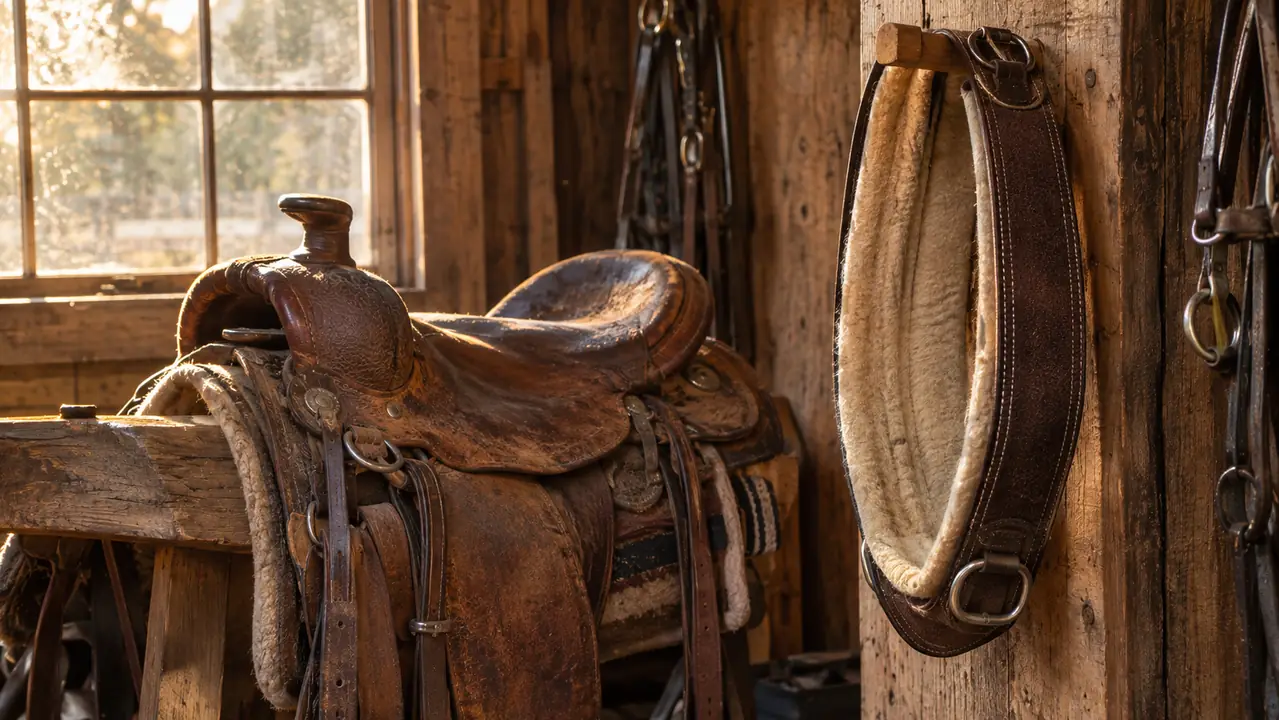
I did not buy it because I thought a cinch would fix everything. I bought it because I needed to remove the friction while I saved up for a saddle fitter to look at my old trail saddle. That saddle is secondhand, with full Quarter Horse bars, and the leather is dark with age. A cinch is not a substitute for a saddle that fits. But it is the part that sits closest to the horse, and it is the part I could change that week.
The Quick Verdict
A well-made felt lined cinch that solved the rub behind Sarge's left elbow and held up for two and a half years. It is not a saddle fit fix, and the felt needs brushing.
Amazon Check Today's Price →The cinch I wish I had bought before the rub
Weaver Equine builds this one with a 1/2-inch polyester felt liner, a poly webbing top, and non-rust stainless steel hardware. Measure your horse before you order, not after.
Amazon See the Felt Lined Smart Cinch on Amazon →How I've Used It
I ride Sarge about three times a week from April to November. Most rides are an hour or two on the Kickapoo Valley Reserve or the county trails, and the longest regular ride is about four hours. In winter he gets light work and turnout, and the cinch hangs in the tack room. I brush the felt out after every ride with a stiff brush, knock off the hay and hair, and hang it on a hook. I do not wash it. I do not leave it crumpled in the trailer.
The routine matters because felt holds debris. If you have used a fleece or felt product on a horse, you know it can pick up shavings, hay, and winter coat. This cinch does. That is not a flaw exactly, but it is a fact. A bare string cinch is easier to knock clean. The felt lined one takes an extra minute. After two and a half years, that extra minute is just part of tacking up.
I started on short rides. That was not a deliberate training plan. It was April, the trails were muddy, and I wanted to make sure the cinch did not gall him before I committed to a long ride. I checked him after every ride, ran two fingers under the edge, and looked for heat, hair loss, or pinching. After a month, I stopped expecting a problem. That is the best thing I can say about a piece of tack: it became boring.
I paid attention to how it sat. The cinch has a poly webbing top and a 1/2-inch polyester felt liner. The listing says the hardware is non-rust stainless steel, and I have not seen rust. The whole cinch is listed at 1.5 pounds. It does not feel clumsy to handle. The listed dimensions are 31.5 by 5 by 1 inches. I did not measure it against a diagram. I hung it, checked that it was not twisted, and rode.
What the Felt Liner Actually Does
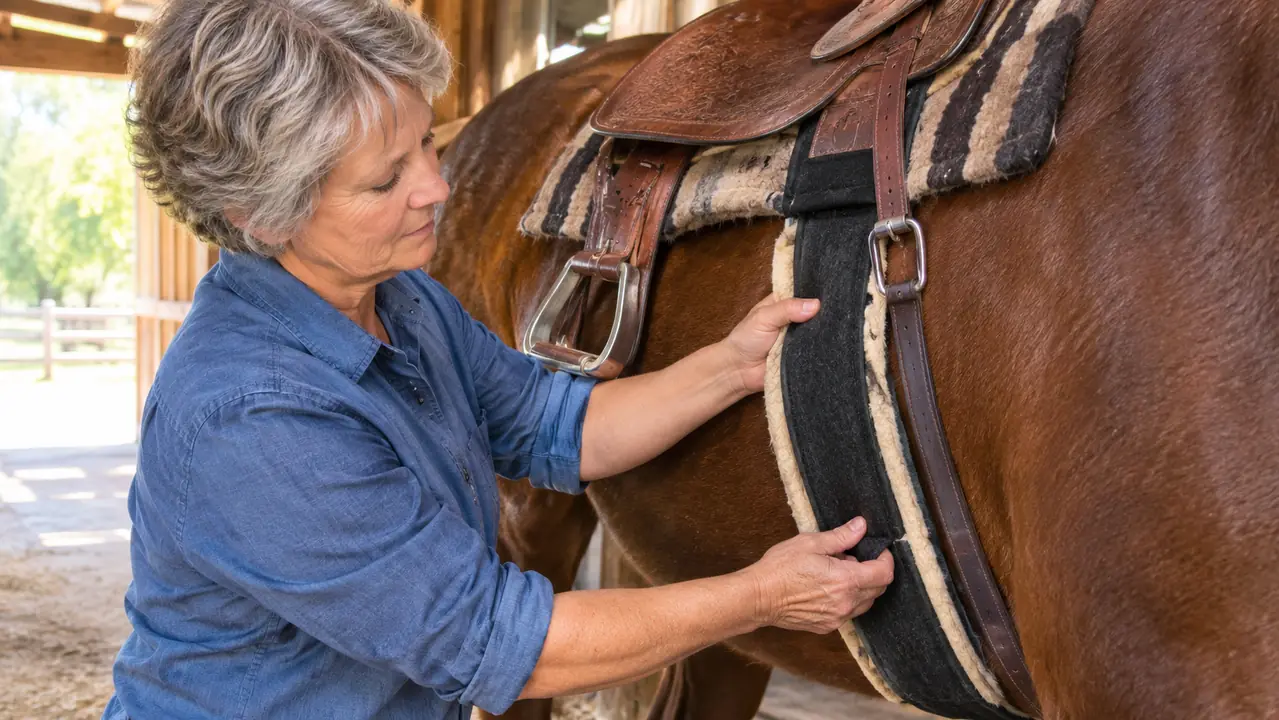
The felt liner is the reason I bought this cinch. A string cinch is a set of cords. It can be fine for a horse with tough skin and a good saddle fit. On Sarge, the old one had started to rub behind his left elbow, probably because the saddle shifted slightly on the hills and the cords worked against the skin. The felt liner spreads contact over a wider, softer surface. I will not tell you it eliminates all friction. Nothing does. But the rub stopped getting worse as soon as I changed.
The liner is 1/2 inch polyester felt. It is not fleece, and it is not a gel pad. It is a firm felt that sits between the webbing and the horse. On a hot day, I still check under the cinch after a long ride. I lift it, look at the skin, and feel for heat or dampness. If the felt is wet with sweat, I hang it to dry before the next ride. That is basic horse keeping, not a special feature.
I also like that the felt does not grab the hair the way some synthetic fleece does. It can still collect hair, but it does not pull. I brush it out, and it comes clean enough. After two and a half years, the liner is not as crisp as it was new. It has a slight nap, and the edges have softened. It has not torn, separated, or curled away from the webbing. That is what I wanted to know after the first month.
Two and a Half Years Later
The honest answer is that the Weaver Equine cinch has held up better than I expected. It has been used about two and a half years, three times a week in riding season, plus odd winter rides. The webbing has not frayed at the ends. The felt has not worn through. The hardware has not rusted. I have not had a stitch let go. It does not look new. The felt is stained from sweat and dirt, and the webbing has that dull look that comes from real use. But it is still doing its job.
The rub behind Sarge's left elbow healed over about three weeks of rest, and it has not come back. I want to be careful here. I am not a vet. I did not treat an open wound with a cinch. I changed the tack, kept the area clean, and gave him time off. If your horse has a raw sore, swelling, or heat in the girth area, call your vet. A cinch is not medicine. What I can tell you is that this cinch removed the thing that was rubbing him, and the skin stayed sound after that.
The one thing I notice now is that the felt has compressed slightly where the cinch sits under the belly. That is normal with any padded material. It has not bottomed out. I can still feel the give when I press it. If it ever gets hard or stays damp, I will replace it. I have not reached that point. I also check the webbing and hardware every few months, because that is where any cinch takes the most strain. So far, it is sound.
The Small Details That Matter in a Barn
The weight is one of those details nobody talks about. At 1.5 pounds, it is light enough to handle with one hand when I am tacking up, but it has enough body that it does not flap around in the wind. The 31.5 by 5 by 1 inch listing is not a number I think about while riding. It just tells me it is a standard western cinch. Sizing is the part you have to get right.
I measured Sarge with a soft tape before I ordered. I did not guess from his height or weight. I ran the tape under his belly where the cinch sits, pulled it snug, and wrote the number down. Then I checked the size chart on the listing. I will not tell you which size he wears, because your horse is not my horse. A cinch that is too short will pinch. One that is too long will not tighten where it should. If you are between sizes, call the seller or ask your saddle fitter.
The non-rust stainless steel hardware matters in Wisconsin. We have wet springs, muddy falls, and a barn that is not heated. I have had cheap hardware pit and leave rust stains on leather. This hardware has stayed clean. The felt does need to be hung to dry. If you leave it in a heap on the tack trunk, it will stay damp and smell. That is not the cinch's fault. It is yours. I hang mine on a hook next to the saddle, and it is dry by the next ride. The listing says the warranty is Always Guaranteed. I have not had to use it.
What I'd Change
I would not change the cinch itself. I would change the way I approached it. I wish the listing made sizing more obvious for people who have never measured a cinch. I had to read it twice. That is not a defect in the product. It is a defect in my patience. If you are new to this, measure twice.
I would also tell you that felt is not maintenance-free. If you want to hose off your tack and hang it up, buy a bare string or a neoprene cinch and accept the tradeoffs. Felt needs brushing. It needs air. It needs to be hung, not stuffed in a bag. I do that because the rub was worse than the extra minute. If you will not do it, this is not the cinch for you.
The only real negative I have found is that the felt holds onto winter coat. In November, when Sarge is fuzzy, I get a mat of hair on the liner after every ride. I brush it off. I do not wash it. I brush it and let it dry. If you are squeamish about hair on your tack, this will bother you. It bothers me a little. Not enough to switch back.
What I Liked
- The 1/2-inch polyester felt liner sits flat and stopped the rub behind Sarge's left elbow from getting worse.
- The poly webbing top and non-rust stainless steel hardware have held up for two and a half years without rust or fraying.
- The 1.5-pound weight is easy to handle one-handed while tacking up.
- It stays flat under the belly and does not roll or bunch at the edges.
Where It Falls Short
- Felt collects hair, hay, and shavings, so it needs brushing after every ride.
- It has to be hung to dry. If you leave it damp, it will smell.
- Sizing is not guessable. You need to measure your horse, and the listing takes a careful read.
- It is not a fix for a saddle that does not fit, and it will not help an open sore.
The rub behind Sarge's left elbow healed over about three weeks of rest, and it has not come back in two and a half years of riding.
Who This Is For
This is for the rider who has a horse with a cinch rub history and a saddle that is at least close to right. It suits trail and pleasure riders who ride a few times a week, who do not mind brushing felt, and who want a cinch that sits flat without a lot of fuss. It also suits the owner who is trying to remove one source of friction while saving for a saddle fitter. That was me. I am not a competitor, and I am not a trainer. I just wanted Sarge comfortable on a four-hour ride.
It is also a reasonable choice for a horse with sensitive skin behind the elbow, as long as the skin is not broken. If the skin is raw, treat that first. If the saddle is bridging or the bars are wrong, fix that first. A felt lined cinch can buy you time, but it cannot correct a saddle that is sitting on the horse's shoulders. I say that as someone who has made that mistake.
Who Should Skip It
Skip it if you want tack you can hose off and forget. Felt takes care. Skip it if your horse has an open sore, swelling, or heat in the girth area. That is a vet call, not a tack change. Skip it if you have not measured and you are guessing from a picture. A cinch that does not fit will rub no matter what it is lined with.
Skip it if your saddle does not fit and you are hoping a cinch will cover for it. It will not. I bought this because I needed to remove friction while I saved for a fitter, not because I thought it was a cure. If you are in the same spot, it is a good stopgap. If you are looking for a permanent fix for a saddle that rolls or bridges, put the money toward the saddle first.
If your horse has a rub you can trace to the cinch, start here
Measure first. Then look at the Weaver Equine Felt Lined Smart Cinch. It is the one I have used for two and a half years, and the rub behind Sarge's left elbow has not come back.
Amazon Check the Listing on Amazon →