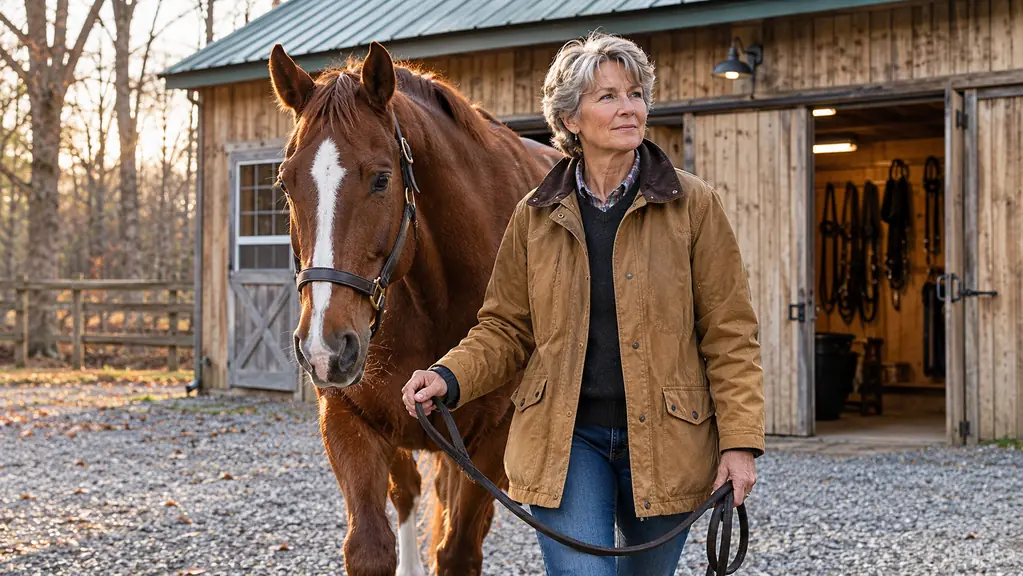
The bald spot showed up in April of 2024, about the size of a half dollar, just behind Sarge's left elbow. Hair gone, skin pink and angry. I had been cinching that gelding with the same old string girth for years and never gave it a thought, which is the part that still bothers me. A string cinch is a lot of narrow cord pulling against a horse's hide, and a 16-year-old with wide withers does not need extra grief from his own owner. That is how the Weaver Equine Felt Lined Smart Cinch ended up on my saddle.
What follows is the version I would want to hear from a friend before spending her money. Not the polished version. The felt, the hardware, the cleaning, the small annoyances, and an honest answer about whether it was worth changing something I had done the same way for twenty years. I ride three times a week from April through November, mostly the Kickapoo Valley Reserve and the county trails near Viroqua, with one four-hour ride most summer weekends. Sarge is 16, 15.1 hands, around 1,100 pounds. I am 61, retired from dispatching school buses, and I do not get off a horse the way I did at 40.
The Quick Verdict
It ended a rub that kept coming back, brushes clean in about a minute, and the hardware has not seized in two and a half years. It is still a cinch, not a saddle fit fix, and the felt collects burrs if you ride where there are burrs.
Amazon Check Today's Price →Two and a half years is long enough to have an opinion that is not first-week enthusiasm. Here is what held up, what did not, and who I think should actually buy one.
The cinch that stopped a rub I had been fighting for years
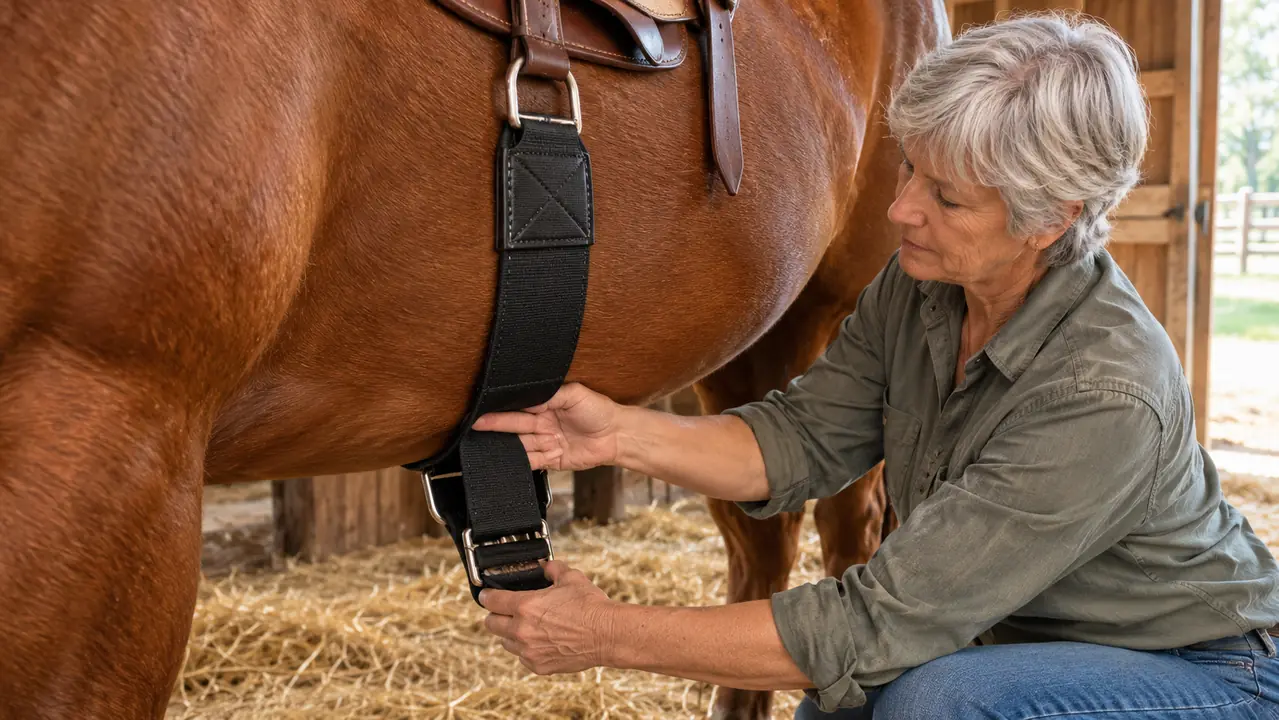
Felt lined against the horse, poly webbing top carrying the pull, stainless hardware at both ends. Two and a half years of three rides a week on my own gelding and the hair behind his left elbow has not gone missing since.
Amazon Check today's price on Amazon →What a Felt Liner Actually Does
A cinch has one job. It spreads the pull of the rigging over enough surface that no single patch of hide takes the whole load. A string cinch does that with cord, which is honest and light and narrow. The Weaver Equine cinch does it with a half inch polyester felt liner against the horse and a poly webbing top carrying the pull up to the rigging. The hardware at the ends is stainless, the non-rust kind, which sounds like a small detail until you have thrown away a perfectly good cinch because the buckles seized shut.
Felt is different from cord in two ways I can see with my own eyes. It spreads pressure across a wider band instead of concentrating it into lines, and it does not grab hair the way twisted cord does when a horse moves under it. I am not going to tell you felt is magic, because it is not. What I will tell you is that Sarge quit flinching when I reached for the girth, and that flinch had been there so long I had stopped noticing it.
The half inch thickness matters more than I expected, and I only know that because I tried something thinner first. Before I bought this one I borrowed a neoprene sleeve from a woman at the barn, the kind you slide over an existing cinch, and rode with it for two weeks in late April. It bunched. Neoprene grabs, and every time Sarge moved the sleeve rolled itself into a rope under the girth and I would look down and see a hard wrinkle pressed into him. I took it off in the middle of a ride on the second Sunday and rode home with the bare string cinch, and that was the end of the cheap experiment. The felt on the Weaver Equine cinch is a liner built into the cinch rather than slipped over one, so there is nothing to roll.
What it will not do is fix a saddle that does not fit. If your saddle bridges in the middle or rocks front to back, a felt cinch is a bandage over the symptom and you will be back where you started by August. My own saddle is a secondhand Western trail saddle with full Quarter Horse bars, and I had a woman who fits saddles for a living look at it that same spring. She put it on him bare and ran her hand under the front of the bars, then had me watch while he stood square on the barn floor. It cost me a farm call and an hour of my Saturday. If you have not had that done, do it before you buy anything that goes under the horse.
How the Rub Started
Here is what I actually saw. Sarge came in from a two-hour ride with the hair rubbed off behind his left elbow, skin pink and hot to the touch but not broken. I gave him three weeks off. The rub healed on its own in that time, because rest heals rubs, not cinches. What a cinch can do is keep it from happening again, and that is the only claim I am making about it.
I measured him with a string around the heart girth the way the old rule of thumb says, halved it, and went looking. I did that on a Tuesday morning with him standing in the barn aisle and Tick asleep in the doorway, and I wrote the number on the inside of a feed receipt because that was what was in my pocket. The listing I bought from shows a 28-inch size. I am not going to tell you what size Sarge wears, because your horse is not my horse and the number does not transfer. Measure yours, write it down, and if it lands between sizes, ask somebody who knows before you guess.
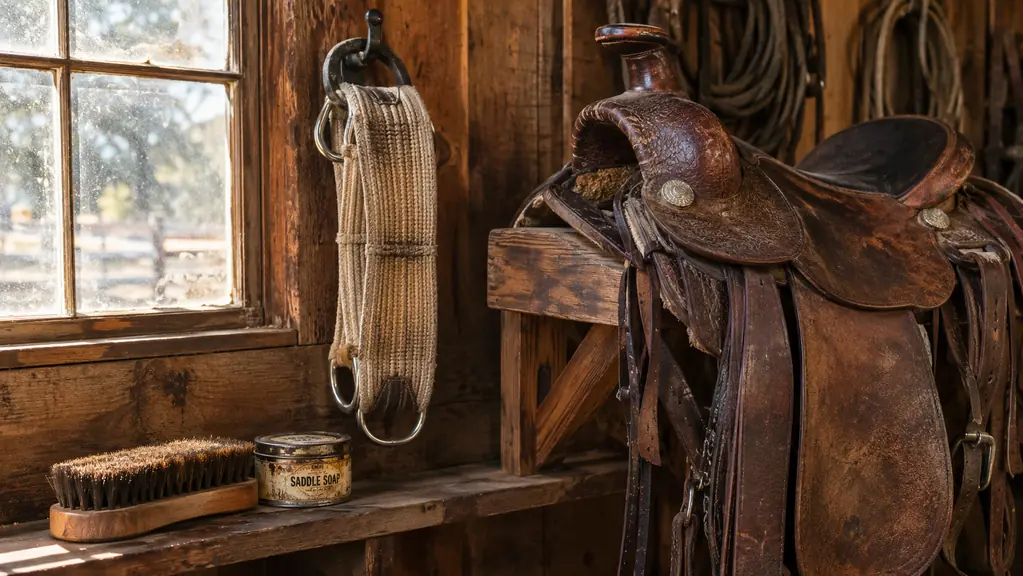
The first ride was unremarkable in the best way. Felt compresses, so I checked the tension again about a mile in and took up a hole, then once more at the halfway point. I remember the halfway check because I did it at the top of a long climb on the Reserve, off the horse, with the reins over my arm, and I could get two fingers under the edge and no more, which is where I wanted it. By the third ride I knew where it wanted to sit. It has hung on a hook in my tack room ever since, next to the saddle, and I brush it out after every ride before it goes back up.
One thing I got wrong early: I tightened it the way I tightened the string cinch, out of habit, and the first couple of rides it was a hole too snug once the felt warmed up and settled. Sarge did not complain, but he did not move out freely either, and I noticed it in the first mile rather than at the trailer. Now I start a hole looser than feels natural and take it up after the first half mile.
Two and a Half Years of Real Use
The honest condition report: the poly webbing top has not frayed, stretched or cracked, the stainless hardware still opens and closes with two fingers, and the felt has pilled a little along the edges where it meets the webbing. The felt also holds a dent where it sits against him, which is normal and not a defect. The whole thing weighs about a pound and a half, so it is heavier in the hand than the string cinch it replaced.
I have looked at the thing closely twice a year, once when I pull it out in April and once when the season ends in November, and the only change between the first spring and this one is that pilling along the edges. The stitching where the liner meets the webbing has not let go anywhere. If it had, I would tell you, because I have thrown away a nylon halter over exactly that kind of seam failure and I am not shy about naming it.
The cleaning is the part people ask about. I keep a stiff brush in the tack room and knock the hair and grit off the felt after every ride, then hang it up. That is the entire routine, maybe a minute. In the muddy months I let it dry before I brush it, because brushing wet felt pushes the dirt in rather than out. It does not go away damp.
Summer is where felt shows its one real weakness. Felt holds sweat longer than cord does. In August I hang it where air moves through the tack room instead of dropping it in the bucket by the door, and it is dry by the next morning. There was one stretch in July of 2025, five days running over ninety, when I rode early and it was still faintly cool to the touch when I saddled the next morning, which told me the air in that tack room was not moving the way I assumed. I moved the hook. It dries fine now. November through March it hangs untouched and comes back out in April without a problem. That is two and a half years at three rides a week, and I expect to replace it eventually. Everything wears out.
The Parts I Do Not Love
The felt picks up everything. Burrs, shavings, hay chaff, mane hair. If you board at a barn with sawdust bedding you will brush this cinch more than you brushed your last one, and you should know that going in. I rode a creek bottom on the Reserve one September where the burdock was chest high on the horses, and I spent eleven minutes at the trailer with a brush and my fingernails getting the felt clean enough to put away. Eleven minutes is not the end of the world. It is also eleven minutes I did not spend brushing a string cinch, ever.
It also takes two or three rides to learn how much to tighten it, because the liner settles once it warms against the horse. Neither of those is a reason to skip it. They are reasons to know what you are getting.
What I Liked
- Felt liner spreads pressure over a wider band than a string cinch and does not grab hair the way cord does
- No rub behind the left elbow in two and a half years of regular riding
- Non-rust stainless hardware still moves freely after two and a half years
- Poly webbing top has not frayed or stretched under three rides a week from April to November
- Half inch liner is built in, so there is nothing to roll or bunch the way an add-on sleeve does
- Brushes clean in about a minute and hangs out of the way in the tack room
Where It Falls Short
- Felt collects shavings, burrs and hair and needs brushing after every ride
- Holds sweat longer than cord in hot weather, so it needs air moving over it to dry
- Heavier in the hand than a string cinch at about a pound and a half
- Takes a few rides to learn how much to tighten it, since the liner compresses against the horse
Rest healed the rub. The cinch is what kept it from coming back, and two and a half years later the hair behind his left elbow is still there.
Fitting It to Your Own Horse
Measure with a string around the widest part of the heart girth, then halve that number. That is the old rule and it will get you close. It will not tell you how your own saddle's rigging sits, and it will not tell you whether your horse is built in a way that wants a different shape altogether. If the listing shows a 28-inch and your string says something else, trust your string, not mine.
The other thing worth saying is to check the fit under saddle, not standing in the barn. A cinch that looks right on a still horse can shift once he moves. Ride a mile, check it, ride another mile, check it again, and look at the hide when you get back. Pink skin and missing hair is your answer, and it is a better answer than any review, including this one.
Do that check on a day you are not in a hurry, and do it on ground you know. My first real test of this cinch was a slow two miles on the flat county trail rather than the Reserve, because I wanted to be able to get off and look without holding up anybody or managing a horse on a slope. Twenty minutes in I got off, ran my hand along both sides behind the elbows, and found nothing but hair and a little sweat. That was the day I stopped worrying about it.
Who This Is For
This is for the rider whose horse has a rub from a string or rope cinch and who has already had the saddle looked at. It suits a horse with wide withers and a decent barrel, a rider who does not mind a minute of brushing after each ride, and anybody who has thrown away hardware that rusted solid. It suits trail and pleasure riders doing a few rides a week from spring to fall, which is most of the people I know. It also suits a horse that is thin skinned behind the elbow, because that is exactly the spot the felt covers better than cord does.
It suits a certain kind of owner, too. If you are the person who keeps a brush in the tack room and hangs things on hooks instead of dropping them in a bucket, the upkeep on this will not bother you at all. Two of the women I ride with are exactly that sort and both of them have gone to a felt lined cinch since they saw mine. The third one keeps her tack in a heap in the trailer and I have not mentioned it to her, because I know how that conversation ends.
Who Should Skip It
Skip it if the rub has not been looked at, or if the skin is broken, oozing or not healing, because that is a vet question and no piece of tack answers it. Skip it if your saddle does not fit, since this will hide the problem for a season and then you will be paying a saddle fitter anyway. Skip it if you ride in burr country and know in your heart you will not brush it out, because packed felt stiffens up and stops doing the one job you bought it for.
Skip it, too, if your horse is between sizes or built so far outside the ordinary that nothing off the shelf has ever fit him right. I have a neighbor with a draft cross who has never bought a cinch she did not have to send back, and I would not push her toward this one on my say so. Get the measurement, and if it comes out strange, spend the money on somebody who fits tack for a living before you spend it on the internet.
And skip it if you want a cinch to be a project. This is not one. Mine went on the saddle in April of 2024, it has been brushed out and hung on a hook ever since, and the only real change is that I stopped dreading the sight of a bald patch behind his elbow. That is a small thing to pay for and a large thing to quit worrying about. If your situation looks like mine did, the Weaver Equine Smart Cinch is where I would start. If it does not, save your money and call the saddle fitter or the vet first.
Two and a half years later, the hair is still there
The felt liner is the part that matters, the stainless hardware is the part that lasts, and the brushing takes about a minute. Check the size against your own horse's measurement before you order.
Amazon Check today's price on Amazon →