

Nobody warns you that the day you drop a rein is the day you start rethinking how you handle your horse. Mine went into the gravel shoulder of a county road outside Viroqua on a windy afternoon in the summer of 2025. I leaned down to grab it, Sarge stepped on the other one, and I came up holding a leather split rein with a hoofprint pressed into it. He stood there looking at me like I had organized the whole thing. That is how a sixty-one-year-old woman ends up standing in a ditch deciding she is finished with split reins after thirty years of using nothing else.
Three days later I had a Weaver Equine poly roper rein clipped to Sarge's bridle. One continuous loop, 3/8 inch by 8 feet, with leather water loops and nickel plated scissor snaps. I have used it about fifteen months now, roughly three rides a week from April through November, and my longest regular ride runs about four hours. I am not a trainer, I am not a vet, and I do not sell tack. I am a home horse owner with one sixteen-year-old Quarter Horse gelding and a small tack room that has to justify everything hanging in it. What follows is what I actually found after a full season and a half, including the parts I do not love and the riders I would steer away from it.
The Quick Verdict
A plain, tough loop rein that ended my dropped-rein problem for good. It is rope, it feels like rope, and it will not suit a rider who wants a traditional leather rein in her hand.
Amazon Check Today's Price →The rein that finally stayed in my hand
One continuous loop, 3/8 inch by 8 feet, with leather water loops and nickel plated scissor snaps. It clips on in the barn aisle and there is no loose end left to drop.
Amazon Check Today's Price on Amazon →What Nobody Tells You Before You Switch to a Loop Rein
Most of what you read about loop reins is written by people who compete. I do not compete. I ride trails and county roads and I want my hands free for a gate, a water bottle, and a horse who spooks at a deer. What nobody says plainly is that a roper rein is one piece of rope, and one piece of rope changes how you handle almost everything. There is no loose end to drop, no second rein to gather up, and no split to sort out when you pick the reins back up after a stop. That is the whole argument for it, and it is a good one. But the trade is real: you give up laying one rein down and keeping the other, which I did more often than I realized.
The second thing nobody tells you is that poly is not leather and will never pretend to be. Leather has weight and a softness that settles into your hand. The rope is lighter and it does not break in, because there is nothing to break in. On a wet morning it is slicker than a well-oiled leather rein. I noticed it most in the first week of a wet October, when my gloves were damp and the rein wanted to slide. A dry glove and a normal grip fixed it and I have not thought about it since. But if you ride with very loose hands and thin gloves in the rain, you will notice, and you should know that going in.
The third thing is the snaps. Nickel plated scissor snaps are the fastest part of the whole setup and the part I watch closest. They clip onto the bit rings in about two seconds each, which matters at six in the morning in November with a horse who will not stand still. Every time I hang the bridle up I open and close both snaps and listen. Fifteen months in, both still close with a click and neither has stretched or gone soft. I still check them, because a snap is the one piece of a rein that fails without warning, and a rein that comes off a bit at a trot is not a small problem.
How I've Used It
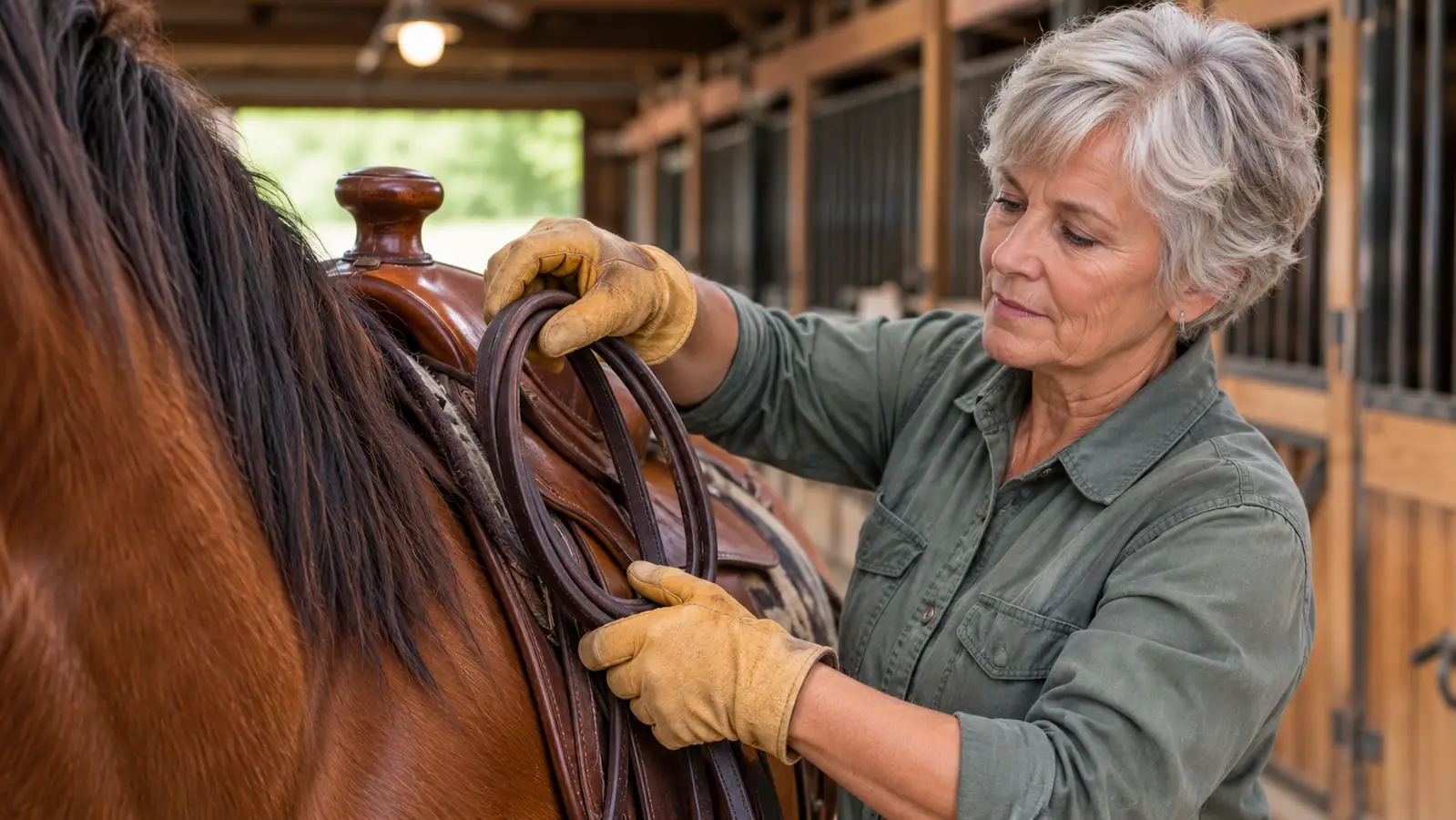
The rein stays clipped to Sarge's bridle on a peg in the tack room, which is the entire reason I like it as much as I do. My routine has not changed in years. Halter off, bridle on, reins already there. With split reins I was always carrying them in from somewhere or fishing them out of a bucket. Sarge is a sixteen-year-old bay gelding, fifteen-one hands, about eleven hundred pounds, with the wide withers that make every piece of tack a fit question. He gets ridden about three times a week from April to November, mostly the Kickapoo Valley Reserve and the county trails near home. My husband Dale does not ride, so it is me and the horse and sometimes the dog, and I want tack that works without a second person.
The dropped rein problem is simply gone. There is one loop, it sits in my hand, and when I get off to open a gate I hang it over the horn instead of laying two reins on the ground where a horse can step on them. That is not a small thing at my age. Bending down to pick up a rein with a fifteen-one-hand horse shifting his weight next to me was the part of every ride I liked least. The loop also made mounting easier, because I gather everything with one hand and there is nothing left dangling under my boot. I have not dropped a rein since, and I have not had to replace one either.
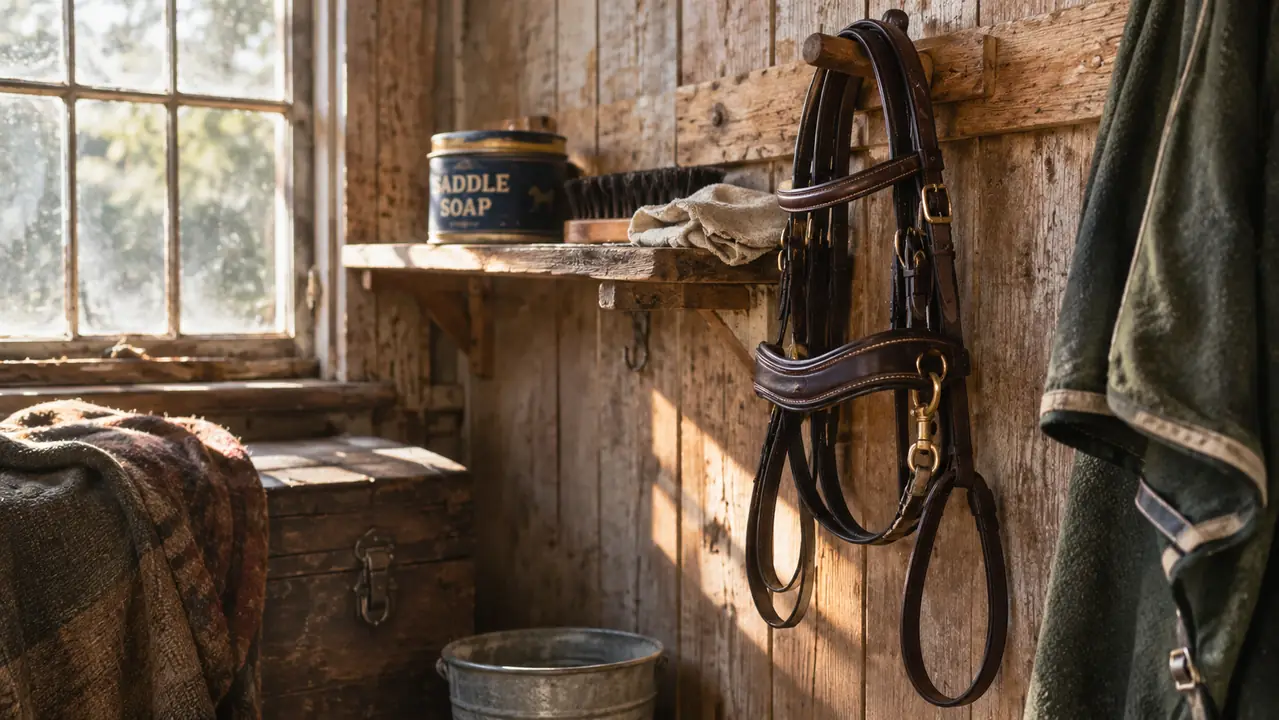
Care is dull and short. The rope wipes down with a damp rag and comes out looking like it did the week I bought it. The leather is the part that needs attention, and I treat the water loops the same way I treat my saddle, which is saddle soap and a damp sponge about once a month in riding season. The leather has darkened a little and softened where the snaps fold against it. In winter the whole thing hangs on the peg from November to April and it has not stiffened or cracked. I have done nothing clever to it and it has asked nothing of me.
Fifteen months, three rides a week, and the rope still looks like the week I bought it. The leather is the part I watch.
The Details That Actually Matter
Eight feet is the number that decides whether this rein suits you, and I want to be straight about it. The rein is one loop, so eight feet of rope gives you roughly four feet on each side of the bit. On Sarge that is a generous amount of rein, more than I use, and I ride with a fair bit of slack anyway. A smaller horse or a rider who likes a shorter feel in her hands might find it long. I would not call it a problem, because you can take up length in your hand, but I would not tell a small rider on a small horse that this is the exact right length either. Three-eighths of an inch is the other number, and that is a good width for a bare hand or a glove.
The snaps deserve their own paragraph because they are the working end of the whole thing. Nickel plated scissor snaps are a design I trust more than a trigger snap on a rein, and these have held up through mud, rain, and one memorable afternoon of ice. What I check for is the spring. If a snap starts to feel soft or closes without a click, it comes off that bridle that day. That is not a knock on this rein, it is a habit worth having with any snap on any rein. I have replaced snaps on other tack after two seasons. These are at fifteen months and feel like they did in the first week.
The water loops with leather laces are where the rope and the hardware meet, and that junction is where a poly rein will eventually show its age. It is a stitched leather loop the snap rides on, laced in place. I expected the leather there to be the weak point and it has been the opposite. It has taken the wear and kept the rope itself out of the snap, which is exactly what you want. The whole thing is made by Weaver Equine in Mt. Hope, Ohio, and it has that plain, unhurried look of tack made by people who assume it will be used in weather.
Balance in the hand is the part I did not expect to care about. A leather split rein has enough weight that it hangs and tells you where it is. This one is lighter and it floats a little more, and for the first month I was aware of it on every ride. That faded. What I notice now is that my hands are quieter, because a loop that stays where you put it does not invite you to fuss with it. If you ride with a light hand you will probably like it. If you ride with a lot of contact and expect the rein to talk back through weight, you will spend a while getting used to it.
The Honest Downsides
The first is the feel, and I am not going to pretend otherwise. Poly is not leather. It does not smell like a tack room, it does not soften, and it does not improve with age the way a good leather rein does. If part of why you ride is the tack itself, this rein will disappoint you on a purely aesthetic level. I say that as someone who has spent years darkening a secondhand saddle with soap and enjoying every minute of it. The rope side of this rein is a tool. The leather ends are the only part with any of that character, and there are just two of them.
The second is the one I want readers to take seriously. A closed loop is a closed loop. There is no weak link that lets go if something goes badly, and a loop can catch on a horn, a gate latch, or a saddle string in a way two separate reins cannot. I have ridden with it for fifteen months without a scare, and I manage the risk by keeping the loop gathered and by never wrapping it around my hand. If you have never ridden with a loop rein, spend a few rides paying attention to where that loop sits. That is not a reason to avoid it. It is a reason to think.
The third is that no rein fixes a horse. Sarge pulls on the trail when he is behind and wants to be in front, and a loop rein did not change that any more than split reins did. It changed how easily I manage him, not how he behaves. If you are shopping for something that will settle a hard puller, this is not it, and no rein is. That is a training question and a bit question, and I would talk to a trainer or a vet before I bought another piece of tack hoping for a different answer.
What I Liked
- One continuous loop, so there is no loose end to drop or step on
- Nickel plated scissor snaps clip onto the bit rings in about two seconds each
- The rope wipes clean with a damp rag and looks the same after a full season
- Leather water loops take the wear at the snap junction instead of the rope
- Stays clipped to the bridle on the peg, so it is always where the horse is
Where It Falls Short
- Poly has none of the weight and feel of good leather
- Slicker than leather in wet weather with damp gloves
- Eight feet is a long rein for a small horse or a rider who wants a short feel
- A closed loop can catch on a horn or a gate latch if you do not manage it
Who This Is For
This rein suits the trail and pleasure rider who keeps one or two horses at home or at a small boarding barn and does not have a groom waiting at the gate. It suits a rider who gets off to open gates, who rides alone, and who is tired of picking reins up out of the dirt. It suits older hands, honestly, because there is less to gather and less to fumble. If that describes you, a Weaver Equine poly roper rein does the job without any fuss and without asking you to learn a new skill. It clips on, it stays on the bridle, and it works in weather.
It also suits the rider replacing split reins that have gone dry, cracked, or been stepped on one time too many. That was me. I had gotten fifteen good years out of leather and I did not want to spend another season babying a rein that was already past its best. This one does not need babying. That is the whole appeal, and after a season and a half I would buy it again without thinking about it.
Who Should Skip It
Skip it if you show, if you ride in a discipline where a traditional split rein is expected, or if you simply love leather and want your tack to look a certain way in photographs. Skip it if you ride a small horse and want a shorter rein in your hand, because eight feet is a real length and you will feel it. Skip it if you want a rein with weight and heft that settles into your palm, because the rope will not give you that no matter how long you own it. None of those are criticisms. They are just the other side of the trade.
And skip it if you have not thought about loop safety, or if you are hoping a rein will solve a pulling horse. Buy it because you want one less loose end in your life and you do not mind rope instead of leather. That is a fair reason. Hoping it changes your horse is not. If something is genuinely wrong with how your horse goes, that is a conversation for a trainer or a vet, and no piece of tack on a peg is going to answer it for you.
If your rein keeps ending up on the ground, this is the fix
Fifteen months of trail use on one loop rein, still clipping on with a click. 3/8 inch by 8 feet, leather water loops, nickel plated scissor snaps. Worth a look if you ride alone and you are tired of picking reins out of the gravel.
Amazon Check Today's Price on Amazon →