

I dropped my split reins on the Kickapoo Valley Reserve in the summer of 2025, stepped on one, and heard the leather crack. Sarge, my 16-year-old Quarter Horse gelding, stood in the shade looking back at me like I had done it on purpose. That is a small thing until you are four miles from the trailer with a rein that will not lay flat anymore. I switched to a Weaver Equine poly roper rein that week, and it has been clipped to that same bridle ever since.
I am not a trainer and I do not sell tack. I am 61, I keep one horse on eleven acres outside Viroqua, Wisconsin, and I ride trail and pleasure about three times a week from April to November. What follows is what I noticed after roughly 15 months of real use. Rain, creek crossings, gates, one four-hour loop on county trails, and a wet June that ruined a pair of gloves. If you already know you want a closed loop, the Weaver Equine 3/8 inch by 8 foot poly roper rein is the one on my bridle.
The rein I have not had to think about since July 2025
One continuous loop, leather water loops and laces, nickel plated scissor snaps. Clipped to my everyday bridle for 15 months of trail miles.
Amazon Check Today's Price on Amazon →There is nothing to drop and step on
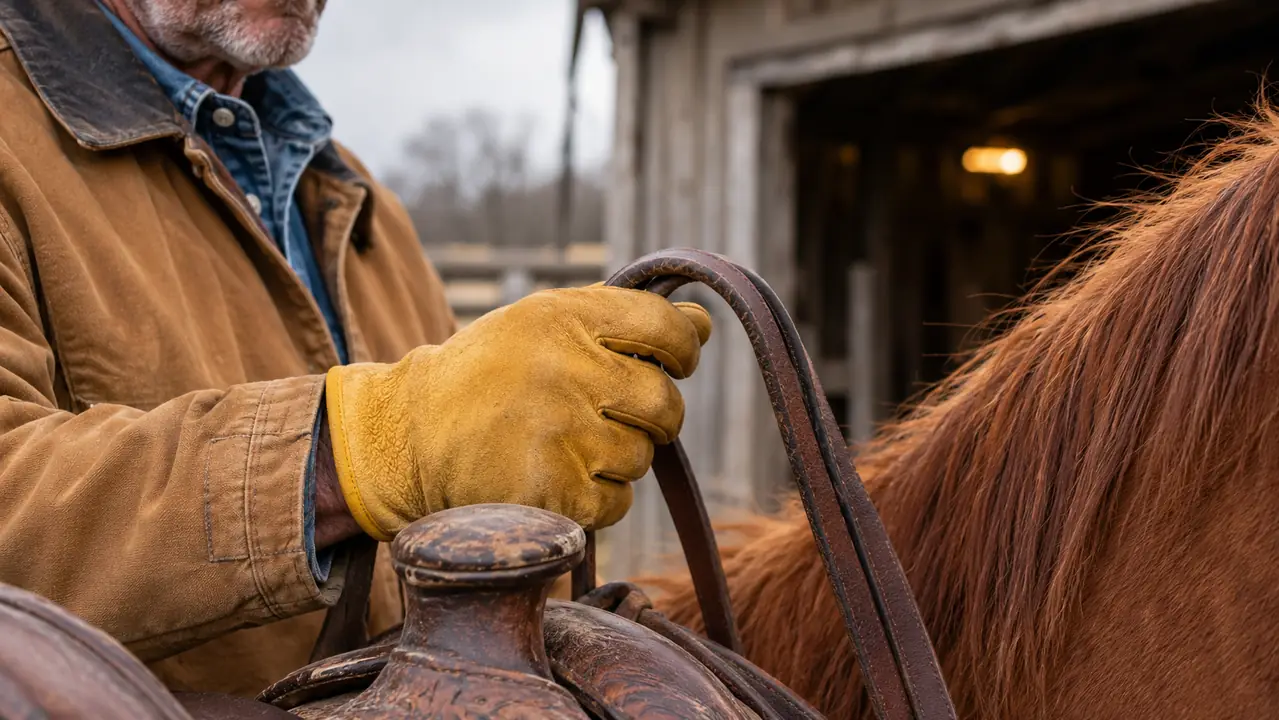
My old leather split reins were two separate straps and both had a free end. I dropped one while mounting, put my boot on it, and heard it crack. A roper rein is one closed loop, so there is no loose tail to slide out of your hand at a gate or land in the gravel while you get on. In 15 months I have not had to get off and go collect a rein. That sounds like a small thing until you have done it on a windy day with a horse who would rather be walking.
Scissor snaps move it between bridles in seconds
I keep one bridle for everyday and an older one for the farrier and for hauling. The nickel plated scissor snaps open wide enough to clip onto either bridle and they close with a click you can feel through a glove. Moving the rein takes maybe ten seconds. The snaps on my old leather reins had stretched after years of use and would pop loose when Sarge shook his head at a deerfly. These have not popped once.
8 feet of rein lets Sarge pick his own line through rock
The rein measures 8 feet, which on a 15.1 hand gelding means I can drop my hand toward the horn and let him choose his footing through rock without the rein going tight. There are stretches on the reserve where I want his head down and his own eyes on the ground. Split reins give you the same length, but you are managing two tails and keeping them even. With a loop, what is in your hand is all of it, and you know exactly how much slack you have given away.
3/8 inch width sits flat in a gloved hand
The rope is 3/8 inch across. Wide enough that it does not cut into my fingers when Sarge spooks at a turkey and I take hold, narrow enough that I can close my hand around it. My winter gloves are a men's large and I can hold the rein, the horn and a gate latch without the rein bunching under my palm. I have ridden with thinner rope reins that rolled and pinched by the second mile. This one has not done that to me.
One hand does almost everything on a trail
Gates, a water bottle, a folded map, a heeler who has wandered onto the trail ahead of us. Most of my riding is done with one hand on the reins and the other doing something else. A loop rein stays where you lay it across the horse's neck while you lean down to unhook a gate, so you can pick it back up without hunting for the second strap. Tick has caused more than one of those moments, and I have not fumbled the rein yet.
Rain and creek crossings do not leave you holding a soaked strap
The rope part is poly, so water runs off it instead of soaking in. It does not swell up the way my leather reins did after a wet ride. I still dry the bridle and the leather water loops before I hang them, because leather is leather and I am not going to pretend otherwise, but I am not sitting on a wet strap for the last two miles with water wicking through my gloves. We had a wet June and I noticed the difference every single ride.
The leather water loops are the only part that asks for anything
Honest note: this is not maintenance-free tack. The water loops and laces are leather, and leather dries out in a tack room. Twice a season I work a little conditioner into the loops where they wrap. The rope itself gets wiped with a damp rag when it is muddy and that is the whole routine. If you are the sort of person who will never touch up leather, the loops will tell on you in a couple of years. I would rather say that up front.
It hangs on the peg already on the bridle, so nothing goes missing
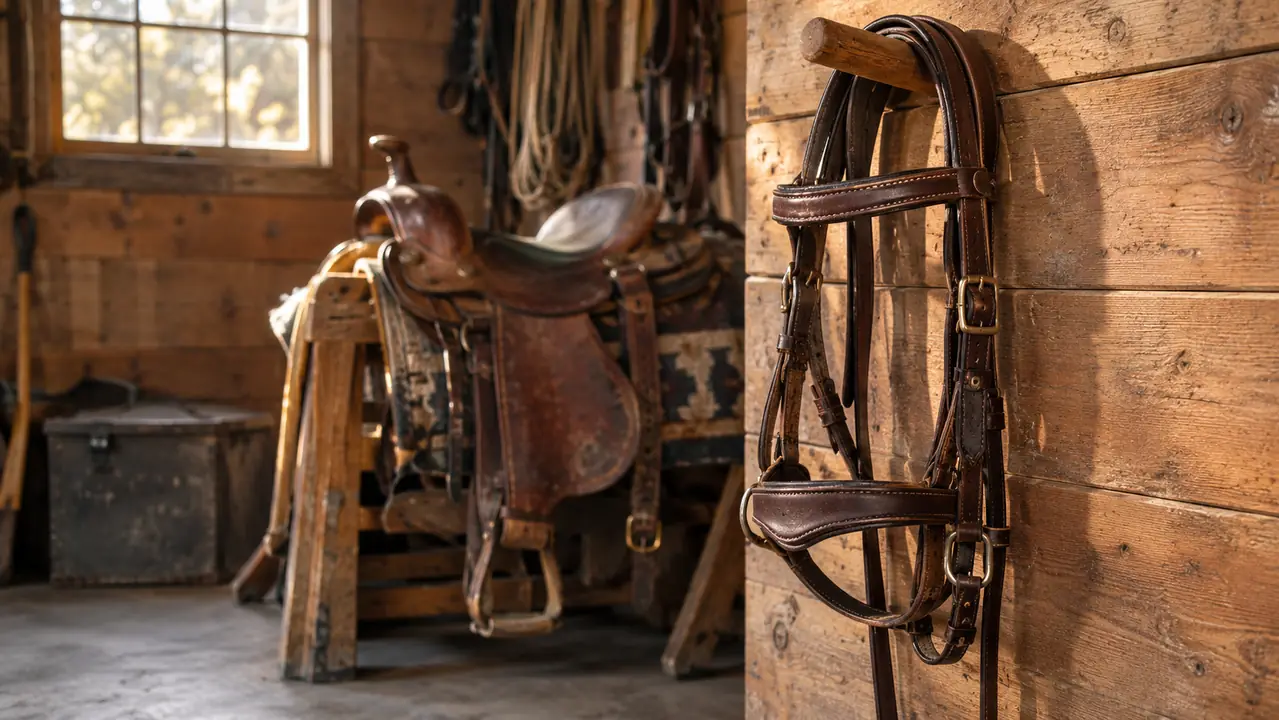
The rein stays clipped to my everyday bridle on a peg in the tack room. That is the entire storage system. My split reins used to live in a coil on the shelf and I was forever separating them and laying them out flat before a ride. Now I lift the bridle off the peg and everything comes with it. One less thing to gather at seven in the morning with a horse already waiting at the gate and giving me that look.
Dry tack room air does not crack it where it folds
I bought my used saddle about 12 years ago and the leather had gone dry and dull before I started looking after it properly. Leather hanging in a tack room gets stiff, and it cracks where it bends. The rope on this rein has been folded over the same peg through two Wisconsin winters and it has not split or frayed. The leather ends get my attention twice a year. The rope does not ask for any.
It suits a neck-reining horse and a rider with steady hands
Sarge neck reins off light contact, so a closed loop is a natural fit for how we ride. If your horse is green and you are constantly taking up and giving rein, a loop means sliding your hand along the rope rather than separating two straps, and some riders never get comfortable with that. If you ride with a romal, or you show in a class that calls for split reins, this is not your rein. For trail and pleasure, it is what I reach for without thinking.
What I'd Skip
I would skip buying a loop rein longer than you will use. Eight feet is already more rein than I need on a 15.1 hand horse, and a longer loop just gives you extra rope to gather up in your hand on a windy day. I would also skip anyone telling you poly reins need no attention at all. The water loops on this one are leather, and if you leave them dry through a winter they will stiffen and start to show it. And if you show, or if you were taught on split reins and your hands are happy with them, stay where you are. The right rein is the one you stop thinking about, and mine happens to be a Weaver Equine roper rein. It is worth being honest that a closed loop is a preference, not an upgrade, and it will not fix a horse that pulls or a hand that is heavy.
Fifteen months, three rides a week, one wet June, and the snaps still close with a click I can feel through a glove.
If your reins live on the bridle, this is the one I would buy again
3/8 inch by 8 feet, one continuous loop, leather water loops with laces, nickel plated scissor snaps. Made by Weaver Leather in Mt. Hope, Ohio. It has been on my bridle since July 2025 and I have not had a reason to take it off.
Amazon Check Today's Price on Amazon →