
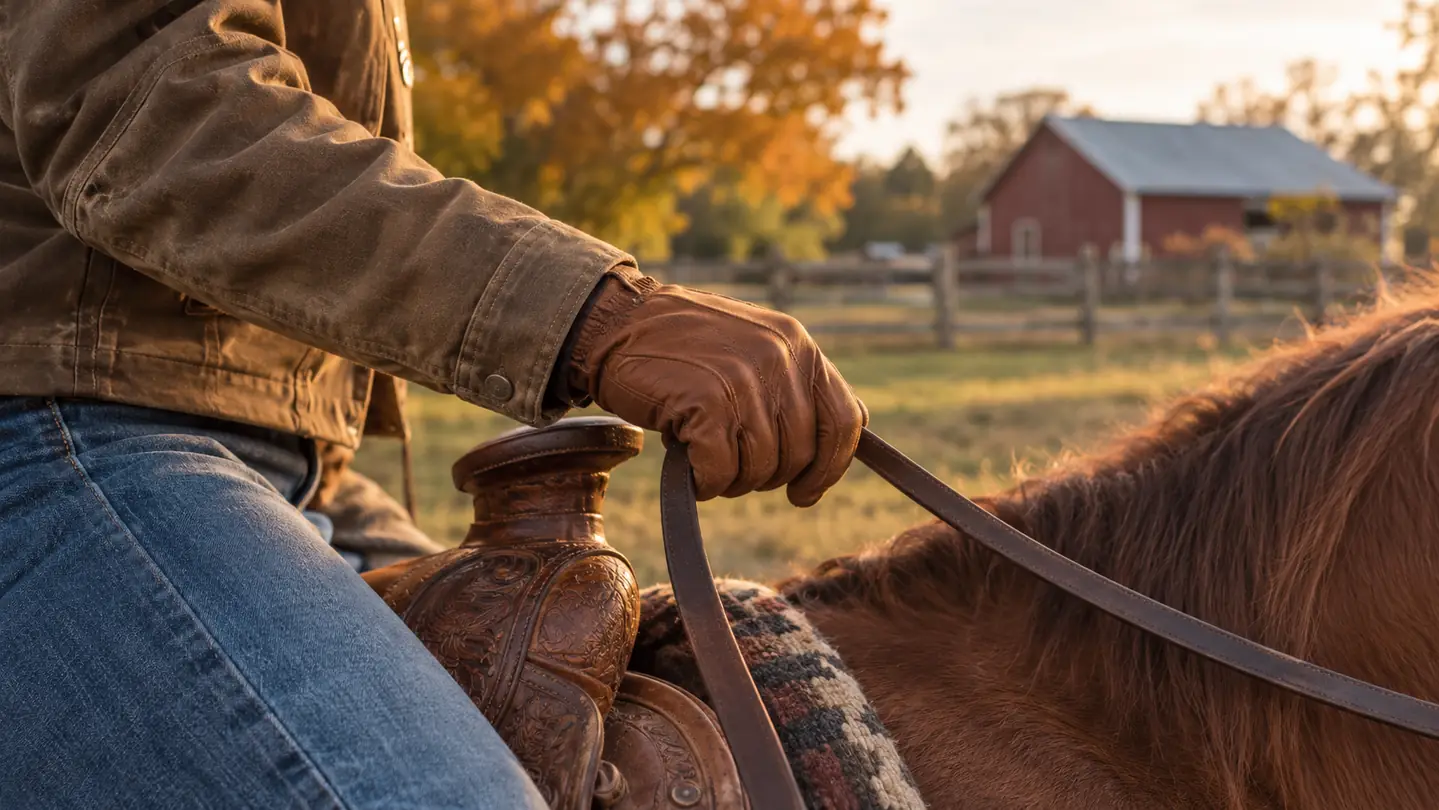
The reins I rode with for years were two separate straps of leather, and I liked them right up until the morning I dropped one in the trailer lot, stepped on it, and heard the leather give. That was summer 2025, and the strap had gone dry at the bit end where I had never conditioned it. A week later I clipped a Weaver Equine poly roper rein onto Sarge's bridle and it has hung on the same peg ever since, something like fifteen months now, two autumns and a great deal of Wisconsin mud.
So here is the short answer before the long one. If you ride one-handed, neck rein, and want a rein you can clip on in the dark and rinse off with a hose, the Weaver Equine poly roper rein is the practical pick. If you do ground work, ride two-handed, or want something you can shorten, lengthen and have repaired for the next twenty years, leather split reins still earn their place. I have one horse, one secondhand trail saddle, and no hired help, and both of those answers have been true for me depending on the week.
| Weaver Equine Poly Roper Rein | Leather Split Reins | |
|---|---|---|
| In the hand | One continuous 8 foot loop, 3/8 inch wide, held as a single unit | Two separate straps, each managed on its own side of the neck |
| Grip when wet | Rope texture keeps some bite in rain and mud | Soaked leather goes slick until it dries and gets conditioned |
| Putting it on the bit | Nickel plated scissor snaps, on or off in seconds | Tied or buckled through the bit rings, slower with cold hands |
| Riding one handed | Loop sits quiet in the hand and neck reins easily | Two straps to keep sorted so neither slips loose |
| Letting go of a rein | Release the loop and there is nothing left in your hand | Drop one strap, keep the other, the horse still has a rein |
| Changing the length | Fixed at 8 feet, no adjustment | Buckle or tie point lets you shorten or lengthen |
| Routine care | Rinse, wipe, hang on the peg, no oiling | Needs cleaning and conditioning to stay supple |
| Repair over the years | A frayed or chewed rope is finished | Can be relaced, restitched and brought back |
| Look at a show or a clinic | Reads as working gear | Reads as traditional tack |
| Best for | Neck reining, one handed trail miles, wet weather | Ground work, two handed riding, riders who want adjustment |
Where Weaver Equine Poly Roper Rein Wins
The first thing I noticed was how much less there is to do with one hand. A roper rein is a single loop, 3/8 inch wide and 8 feet long, running from one bit ring to the other. There is no off-side strap to find, no buckle to line up, nothing to sort out at a gate while your horse is dancing sideways because he can hear the other horses. Sarge neck reins off leg and rein, and with one loop I can keep my hand low and quiet and let my legs do the arguing.
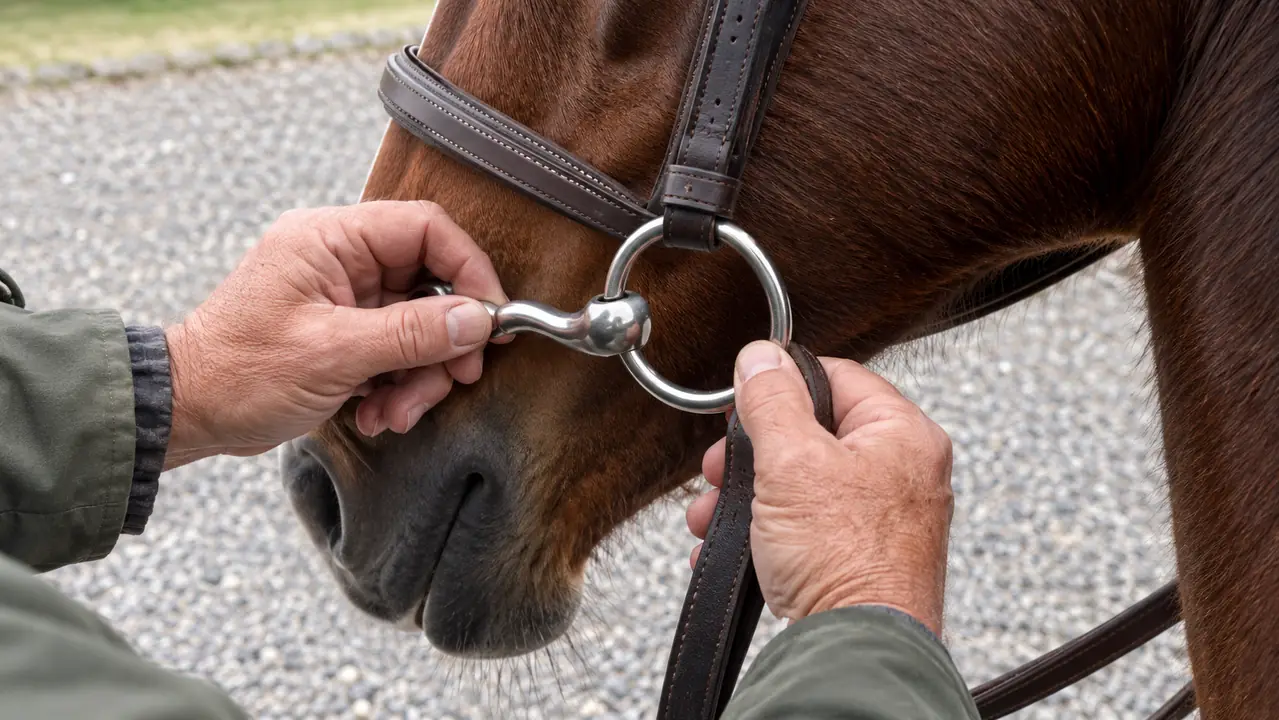
The second thing is the hardware. Nickel plated scissor snaps at each end clip onto the bit rings in about the time it takes to close your hand. I move that rein between the bridle on the peg and the bridle on Sarge without turning on the tack room light. There are water loops with leather laces at the bit ends too, if you would rather tie it on and leave it. I tied mine on the second bridle and it has not moved in a year.
Third is weather, and in Vernon County that is not a small thing. Rope does not care about rain, and it does not stiffen in a cold barn the way my old leather did in January. In November, before I am fully into gloves, it still feels like the same rein it was in July. It has no oil to work in and no dryness to work out. When it comes back from the reserve with mud in it, I run it under the hydrant, wipe it with a rag, and hang it up.
That last point is worth spelling out with an actual morning, because "easy care" is the kind of phrase that means nothing until you have lived it. Late October, forty-one degrees, drizzle coming sideways, and I had twenty minutes before Dale needed the truck. My old routine with leather was a five minute job: wipe the mud off with a damp rag, let it dry, work a little conditioner into the bit ends where they go stiff, and hang it so it dried straight instead of curling. That is fifteen or twenty minutes a week I do not spend anymore. With the roper rein I unhook it, run it under the hydrant, shake it out, and hang it on the peg. Done in under two minutes, and it is dry by the next ride because there is nothing in it holding water.
And it is honest about what it is. Nothing about that rein pretends to be something a working cowboy paid a saddler for. It is a tool that lives on a bridle in a pole barn and does its job on a Tuesday afternoon.
Where Leather Split Reins Win
Now the honest part. Split reins do two things a loop rein simply cannot do, and both of them matter to a certain kind of rider. The first is letting go. With split reins, if you need a hand free, you drop one strap and keep the other, and your horse still has a rein on him. If I open my fingers on the loop, I have nothing at all. On a horse that has ever spun and left, that difference is worth sitting with for a minute before you decide.
The second is length. My roper rein is 8 feet and it will be 8 feet when I am seventy. Split reins buckle or tie, so you can shorten them for a horse with a shorter neck or lengthen them for one that needs more. You can also change which side the buckle sits on, which sounds trivial until you have ridden two hours with hardware sitting under your thumb.
The third is repair, and I want to be fair to leather here because my own pair broke. They broke because I never conditioned them and then stepped on one in a gravel lot. That is a care failure, not a leather failure. A saddle shop could have relaced that strap for less than the fuel to drive there. Well-kept leather can be cleaned, oiled, restitched and brought back for decades. A rope that frays where a horse chewed it is done, and there is no fixing it.
Let me put a number on that, because I think the repair argument gets waved away too easily. The pair I ruined cost me real money and I did not replace them with another pair, which tells you where I landed. But I have a neighbor near Westby who has ridden the same set of split reins since the nineties. She wipes them down after every ride, conditions them twice a season, and has had one strap restitched at the bit end. That is thirty years of use out of one purchase. A rope rein will not see thirty years. Fifteen months in, mine looks close to new, but rope is rope, and the day it starts to fray at a snap is the day it is a lead rope.
And the last is how it looks. I do not show. But when I ride with people who do, split reins look like the tack that belongs on a finished horse, and no amount of practicality changes that.
One loop, clipped on in the dark, rinsed off with a hose
This is the rein that has lived on Sarge's bridle for fifteen months of trail miles. 3/8 inch by 8 feet, nickel plated scissor snaps, water loops with leather laces at the bit ends.
Amazon Check Today's Price on Amazon →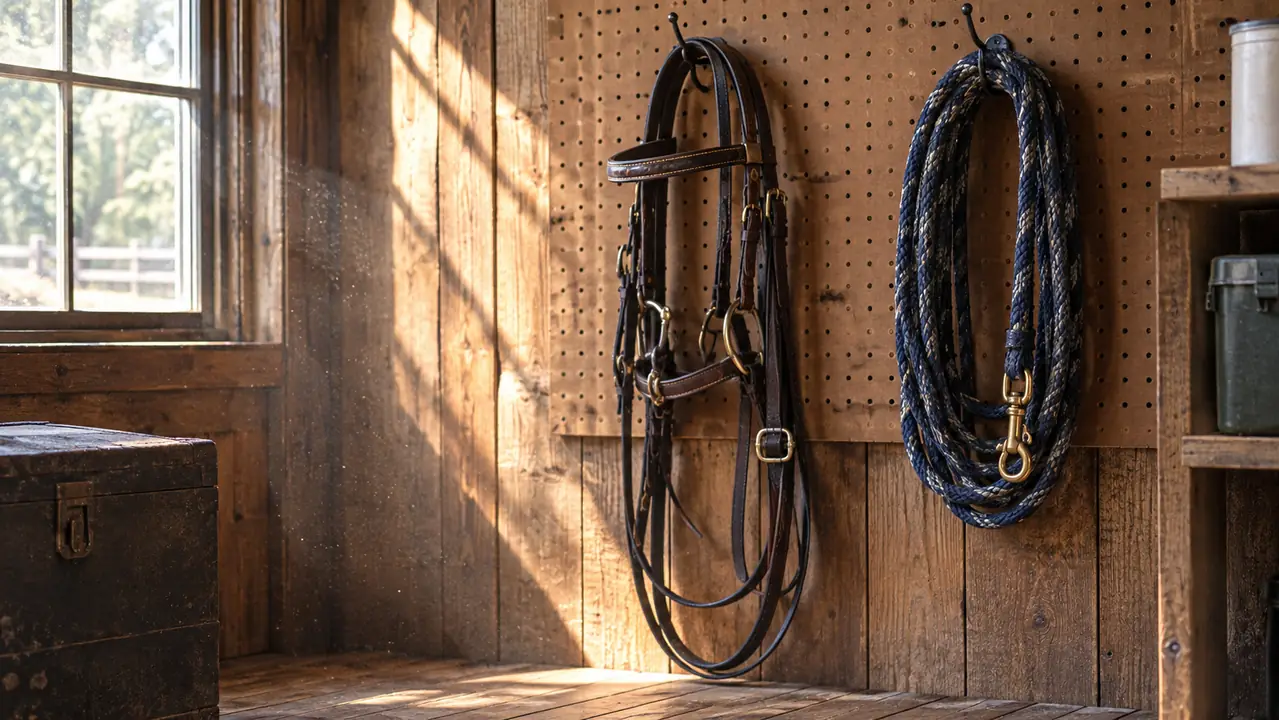
What Fifteen Months of Trail Riding Taught Me
The loop has one habit worth knowing about. When you swing down, it can catch on the saddle horn, and if your horse steps off before you get it clear you will feel it. I flip the loop forward over the horn now, every time, the way I was shown. That is not a flaw in the rein. It is a habit you build in about a week.
Mud is the other thing. Rope has a lay to it, and grit works down into that lay and stays there if you let it. A rinse and a wipe after a wet ride takes less than a minute, and it keeps the rein from feeling gritty in your hand the next time out. The scissor snaps want the same treatment. Mine got stiff after one muddy ride in the reserve, and a rinse under the hydrant brought them back to clicking properly.
There was one afternoon in the second summer that taught me more about the rein than the first six months did. I was on a county trail north of town, off the horse and leading Sarge through a boggy stretch where the footing was bad. I had the loop over my arm, both hands on the lead, and I needed to get the gate open at the far side. With split reins I would have had to sort out which strap went where and pick a side. With the loop, I hooked it over the saddle horn, opened the gate, led him through, and picked it back up. Thirty seconds. That is the whole argument for the loop, and it is not a dramatic one. It is a hundred small moments like it.
What surprised me most is how little I think about it now. Good tack disappears. I noticed the rein constantly for the first month because it was new, and somewhere around the second month it stopped being a thing I was evaluating and became the thing my hand holds. That is the highest compliment I can pay a piece of gear. Sarge is sixteen this year, with wide withers that make saddle fit a genuine headache, and I am sixty-one with hips that complain on a four hour ride. Neither of us has patience for tack that needs managing.
Fifteen months, three rides a week from April to November, and the snaps still click the way they did the first morning.
Who Should Buy Which
Buy the Weaver Equine poly roper rein if you neck rein, ride one-handed most of the time, and want a rein that goes on in seconds and does not need a care routine. It suits a trail rider with a horse that neck reins off leg and rein, a rider with hands that ache in the cold, and anyone who has already lost a leather strap in a trailer lot and does not care to repeat it. If your rides are two to four hours on county trails and your tack room is an unheated corner of a pole barn, this is the rein that will not ask anything of you.
Stay with leather split reins if you do ground work, ride two-handed, or want a rein you can shorten and lengthen as your horse changes. They are also the better answer for a green horse, because being able to drop one strap and keep contact with the other is a safety margin a loop does not give you, and for anyone who rides with people who care how tack looks. If you go that way, buy good leather and actually condition it, because the pair I ruined failed on my care, not on the leather.
A fair number of riders keep both. I still have my old split reins in the tack room, cleaned and conditioned, and they go on for ground work and for the first few rides of spring when Sarge is fresh. The roper rein does everything else. Most seasons the swap happens somewhere in April and again in November, which is a useful way to think about it: the loop is my summer rein and the leather is my spring rein, and neither one has ever been the wrong tool for the month it was hanging on the peg.
Two reins, two jobs, and no reason to make it a religion. If your horse is sore, off, or unwilling to move out, that is a vet or a saddle fitter conversation, not a rein conversation. A rein only decides how your hands talk to the bit. Get a professional for anything beyond that.
If gathering two straps every morning has gotten old, this is the fix
3/8 inch by 8 feet, one continuous loop, nickel plated scissor snaps, water loops with leather laces. Made by Weaver Leather in Mt. Hope, Ohio. Fifteen months on my own bridle and still on the peg.
Amazon See It on Amazon →