Short answer first. For leading, tying, hauling and farrier days, the Weaver Equine Nylon Horse Halter is the better everyday tool for most home horse owners, and a rope halter is better at one narrower job. I keep both on hooks in my tack room. The Weaver Equine padded halter comes off the hook almost every time. The rope halter comes out when I want Sarge to feel a small ask before he feels a pull.
I am not a trainer and I am not selling a method. I am 61, I live on eleven acres outside Viroqua, Wisconsin, and I ride trail and pleasure three times a week from April into November. Sarge is a 16-year-old bay Quarter Horse gelding, 15.1 hands, about 1,100 pounds, with withers wide enough that saddle fit is its own ongoing project. I have bought halters that rubbed him and halters that outlasted my interest in them. What follows is roughly two years of daily use on one padded nylon halter, set against the times I switch to rope.
| Weaver Equine Nylon Halter | Rope Halter | |
|---|---|---|
| Everyday leading and tying | Snap closure and adjustable webbing, on and off in seconds | Retied each time, and small adjustments take practice |
| Feel and pressure | Thin webbing and a foam liner soften the signal | Thin rope sends a sharper, earlier signal the horse feels at once |
| Comfort for long standing | Soft PVC coated foam rubber liner spreads contact under the nose | Bare rope against bare skin for an hour at a trailhead |
| Adjustment | Adjusts where it sits, without untying anything | Every change means retying the whole halter |
| Weight and packing | 1.26 pounds, with plated hardware that adds bulk in a saddlebag | A few ounces of rope that rolls up small |
| Mud and dust | Nylon rinses clean, but the foam liner can hold grit until you wash it | Nothing to trap dirt, rinse and hang |
| Tying safety | Hardware can bend or give under a hard pull | One continuous piece with nothing to fail, which also means nothing gives |
| Cost | More than a plain rope halter | The cheaper of the two |
| Farrier, vet and borrowed handlers | Obvious to put on, and forgiving in unpracticed hands | Works fine, but whoever holds the horse needs to know how it goes on |
| Ground work and teaching | Padded nose dulls the lesson you are trying to give | Precise enough to ask with your little finger |
What the Weaver Equine Halter Actually Is
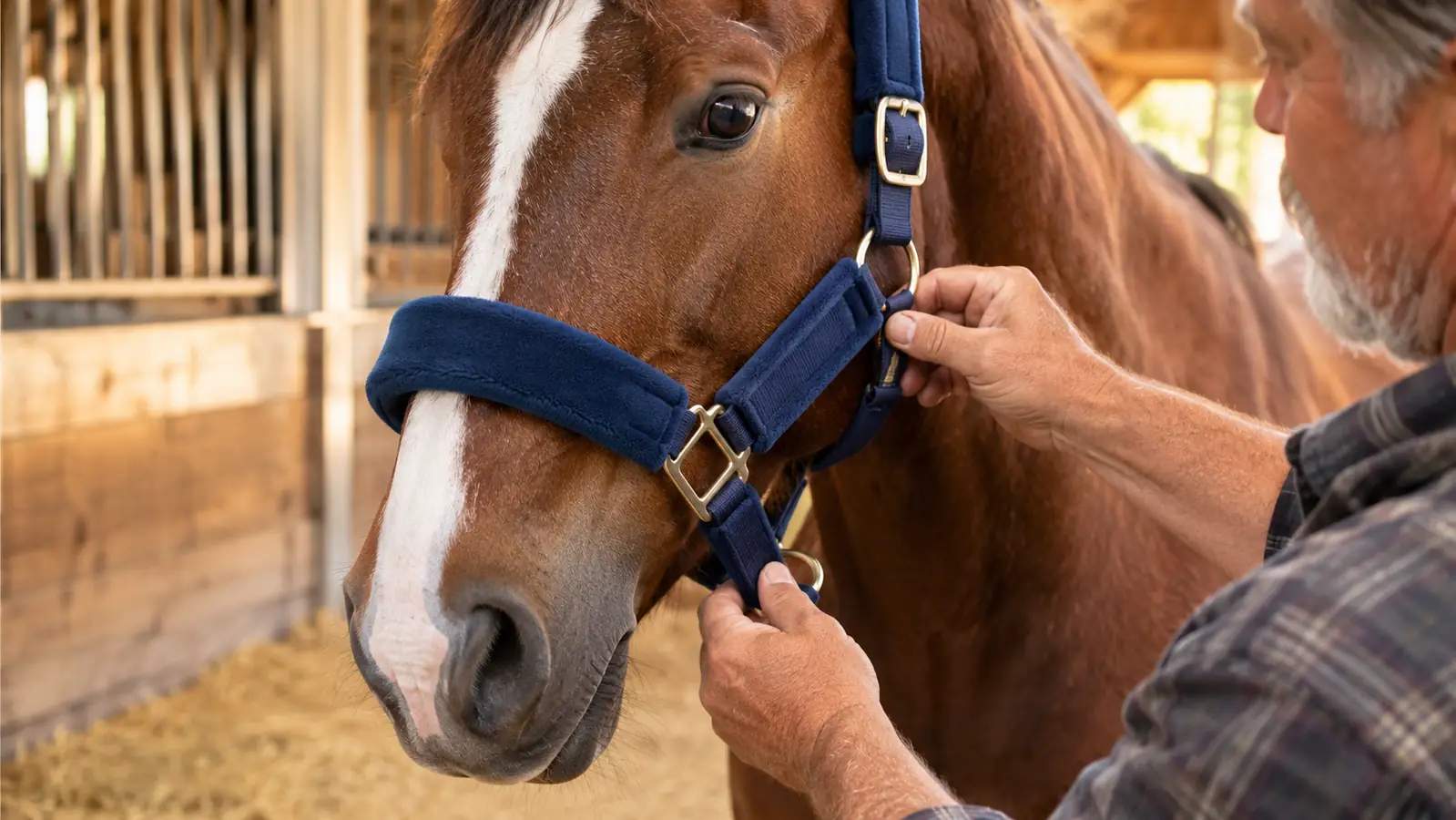
The halter I am writing about is the Weaver Equine Nylon Horse Halter in the 1 inch Average Horse size. The webbing is nylon, one inch wide. The liner is soft PVC coated foam rubber, which is the part the horse cares about. The hardware is brass plated and the closure is a snap. It is adjustable, it weighs 1.26 pounds, and it measures 20 by 12.5 by 2 inches sitting on a shelf. At the time I am writing this it carries 2,134 ratings at 4.6 stars on Amazon, which is a lot of people who are not me agreeing that it does the basic job.
The padding is why I bought it. My previous halter was flat nylon webbing, and on a horse who leans into the end of the lead rope, flat webbing puts all of that pull on one narrow line under the nose. Sarge leans. Not badly, but he would rather walk than stand, and he tests a rope. After a summer of it, the hair on the bridge of his nose was thin and there was a crease in the coat where the webbing sat. The foam rubber liner spreads that contact over a wider band. It is not a cure for a horse that habitually pulls hard. It is a fix for the ordinary mild pulling that happens at the gate, at the trailer, and while the farrier is working.
One thing the listing will not tell you is how the liner wears. Foam under a horse's chin takes a beating, and I expected it to crack or go flat within a year. Two years in, it has not. What it does do is collect grit, especially in late summer when the pasture is dry, and I brush it out with a stiff brush about once a week and rinse the whole halter when it looks like it needs it. That is two minutes of work, and I would rather do it than go back to flat webbing.
What a Rope Halter Actually Does Differently
A rope halter is a length of rope with knots tied in it and nothing else. No liner, no hardware, no snap. The knots sit at the nose and under the jaw, and the rope between them is thin. That is the entire design, and it is deliberate. A thin rope transmits a signal faster and more precisely than a wide webbing noseband with foam under it does. If you are teaching a young horse to give to pressure, or reminding an older one about personal space, a rope halter lets you ask with your little finger instead of your whole arm. That is a real advantage and I do not want to talk anyone out of it.
The same quality that makes a rope halter useful makes it a poor choice for the halter that hangs by the door. Thin rope against a bare nose, used for an hour of standing tied at a trailhead, is more likely to leave a mark than padded webbing is. Rope also does not adjust with a snap. You retie it. That is nothing on a warm day with a quiet horse. It is a lot to think about when it is fifteen degrees and the horse is dancing because he wants to go back in the barn.
Where the Weaver Equine Nylon Halter Wins
It wins on the things you do every single day. Getting it on takes one hand and about two seconds, because of the snap closure, and I can manage it in winter gloves. It adjusts without untying anything. When Sarge is tied to the trailer while I unload, or standing for the farrier, or standing in the aisle for a vet visit, that halter is doing the holding, and the padded liner means it is not grinding on him while it does. I have handed the lead to a farrier, a vet, and a neighbor who has never handled a horse, and none of them needed instructions.
It also wins on care, which sounds like a small thing and is not. Two years of mud, sweat, and one memorable incident involving a hay bale have been handled with a bucket of water and a brush. Nylon rinses and dries. The brass plated hardware has not rusted or seized. The only thing I have replaced in that time is a lead rope snap, which is a lead rope problem and not a halter problem. When gear lives on a hook and gets used twice a day, that kind of boring reliability is the whole point.
Where a Rope Halter Wins
A rope halter wins on feel, and if you do ground work with your horse, that is not a small win. When I want Sarge to move a shoulder off my hand, or to stand still while I pick up a hind foot, the rope halter makes my ask lighter and his answer quicker. Every trainer I have ever paid to watch my horse said the same thing in different words: less hand, more timing. Thin rope helps you get there, because the horse feels you sooner and you learn to stop pulling sooner.
It also wins on weight and on money. A rope halter rolls up into a saddlebag and weighs almost nothing, which is the one I would take on a long ride if I were leading a pack horse or tying off on a highline. It has no hardware to bend, rust, or break, and there is nothing on it that can come apart on a horse at the wrong moment. It costs less than a padded nylon halter with plated hardware on it. I know several people who keep one in the truck for exactly those reasons, and they are not wrong to.
The halter that comes off the hook every morning
Padded nylon webbing, a soft foam rubber liner, brass plated hardware and a snap closure I can work with cold fingers. Two years of daily use on one horse and it is still the one I reach for.
Amazon Check Today's Price on Amazon →Two years of daily use and the hair grew back on the bridge of his nose. That is the entire argument for padding.
How I Use Each One on Sarge
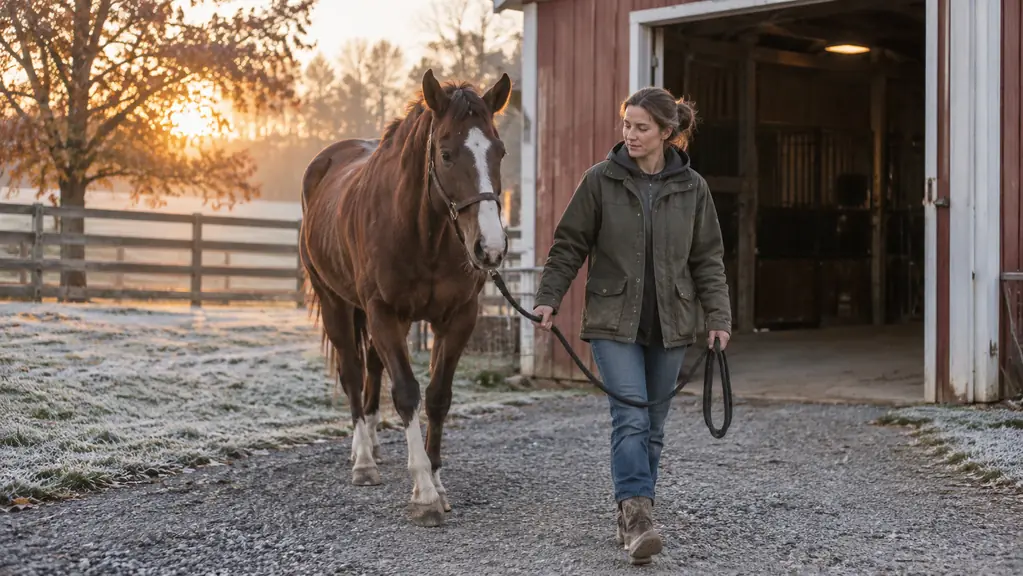
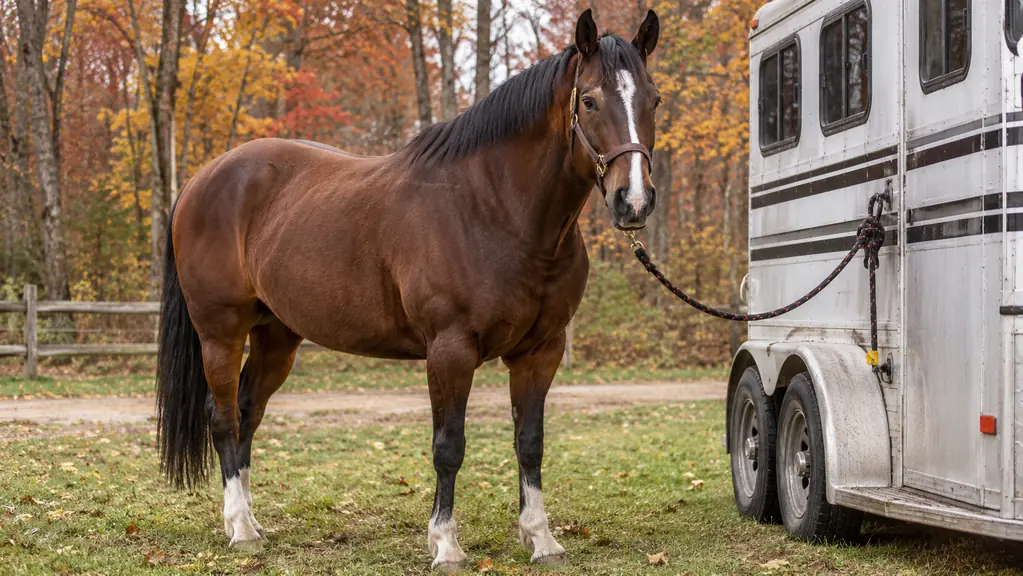
Every morning I walk out to the two stall pole barn, take the Weaver Equine halter off the hook outside Sarge's stall, and put it on him to lead him out. He wears it for grooming, for the farrier, and for tying to the truck or trailer. It has been to the Kickapoo Valley Reserve and the county trails more times than I can count. It has been rained on, dropped in the mud, and stepped over. The inch wide webbing has not stretched out or gone soft at the adjustment points. The liner has not cracked, which was the failure I expected.
The rope halter lives in the tack room and comes out maybe a dozen times a season. I use it when I am working with Sarge on standing still, or when he has gotten into the habit of walking through me at the gate, which he does about once a year. Two or three sessions with the rope and he remembers his manners. Then the rope goes back on its hook and the padded halter comes back out. That is the honest division of labor between the two, and it has not changed in two years.
There is one more use worth mentioning. When my husband Dale holds Sarge while I fuss with the trailer latch, I hand him the lead on the padded halter. If I handed him a rope halter he would hold it like a tow strap, and neither the horse nor Dale would enjoy the lesson that followed. Padded nylon is forgiving of a handler who does not ride, and that matters more as I get older and need the extra pair of hands.
Sizing and Fit Notes
The Average Horse size fits Sarge at 15.1 hands and roughly 1,100 pounds, and it fits with room to adjust. That is not a guarantee for your horse. Measure the circumference of your horse's nose a couple of inches above the nostrils and check it against the size chart before you order. Size is the one thing adjustment cannot fix. A halter that is too small will pinch no matter how you set it, and one that is too big will slide around and rub in new places, usually right where you do not want it.
Once it is on, you should be able to fit two fingers under the noseband and about a hand's width under the crown piece at the poll. Check it again after the first wet ride, because wet nylon can shift. And take it off when you turn your horse out. I do not leave any halter on Sarge in the pasture or in his stall, and no halter, nylon or rope, is a substitute for tying with a quick release knot and checking it before you walk away.
One Thing Neither Halter Fixes
If your horse sets back and pulls until something breaks, a different halter is not the answer, and I say that as someone who once bought three halters in one year hoping otherwise. A horse that panics when tied needs a safer tying setup and somebody experienced to watch him, not softer webbing. Same for a horse that is head shy or sore around the poll. A padded halter is kinder on a normal horse doing normal work. It is not a treatment for a problem that lives in the horse's head or in his neck, and I would be doing you a disservice to suggest it was.
Who Should Buy Which
Buy the Weaver Equine padded nylon halter if your horse wears a halter for handling rather than for training. If you lead in from the pasture, tie for the farrier, load and unload, and stand around at trailheads, the padding and the snap closure will earn their place on the hook. It is also the halter to buy if someone other than you handles the horse, because it is obvious and forgiving. Buy a rope halter instead, or as well, if you are actively teaching your horse something and you want the feel that thin rope gives you. Plenty of people end up with both, and the rope one lives in the tack room.
If you are not sure, start with the padded halter, because it is the one that gets used daily. Nobody I know has ever regretted owning a halter that did not rub. Plenty of people have a rope halter hanging on a nail that they bought for a clinic and never touched again.
Start with the one that gets used twice a day
1 inch nylon webbing, a soft PVC coated foam rubber liner, brass plated hardware and a snap closure. Measure your horse's nose first, then pick the size, then hang it by the stall door.
Amazon Check Today's Price on Amazon →