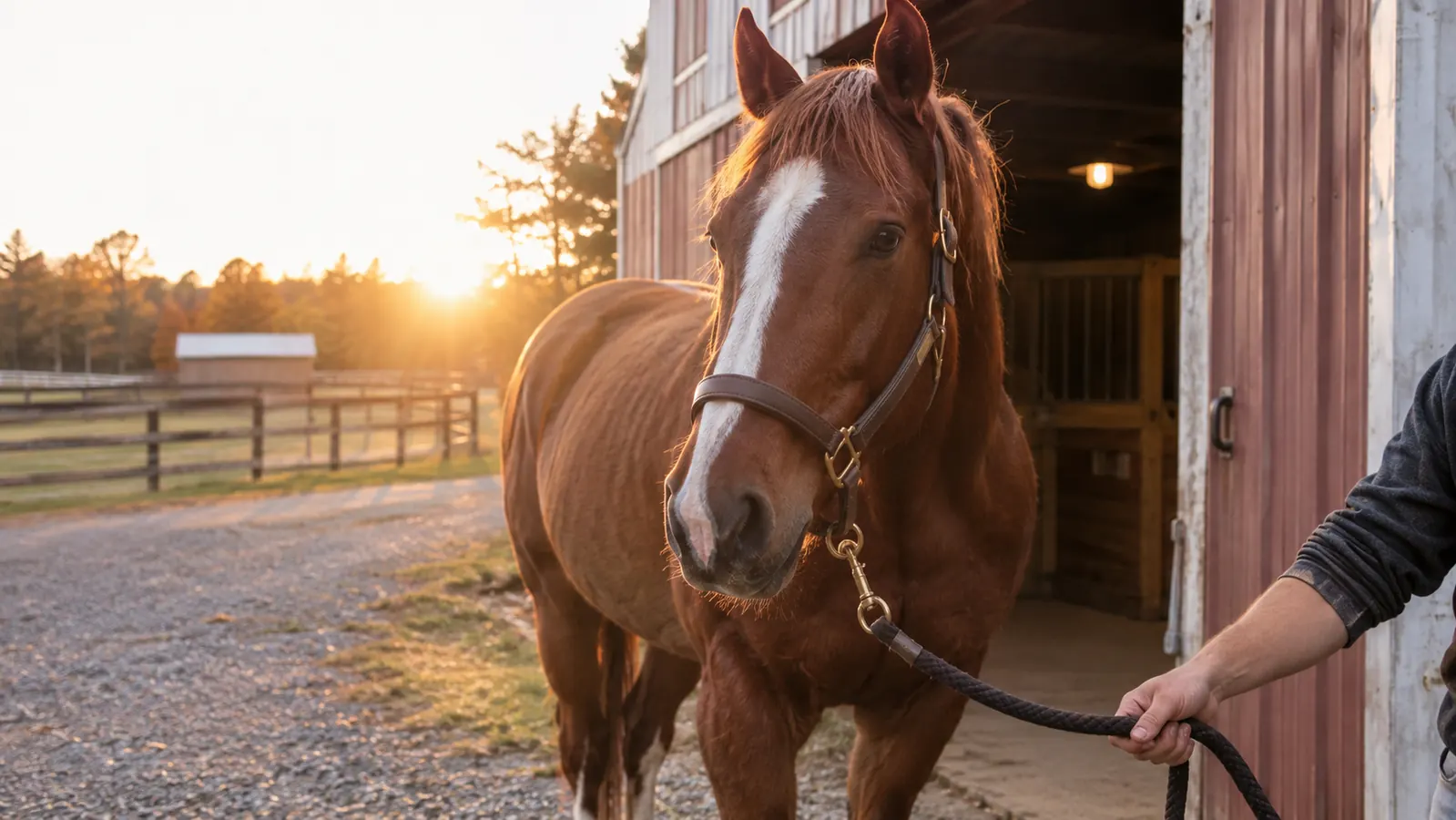
The farrier pulled in at eight on a Tuesday, and I did what I have done a few hundred times now. Walked out to the barn, lifted the halter off the hook beside Sarge's stall, and led him out onto the gravel. Same halter every day for two years. Leading him in from the pasture, tying him to the trailer, holding him for the farrier, walking him down to the wash rack. It is a Weaver Equine Nylon Horse Halter, one inch wide, padded, Average Horse size, and I have not once had a reason to take it off that hook and hang something else there.
Before this one I used a flat nylon halter I bought at a farm store for not much of anything. It worked, in the sense that it held a horse. But Sarge has wide withers and a broad, plain Quarter Horse head, and that flat webbing sat right against the cheekbone and behind the ears. Two summers of it left a thin bare line of hair on the near side. Nothing dramatic. Just enough that I noticed it every time I brushed him. That bare line is the whole reason I went looking for padding, and it is the reason I am writing this instead of just using the thing and saying nothing.
The Quick Verdict
Two years of daily leading, tying and farrier work, and the padding has held, the webbing has not frayed, and the bare patch behind Sarge's ears grew back. The hardware has dulled. It is not the halter I would pick for a horse that sets back hard against the rope.
Amazon Check Today's Price →The halter that has hung by my stall door every day since fall 2024
One inch of padded nylon, a soft coated foam liner that wipes clean with a damp rag, and adjustment that still has room left after two years on an average-sized Quarter Horse. This is the one I reach for without thinking about it.
Amazon Check Today's Price on Amazon →How I've Used It
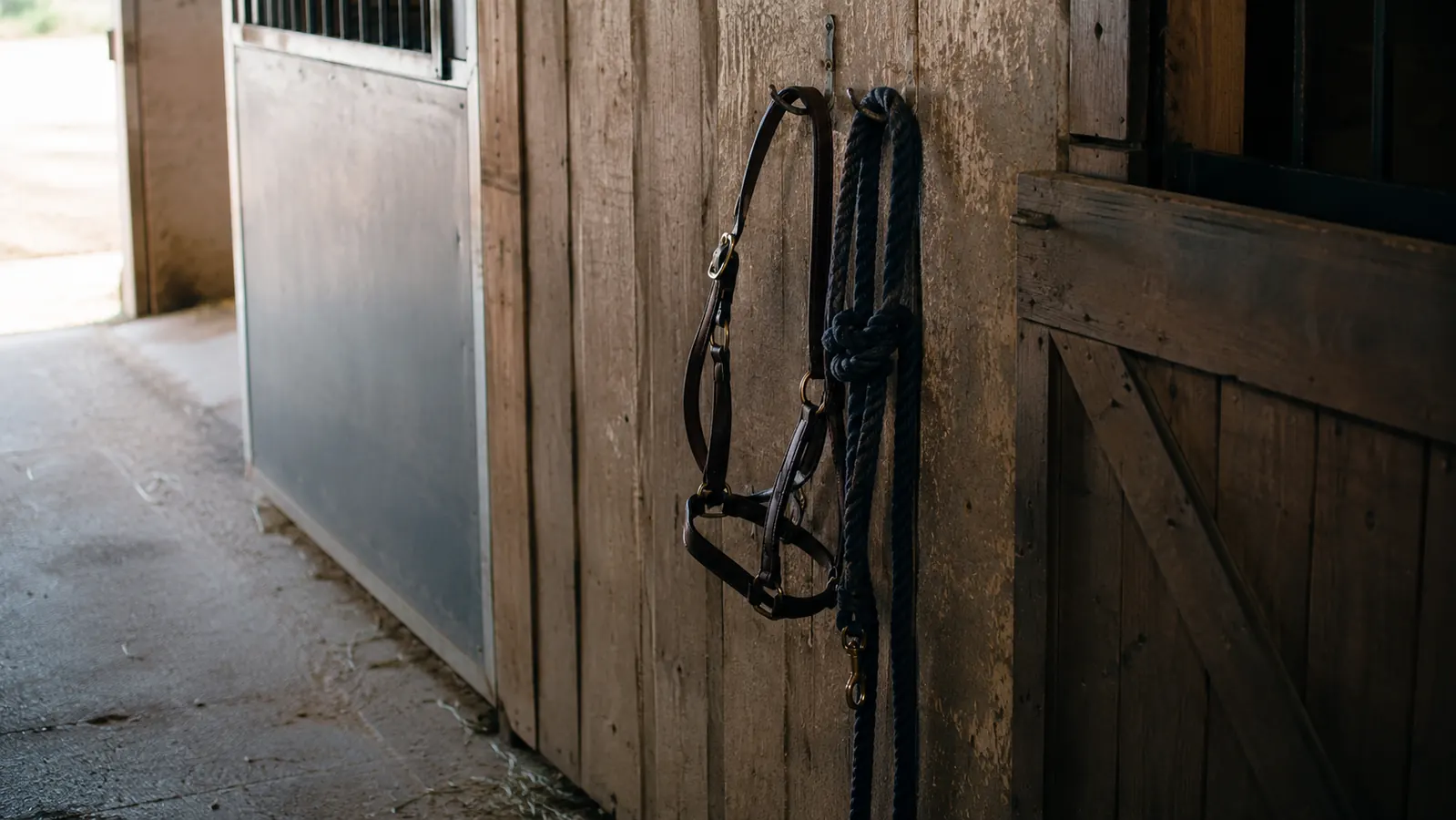
Sarge is a 16-year-old bay Quarter Horse gelding, 15.1 hands, right around 1,100 pounds. I bought this halter in the fall of 2024 and it has been in daily service ever since, and I mean daily. It hangs on a hook outside his stall. It does not live on him. That is deliberate, and I will say it plainly to anyone who keeps a horse at home: I do not leave a halter on a horse in the stall or turned out. A halter left on a horse in a field is how you end up with a horse caught on a fence post, and I have seen what that looks like at a neighbor's place.
A normal week here is three rides from April through November, and the longest of those runs about four hours on the Kickapoo Valley Reserve or the county trails. The halter is on him for the leading, the tying, the saddling and the farrier. It comes off before I get on. So call it six to eight short sessions a week for two years, plus every trailer trip and every visit from the farrier or the vet. That is not heavy work. It is ordinary work, done constantly, which is the hardest thing to build gear for.
At the two-year mark the webbing is still sound. No fraying at the cheek, no stretched-out adjustment holes, no soft spots where the nylon bends around the hardware. The padding has compressed slightly where it crosses the poll, which is what anything with foam in it will do. What has changed is the finish on the hardware. It has gone from bright to a flat, dull tone, and the plating is worn thin at the snap where my thumb lands every single time. Not failed. Worn. There is a difference and I want to be straight about which one this is.
One trip I remember because it irritated me: a Tuesday last October, I loaded Sarge for the reserve, got about four miles down the county road, and realized I had left the lead rope hanging on a fender back home. Turned around, unhooked the trailer in the yard, and walked him out on this halter while I dug a spare rope out of the truck box. Twenty minutes of a horse standing in a cold wind with nothing to do and nobody to watch. No rub behind the ears, no head tossing, no leaning on the tie. That is not a heroic story. It is the sort of thing a halter either handles quietly or does not.
The Padding Is the Whole Point
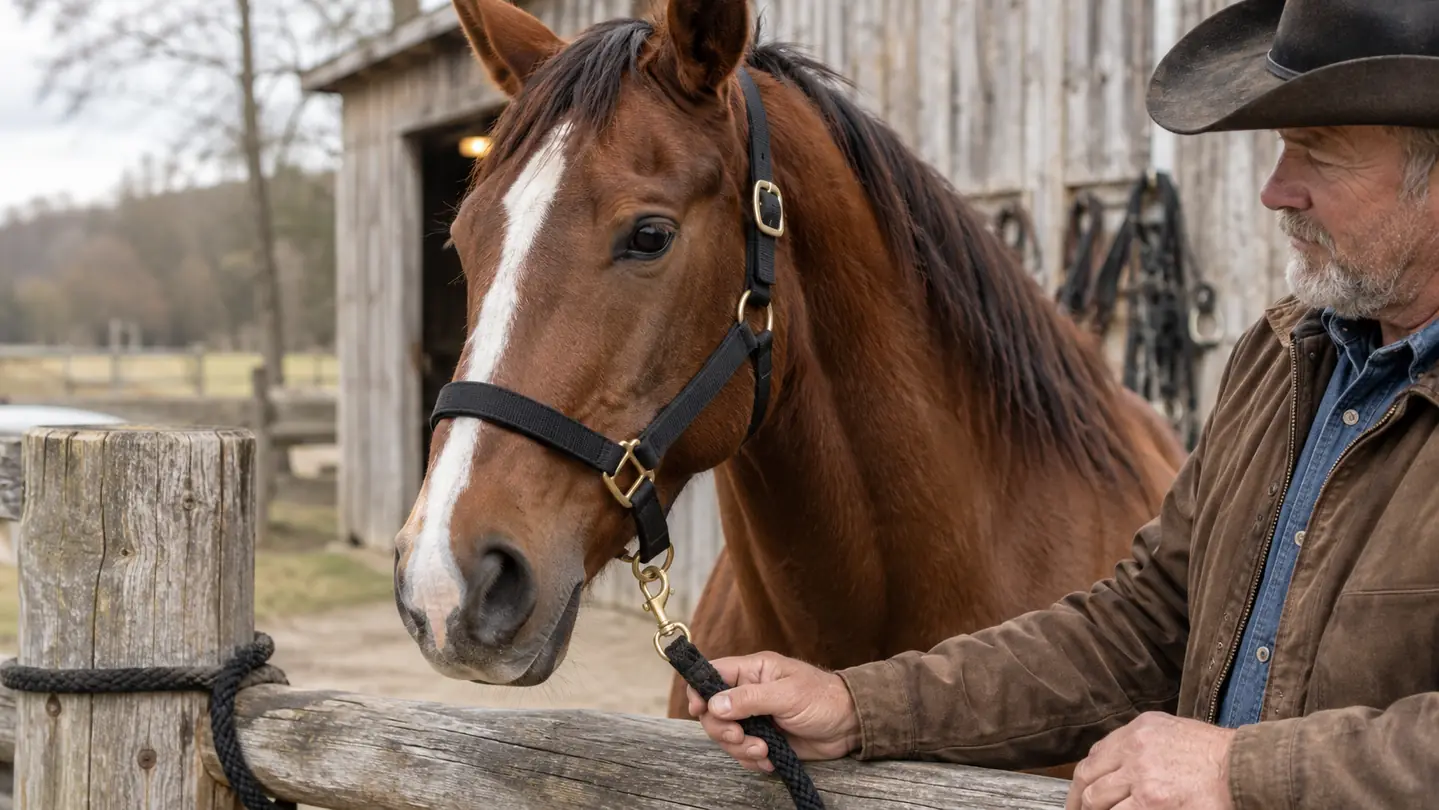
The Weaver Equine liner is a soft PVC-coated foam rubber, and that coating does more than I expected it to. Bare foam soaks up sweat and holds it, and by August it smells like a barn no matter what you do. The coated surface just wipes clean. I run a damp rag over it most days after I hang it up, and I have not had to scrub this halter once in two years.
The change on Sarge was not dramatic, and I am not going to pretend it was. It was not a transformation. It was the absence of something. The bare line behind his ears filled back in over that first winter and has not returned. He also stopped tilting his head away when I bring the halter up toward his face, which he used to do, and which I had always chalked up to him having opinions about being caught. Maybe he did have opinions. But he does not do it anymore, and the only thing that changed was the halter.
Where padding does less than people hope: it does not turn a halter into a training tool. If a horse leans on the rope, padding will not fix the leaning. It softens contact. That is all it does, and for a horse that stands reasonably well to be handled, that is enough.
Two Years of Wisconsin Winters and Wisconsin Summers
This halter has been soaked through and hung up wet. It has sat in a barn that drops below zero in January. Nylon gets stiff in cold, and mine does, which is not a defect, it is the material. In the worst stretch of winter I bring it into the tack room overnight, not because the halter will fail but because cold webbing is miserable in bare hands at six in the morning when you are already late to feed.
Twice a year I take it down and wash it in a bucket of warm water with a little mild soap, rinse it well, and hang it to dry out of direct sun. That is the entire maintenance routine. Two years of that and it looks like a used halter, because it is one. I would rather have that than something that looks new and fits badly.
The worst of it was a wet April two springs back, when we had three days of cold rain and the low end of the barn aisle flooded. The halter spent two nights hanging in a puddle of it before I noticed. I rinsed it, hung it in the tack room where the woodstove keeps things dry, and it was back on Sarge by the next afternoon. Wet nylon left in a heap will take on a mildew smell that never quite leaves. Wet nylon hung up to dry is fine. That distinction cost me a lead rope once, so I pay attention to it now.
Every few weeks I run my thumb along the webbing where it passes through the hardware and look for fuzzing. That is where a nylon halter dies. Not in the middle of a strap, at the wear points where the nylon rubs metal. Mine has some light fuzz at the snap and nothing that worries me yet. When it does start to worry me, I will replace the halter rather than get sentimental about it.
Fitting It on a Wide-Withered Quarter Horse
Average Horse is a broad bucket, and I want to be honest about that. Sarge is 15.1 hands and about 1,100 pounds and he lands square in the middle of it. The noseband sits where it should, roughly a hand's width below the cheekbone, and there is still room left in the adjustment so I am not running it out at the end of the strap. A halter with no adjustment left is a halter that is about to rub.
The fit check I would give anybody: two fingers of slack under the noseband, and the cheek strap should not be pressing a groove into the side of the face. If the noseband has slid down toward the end of the nose, the halter is too big, and a halter that slides forward is a halter that rubs. Check it after you lead, not before. A horse will shift things around in the first fifty feet.
The other thing I check in October, before the winter coat comes in, is whether the fit has changed. Sarge will put on maybe forty pounds between November and March when he is not being ridden, and that is enough to make a noseband that sat perfect in September feel snug in February. I let the adjustment out one hole in the late fall and take it back up in the spring. The adjustment on this halter still moves easily with cold fingers, which has not been true of every halter I have owned.
On a wide, plain head like Sarge's, the padded sections are the ones taking the pressure, and the difference shows up at the cheek and over the poll. It is not a custom fit. It is a stock size that happens to land right on an average Quarter Horse, and if your horse is not average, that is the first thing to think about before you order.
What I'd Change, and What I'll Do When This One Goes
The hardware is brass plated, not solid brass, and after two years of daily thumbing the plating at the snap is thin. It has not failed and it has not seized. But if I were outfitting a horse I planned to keep into its twenties and wanted one halter to outlast me, I would be looking at solid brass or at leather and paying for it. For a barn halter that gets rained on, plated is the sensible trade.
It comes in solid colors, which is all I want in a barn tool. I am not dressing a horse for a show. The snap closure is the part I check first, because snap hardware is convenient and it is also the first thing to give out on any halter I have owned. Two years in, mine still snaps clean and holds under a lean.
When this one finally goes, I will buy the same halter in the same size. That is the least interesting sentence I can put in a review and it is also the truest one. I have a tack room shelf of things I tried once. This is not on that shelf.
One more thing I would tell a friend: buy it for the barn, not for the show ring, and buy the right size. I have watched people order Average Horse for a horse that needed something else and then blame the make. The Weaver Equine sizing runs about where you would expect on an average horse, which also means it will not run generous on a big one. Measure the nose and the cheek and call it what it is.
What I Liked
- The soft PVC-coated foam liner wipes clean with a damp rag and does not hold barn smell
- One-inch nylon webbing has gone two years of daily use without fraying or stretched adjustment holes
- The bare line behind Sarge's ears from the old flat halter filled back in over the first winter
- Adjustment range still has room left on a 15.1-hand, 1,100-pound Quarter Horse
- Dries fast after being soaked, and does not stiffen into a board once it warms up
Where It Falls Short
- Brass plated hardware has dulled and the plating is thin at the snap after two years
- Not the halter I would choose for a horse that sets back hard against the rope
- Average Horse covers a wide range, and a fine-headed horse will swim in it
- Coated foam does not breathe the way felt or leather does on a hot, sweaty day
The bare line behind his ears filled back in over the winter and has not come back. That is most of the review, really.
Who This Is For
This is for the person with one or two horses at home, or at a small boarding barn, who handles them every day and is tired of a flat webbing halter leaving a mark. If your horse is average-sized, if you lead and tie and hold for the farrier more than you ride, and if you want something you can wipe off with a rag and hang back on the hook, this fits that job exactly.
It also suits the rider who trailers out. I tie Sarge to the trailer with this halter, and the padding matters more there than it does in the aisle, because a horse that has to stand tied while you fiddle with a ramp will lean and shift and test the fit in ways he never does at home.
Who Should Skip It
If your horse sets back hard against a tied rope, skip this and talk to someone who knows your horse about a rope halter or a different approach entirely. Padded nylon is kind for a horse that stands. It is not a restraint device and it is not meant to be one. I would also skip it for a draft cross or anything with a genuinely large head, because Average Horse is not going to cover that, and I would skip it for a fine-boned horse where the noseband will sit sloppy no matter how you adjust it.
And if what you want is leather, get leather. This is a working barn halter with plated hardware and a coated foam liner, and it is built and finished like one. It has done everything I asked of it for two years, but nobody at my barn is going to mistake it for something a show handler carries. If you are weighing it against a rope halter, that is a different question with a different answer and it depends entirely on the horse.
Two years, one hook by the stall door, and no rub behind the ears
The Weaver Equine padded nylon halter in Average Horse. Wipes clean, adjusts down for a wide Quarter Horse head, and takes a soaking without turning into a board. If your horse is average-sized and stands to be handled, this is the one I would hand you.
Amazon Check Today's Price on Amazon →