You will touch a halter more times this week than you will touch your saddle, your bridle and your cinch combined. Twice a day to lead in and out. Once to tie at the trailer. Once for the farrier, once for the vet, once because Sarge stuck his head through the fence and you had to walk him back to the gate. Flat nylon does that job for years without complaint, right up until the day you take it off and see the hair rubbed thin behind his ears. That is exactly where I was in the fall of 2024, with a 16-year-old Quarter Horse gelding and a feed-store halter that had stopped being kind.
Sarge is 15.1 hands and about 1,100 pounds, with a wide wither and a thick throatlatch, so halters either fit him on the last hole or they do not fit him at all. I bought the Weaver Equine padded nylon halter in size Average Horse that fall, and it has been on and off him every single day since. Two years now. It hangs on a hook outside his stall between uses, and I never leave it on him in the pasture or in the stall, which is a safety habit and not a knock on the halter. Here is what two years of daily handling taught me, ordered by how much it actually mattered.
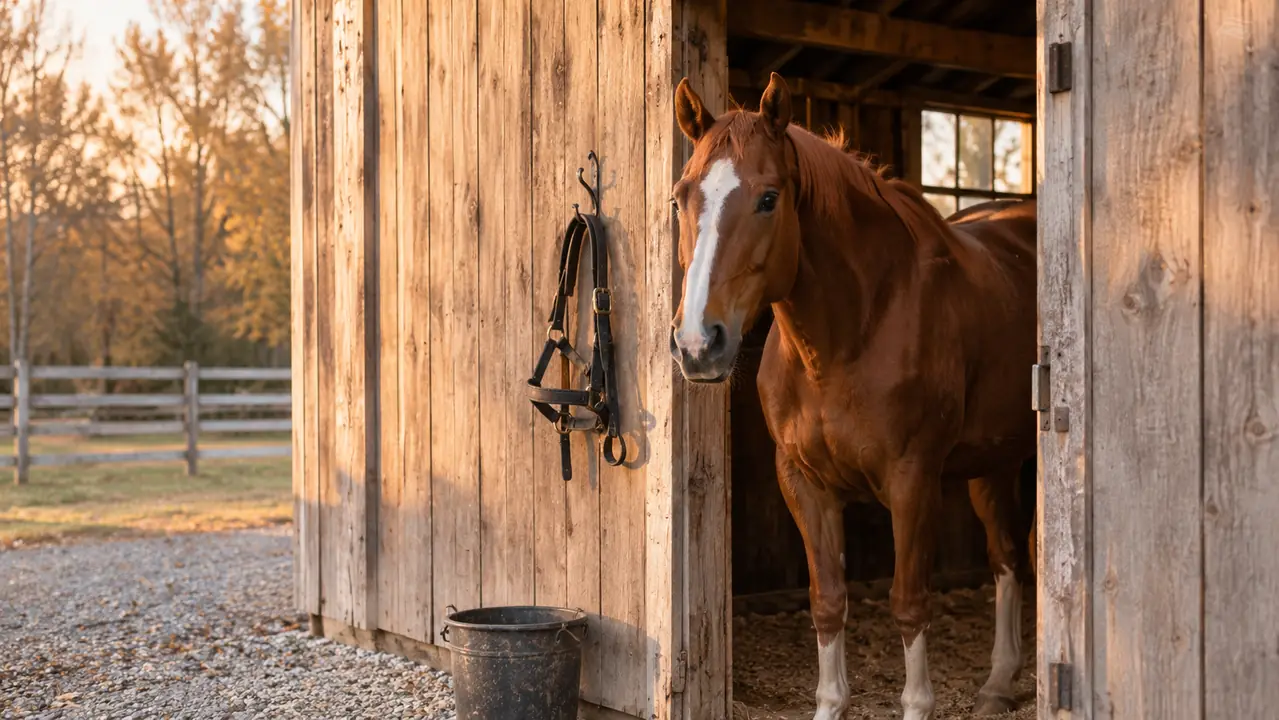
The halter on the hook outside the stall, two years running
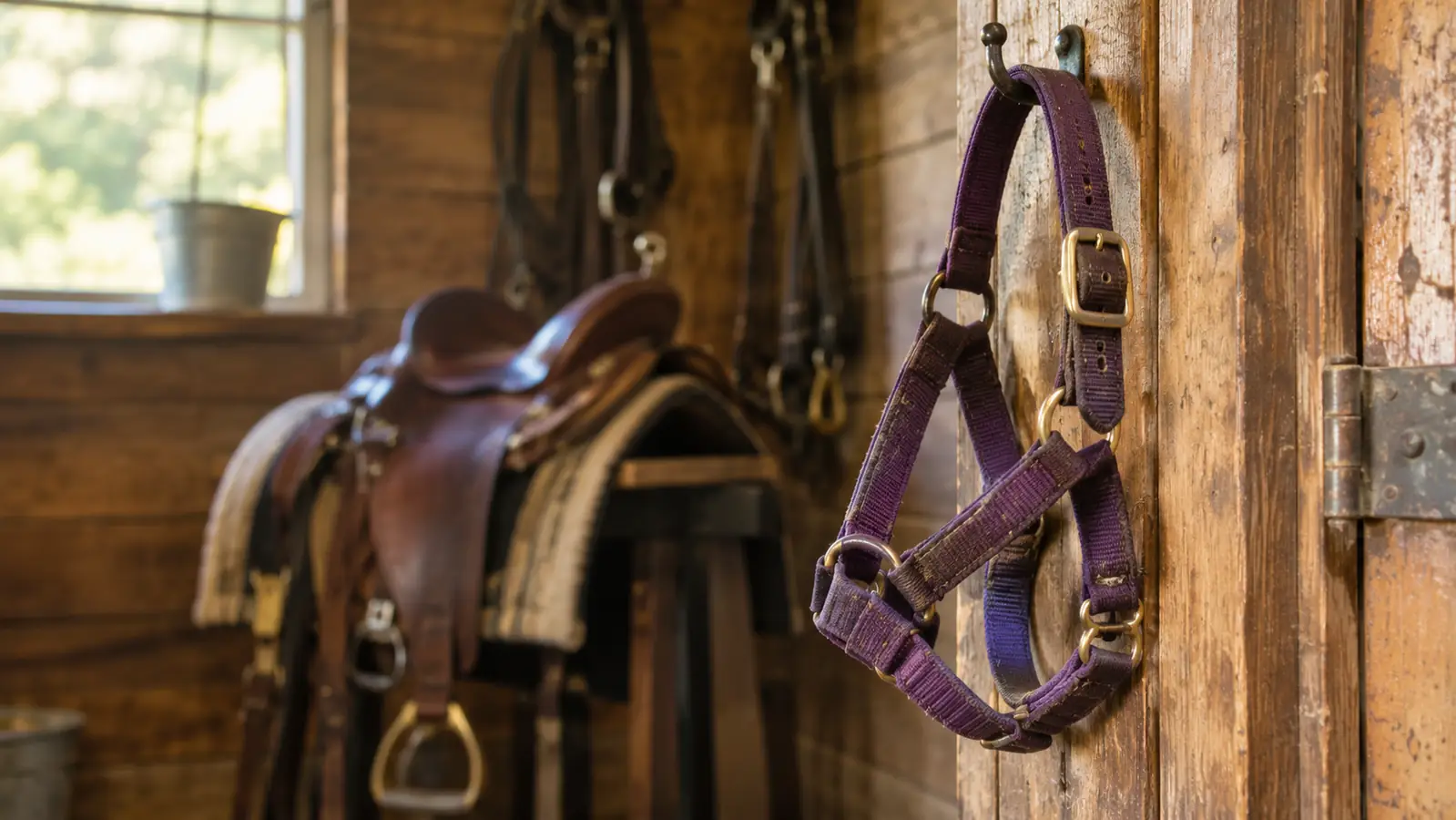
Size Average Horse, one inch nylon, a PVC-coated foam rubber liner and brass plated hardware. This is the Weaver halter I reach for every morning.
Amazon Check Today's Price on Amazon →The liner spreads pressure over a band instead of a line
Flat nylon webbing, one inch wide, puts the whole load of a pull on a strip about as wide as your thumb. That is fine for a horse standing still and less fine for one that plants his feet at the gate. This Weaver halter carries a soft PVC-coated foam rubber liner under the nylon, so the same pull lands on a wider, softer band. I noticed it in the first week, not because Sarge said anything, but because the crease behind his ears after a two-hour trailer ride was gone. The hair grew back and stayed.
Adjustable enough to fit a wide-withered Quarter Horse
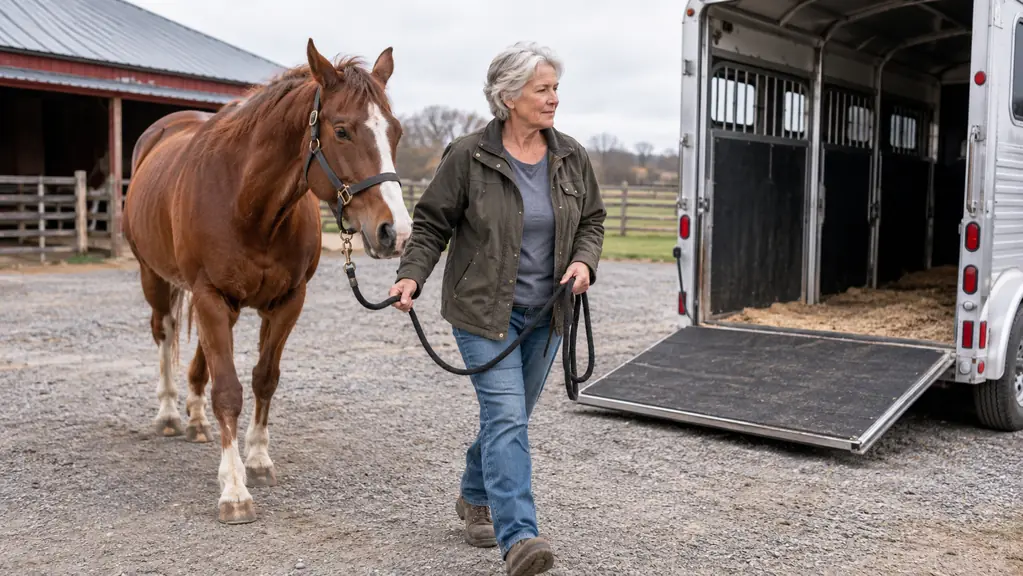
I adjusted it once when it arrived and once the following spring, when Sarge came back into work and his neck changed shape the way it does every year. The listing calls this an average horse size and names Quarter Horse, Thoroughbred and Warmblood as the fit, which matched what I saw. It is adjustable at the usual points and nothing has crept loose over weeks of use. Measure your own horse before you order, though. Average covers a lot of ground, and a wide-withered horse sits near the top of it.
One snap, one hand, at the trailer door
Some mornings I am holding a hay bale, a lead rope and a coffee at the same time. The snap closure on this halter is the reason I can do that and still get it fastened. One hand, one motion, no threading a strap through a buckle while the horse walks through the gap. The brass plated hardware has not stiffened up on me in two winters, which is more than I can say for the halter it replaced.
Two years of farrier visits without a rub behind the ears
The farrier comes every six to eight weeks. That is roughly sixteen visits a year, each one with the halter going on and off while Sarge stands on three legs. Add the vet, the trailer, the tying at the hitch and the leading in from the pasture twice a day. Behind the ears is where a halter rubs first, and it is the first place I check. Two years in, the hair there is intact and the skin is not thickened. That is the whole review, honestly.
Nylon does not stretch when it gets rained on
Leave a halter hanging on a fence post through a Wisconsin October and you find out what it is made of. Nylon comes back to the same length. Cotton web will not. I hose this one off when it gets muddy, hang it on the hook, and it is dry by morning and the same size it was the day before. Nothing has stretched, nothing has gone soft at the buckle end, and I have not had to punch an extra hole in anything.
The PVC-coated liner wipes clean instead of matting
Fleece liners feel kind in the store and then collect burrs, bedding and mud until they mat into a hard pad, which is worse than no padding at all. The liner here is foam rubber under a PVC coating, so mud comes off with a wet rag and it has never balled up. In two years it has not cracked or separated from the nylon underneath. That is the part I expected to fail first, and it has not.
It will not fix a bad fit, and that is worth knowing
A padded halter buys tolerance. It does not buy a correct fit. If the crown sits too low or the noseband slides down toward the muzzle, padding just makes the wrong thing softer for a while. I check Sarge's fit every few months, two fingers at the nose and room behind the ears, and I re-adjust when he changes shape through the season. Two years of a halter that fits has been worth more to him than any amount of padding on one that does not.
Brass plated hardware that still opens in the cold
Cheap pot metal hardware gets stiff and gritty, and eventually it gets sharp. The brass plated hardware on this Weaver halter has stayed smooth through two winters of frozen mud and one summer of horse sweat. The snap still works with gloves on. That sounds like a small thing until you have stood in a barn at six in the morning in February trying to talk a frozen fastener into moving with numb fingers.
Two winters in and I have not bought a second halter
I used to replace a cheap halter about every eighteen months, usually because a rub had started or a buckle had gone rough against the cheek. I have not bought a second one since the fall of 2024. That is the honest arithmetic on this: one halter, two years, still the one on the hook. You can look up today's price and run the same numbers yourself. When the Weaver finally does wear out, I will buy the same one.
It is the piece of tack with the most contact hours
Count it up. The saddle gets three rides a week from April to November, and then it sits. The halter gets handled every single day of the year, twice, plus every trip, every farrier visit, every time I need to move him from one pen to another. Whatever you put into a halter gets divided across more hours of use than anything else in the tack room. Getting the padding and the fit right on that one piece is the most comfort per dollar you can give a horse.
What I'd Skip
I would skip a fleece-lined halter for a horse that lives outside. It looks softer in the store and it turns into a burr magnet by the second week. I would skip ordering an average size without measuring, because average covers a wide spread of horses and Sarge sits right at the top of it. And I would skip the idea that padding is a cure for a halter that rides too low, because it hides the fit problem instead of solving it. Fix the fit first, then enjoy the padding.
One more thing I would skip: leaving any halter on a horse turned out. Sarge's comes off the minute he goes back to the pasture. That is not about this halter, it is about a noseband catching on a fence post, and I have seen what that looks like. A halter is for leading, tying and handling. This one does all three, and it hangs on the hook outside his stall the rest of the time.
Two years of daily on and off, sixteen farrier visits a year, and the hair behind his ears has grown back and stayed that way.
Two years is not a lifetime, and I will say so plainly if the liner cracks or the snap goes rough. For now this is the Weaver halter on the hook outside Sarge's stall, and most mornings I do not think about it at all, which is the highest thing I can say about a piece of daily tack.
If your horse has a thin patch behind the ears, start here
Size Average Horse, one inch nylon, padded liner, snap closure. Measure your horse, check the fit range, and give the daily piece the attention it earns.
Amazon Check Today's Price on Amazon →