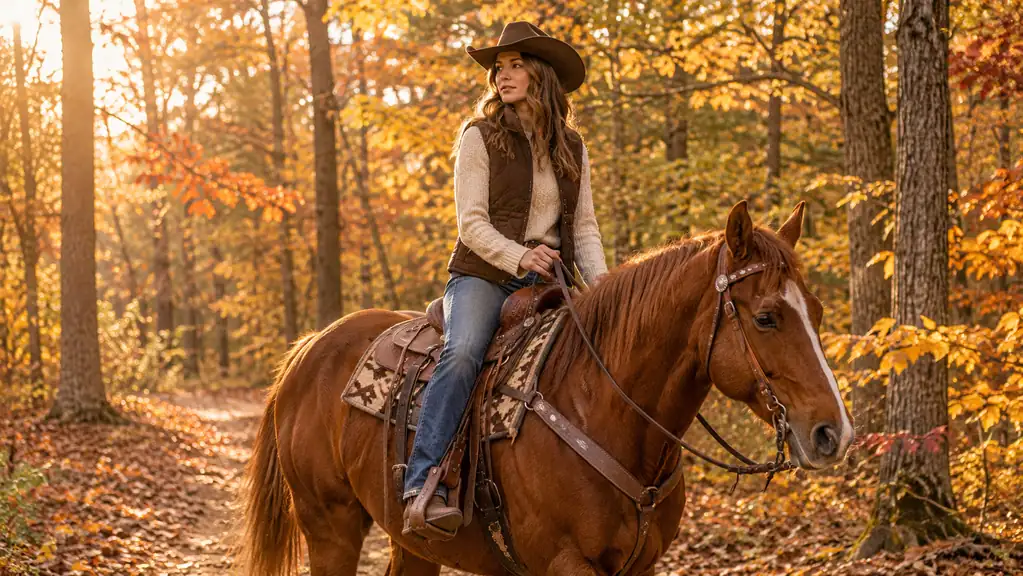
My hips used to decide when a trail ride ended. Not Sarge. He is a 16-year-old bay Quarter Horse gelding, 15.1 hands and about 1,100 pounds, with wide withers that make saddle fit a real job. I am Corinne Tollefson, 61, a retired school bus dispatcher on eleven acres outside Viroqua, Wisconsin. I ride trail and pleasure three times a week from April to November, and my longest regular loop is about four hours. By hour three on the Kickapoo Valley Reserve, my seat bones and low back used to be the loudest thing in the saddle. I bought the Weaver Equine gel seat pad in spring 2025 for that ache. I have used it for about 18 months. A barn friend also lent me her sheepskin seat saver for a month one January so I could compare the two.
Here is the short answer. If your saddle fits your horse and the problem is your own hip or tailbone ache on a long ride, the Weaver Equine gel seat pad is the one I would put on first. It is a seat pad, not an under-saddle pad. It straps across the top of the saddle seat, under you, and never touches the horse. If your problem is a cold, hard seat on a winter morning and you want softness and warmth, a sheepskin seat saver does that better. Neither one fixes saddle fit. Neither one is a medical device. I will say that plainly more than once.
| Weaver Equine Gel Seat Pad | Sheepskin Seat Saver | |
|---|---|---|
| What it is | A gel seat pad that straps across the saddle seat, under the rider. | A wool pile cover that lays over the saddle seat, under the rider. |
| Where it sits | On top of the saddle seat. It never touches the horse. | On top of the saddle seat. It never touches the horse. |
| Rider pressure relief | Shock absorbing gel insert spreads rider weight and takes the edge off pressure points. | Soft pile cushions the surface, then compresses under a rider. |
| Saddle fit | No effect. It does not change the saddle's fit or protect the horse's back. | No effect on fit either. It is not an under-saddle pad. |
| Hot weather | Mesh cover and heat resistant materials are made to reduce heat buildup. | Wool pile can feel warm in summer. |
| Cold weather | Gel and mesh do not warm the seat. | Wool feels warm on a cold morning. |
| Security on the saddle | Strap closure holds it on the seat when you mount and dismount. | Most tie or strap on, but fit varies and a loose cover can shift. |
| Bulk under the rider | 13 by 24 inches, half an inch thick, 2 pounds. It adds very little height. | Pile adds softness and some height, which can change how deep the seat feels. |
| Cleaning | Wipe the mesh cover and strap. No brushing or air drying routine. | Brush out dirt and air dry. Wool takes more care. |
| Fit range | Made for 15, 16, and 17 inch western seats. | Cuts vary by maker, so fit varies. |
| Surface feel | Firm gel under mesh. You still feel the saddle. | Soft and fuzzy against the seat. |
| Best for | Riders with hip or tailbone ache on long trail rides. | Riders who want warmth and softness and will do the upkeep. |
Where Weaver Equine Wins
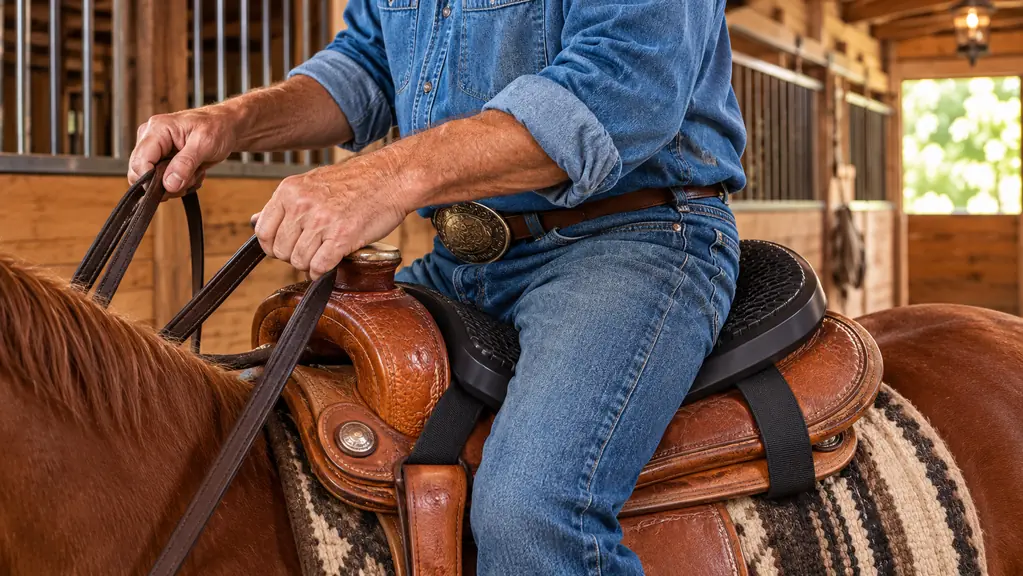
The Weaver Equine pad wins on the thing I bought it for: pressure under my own seat bones. The gel insert is shock absorbing and it spreads rider weight instead of letting it sit in two spots. The pad is 13 by 24 inches, half an inch thick, and 2 pounds. It is made for 15, 16, and 17 inch western seats, which covers the secondhand trail saddle I have ridden for about 12 years. I notice the difference most at hour three. Before the pad, I was shifting my weight and standing in the stirrups to get off my tailbone. With the pad, I still feel the saddle, but the sharp ache is gone. That is a small thing to read and a large thing to ride. Before I bought it I tried the free version first: a wool blanket folded double under my seat. It slid, it bunched, and by the second ride I had a lump the size of a fist under my right seat bone. A folded bath towel was next. Same result, and it looked ridiculous when I stepped off at the trailhead. A gel seat pad is not clever. It just does not move.
It also stays put. The strap closure holds it across the seat when I mount from the ground, which I do more than I should at 61. The first time I strapped it on I set it too far back and it pushed me up against the cantle, so I slid it forward about an inch and that fixed it. Now I set it, tighten the strap, and press down on it with both hands before I swing up. That takes ten seconds and I do it every time, because a seat pad that creeps is worse than no pad at all. The mesh cover wipes clean with a damp cloth. I do not have to brush it, air it out, or wait for wool to dry. After a ride I pull the saddle, wipe the pad, and hang the saddle on the rack in the tack room. The pad lives on the saddle between rides. That low profile matters to me. It adds half an inch, not a pillow. If you want a cloud under your seat, this is not that.
The gel pad did not make my saddle softer. It made hour three feel like hour one, and that was the point.
Where the Sheepskin Seat Saver Wins
The sheepskin seat saver wins on softness and cold weather. The month I borrowed one was January, and the first thing I noticed was a warm seat under me instead of cold leather. The morning I first rode with it the air was 19 degrees and the leather on my saddle was stiff as a board. The sheepskin went on over the seat and it was warm the second I sat down. That is a real thing and I will not pretend otherwise. The saver my friend lent me ran a little long for my 16 inch seat, so I tucked the tail end forward under the cantle. The ride was about ninety minutes on the county trails. I was comfortable the whole way. Wool pile has a way of taking the sting out of a frosty morning. The gel is firm. The sheepskin is fuzzy and forgiving. On a long ride, though, I noticed the pile flatten under my seat bones by hour three. It was still soft, but it was not supporting me the way the gel did.
The sheepskin also wins on tradition and on the feel of a deeper seat. It adds some height and changes how the saddle sits under you. Some riders like that. I found it made my saddle feel a little narrower and deeper, which was fine for a two-hour ride and less fine on a four-hour loop where I wanted to move around. Cleaning it took more of my evening than I expected. I brushed it out with a curry comb, laid it flat on a hay bale in the barn aisle, and left it there overnight. Tick sniffed it twice and lost interest. With the gel pad I wipe and hang it, and that is the whole routine. In July, I would not want wool at all. It is warm by design, and warm is not what I want in summer. The sheepskin is a good piece of gear. It is just not the piece I would choose for my own ache on a long trail ride.
If your seat bones quit before your horse does, start here
The Weaver Equine gel seat pad straps across a 15, 16, or 17 inch western saddle seat and puts a shock absorbing gel layer under the rider. It will not fix saddle fit and it never touches the horse. It is the first thing I would try for rider ache on a long trail ride.
Amazon Check Today's Price on Amazon →What Neither Pad Does
Neither pad fixes saddle fit. I want that plain for anyone with a wide horse. Sarge has wide withers, and my secondhand Western trail saddle has full Quarter Horse bars. It fits him well enough that I have not had a sore back issue, but I still had a saddle fitter look at it. If your horse flinches at saddling, has white hairs under the saddle, or gets back sore after rides, call a vet or a saddle fitter. A gel seat pad under the rider will not help. A sheepskin seat saver under the rider will not help either. They are not under-saddle pads. They do not change the tree, the bars, or the panel contact. Sarge had a rub behind his left elbow from an old string cinch a while back. It healed over about three weeks of rest and a change of cinch, and it has not come back. That was a gear problem with a gear fix. A seat pad under me would have done nothing for it.
The Weaver Equine listing title mentions spine protection, and I understand why that confuses people. This is a seat pad. It sits on top of the saddle seat, under the rider. It does not touch the horse's back or his spine. The sheepskin seat saver is the same. It is under you, not under the saddle. If you want to cushion the horse, you need an under-saddle pad that is designed for that, and you need a saddle that fits. I am not a trainer, a farrier, or a vet. I am a retired school bus dispatcher who rides one horse and pays attention to what works on him.
Neither pad is a medical device for the rider, either. I have had good luck with the gel pad for the ache I get after two or more hours in the saddle. That is my experience, not a promise. If your hips or back hurt all the time, or if the pain is sharp, see your doctor. If your horse is sore, see your vet. Gear is gear. It can make a long ride more comfortable, and that is worth something. It cannot diagnose anything.
How I Compared Them
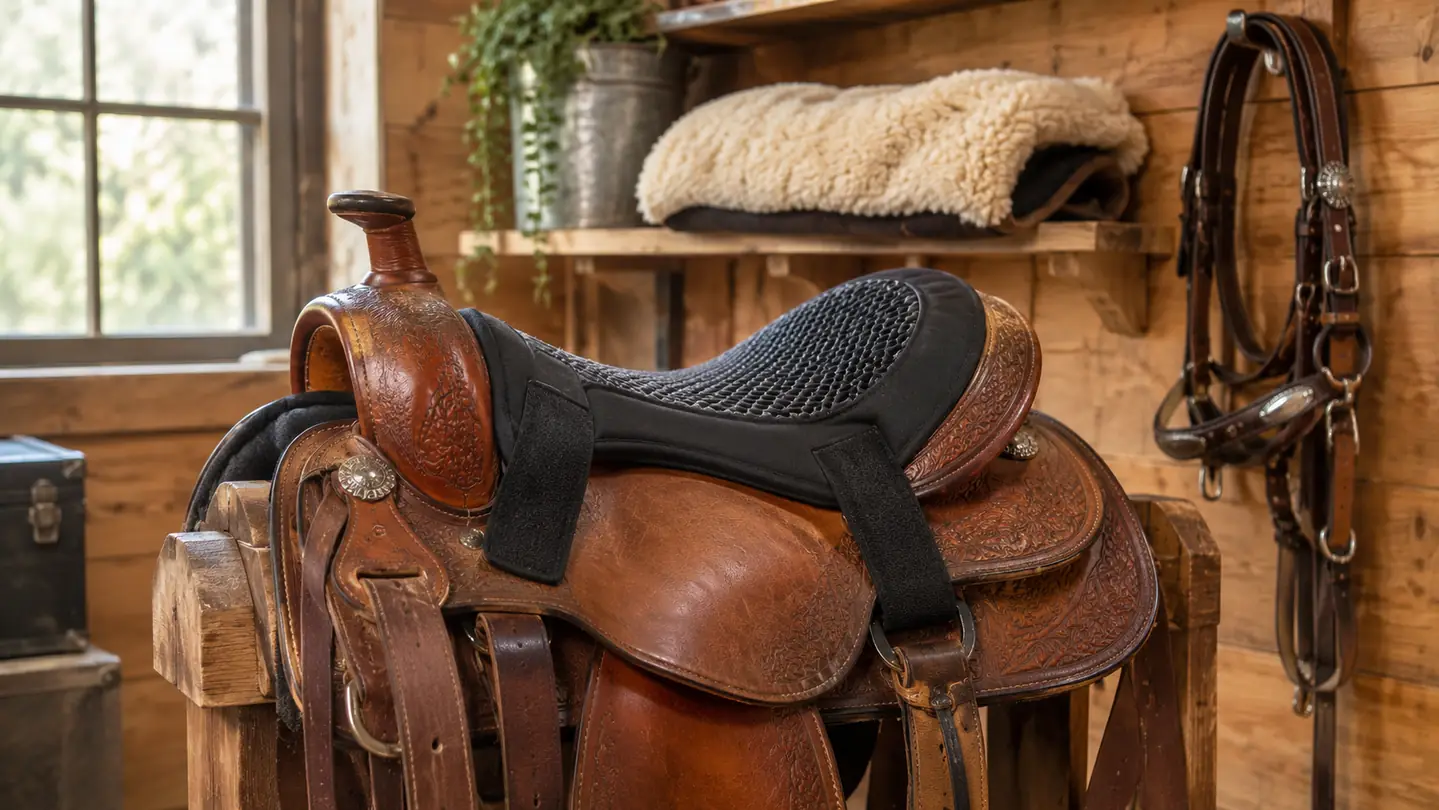
I compared them the only way I could: same horse, same saddle, same trails. I rode the Weaver Equine gel pad for about 18 months, from spring 2025 through this fall. I rode the borrowed sheepskin seat saver for a month in January. I used the same four-hour loop on the Kickapoo Valley Reserve and the same shorter county trails. I measured my own seat at 16 inches before I bought the gel pad, which sits inside the 15, 16, and 17 inch range it is made for. If you ride a 14 inch seat or a draft horse tree, measure yours first, because the pad is built for the three sizes the listing names and nothing else. I did not run a lab test. I did not put a pressure mat under my seat. I paid attention to when I started shifting, when I stood in the stirrups, and whether the pad moved when I mounted.
I also paid attention to care. The gel pad gets wiped with a damp cloth. The sheepskin gets brushed and air dried. I paid attention to heat, because I ride in Wisconsin summer and I do not want a pad that makes me sweat more. I paid attention to bulk, because I like to feel the saddle under me. The gel pad is 2 pounds and half an inch thick. The sheepskin was lighter in my hand but thicker under my seat. That is not a spec sheet. It is what I noticed.
Who Should Buy Which
Buy the Weaver Equine gel seat pad if your saddle fits your horse and your complaint is under your own seat. It suits a rider who does long trail rides, wants a low profile, does not want a care routine, and rides a 15, 16, or 17 inch western seat. It is the one I would buy again. It is also the one I would hand to a friend who says her tailbone is sore at hour three. I would tell her to check the strap before every ride and to give it a few weeks. The first week feels firm, almost like nothing is there. The difference shows up over a long ride, not in the tack room. I noticed less ache inside the first month, and by the end of that first summer I had stopped thinking about my seat entirely, which is the best thing I can say about a piece of tack.
Buy the sheepskin seat saver if you want warmth and softness and you do not mind the upkeep. It suits a cold-weather rider, a shorter ride, or someone who likes the traditional look. It is also a good choice if you want to take the chill off a leather seat without adding a firm layer. I would not choose it for a hot summer trail or for a four-hour ride where I need support. If you are on the fence, start with the gel pad. It is the one that changed my long rides. The sheepskin is the one I enjoyed for a month and gave back.
Ride the four-hour loop without paying for it the next day
I still use the Weaver Equine gel seat pad on every ride over two hours. It straps to the saddle seat, fits 15, 16, and 17 inch western seats, and wipes clean. If your saddle fits your horse and your own seat is the problem, this is the pad I would buy again.
Amazon See Today's Price on Amazon →