The first time it got my attention was not on the trail. It was in the parking lot after. Four hours on the Kickapoo Valley Reserve, one swing down out of the saddle, and I stood with a hand on the truck bed waiting for my hips to unlock.
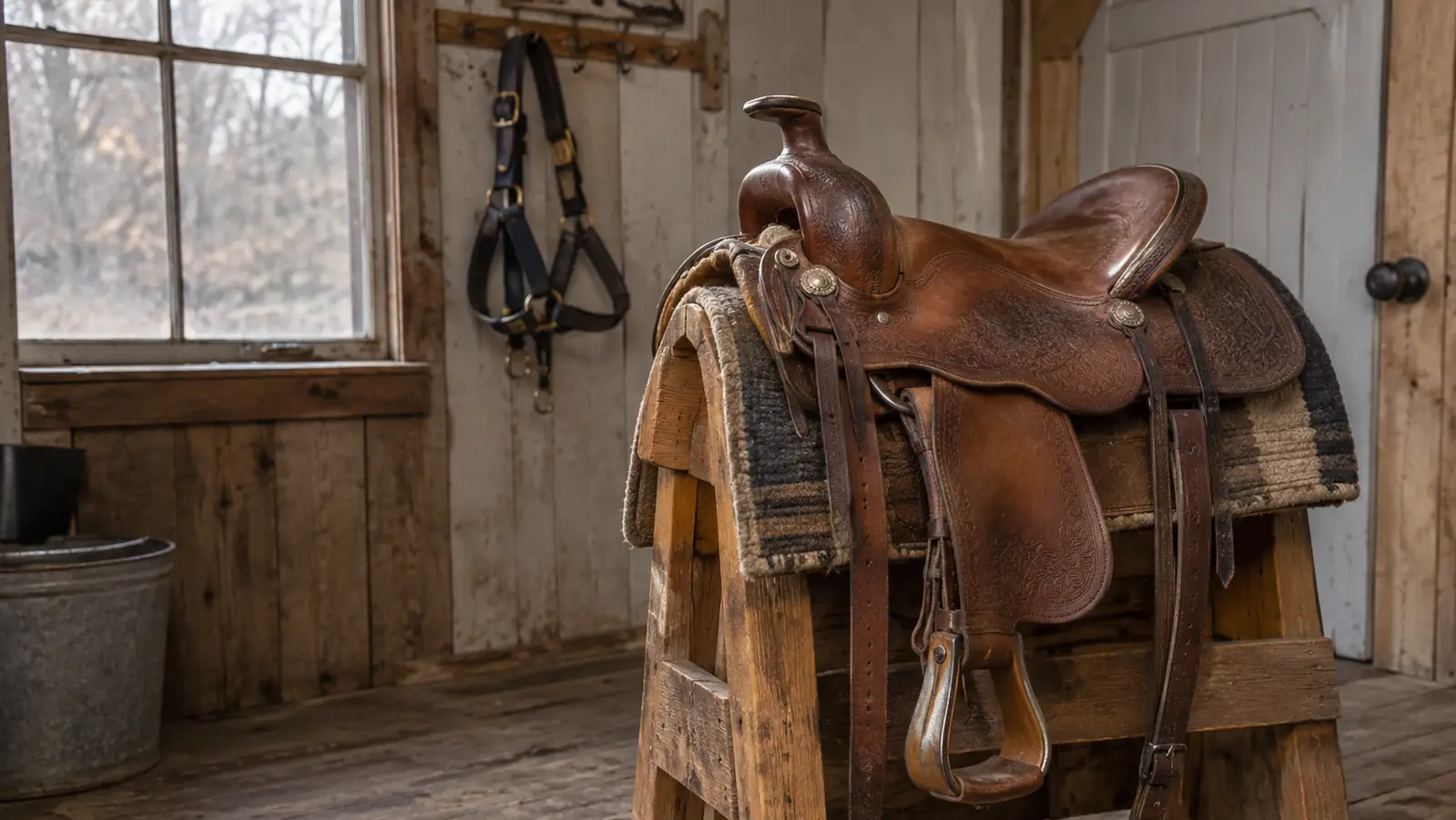
I am 61 and I have ridden trail and pleasure for over thirty years. I am not a trainer and I do not compete. My horse is Sarge, a 16-year-old bay Quarter Horse gelding, 15.1 hands and about 1,100 pounds, with withers wide enough that finding a saddle took two tries. The saddle I ended up with is a secondhand Western trail saddle with full Quarter Horse bars, bought used about twelve years ago, and the leather has gone dark with age.
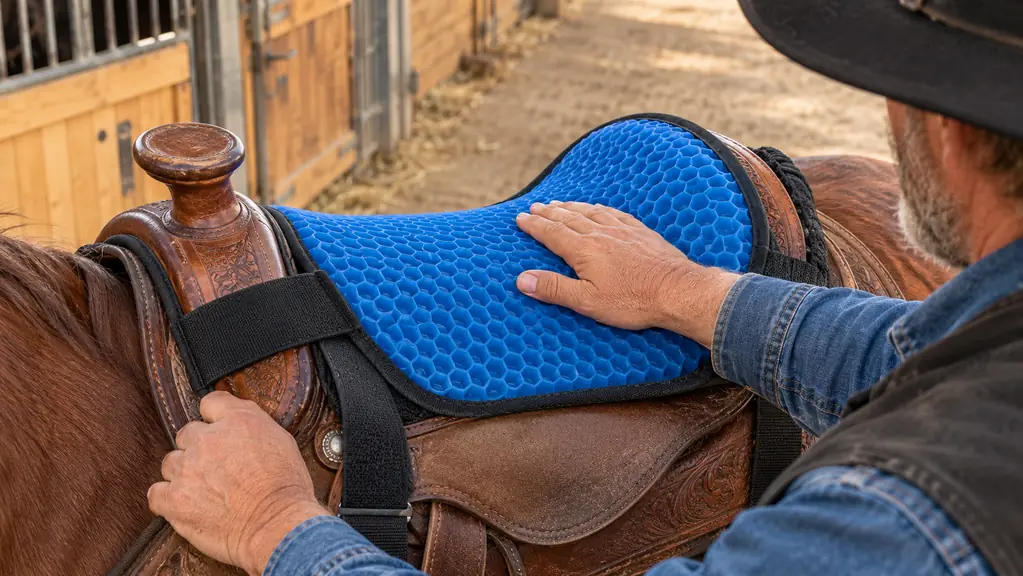
For a while I blamed the saddle. Then a friend asked the question that sorted it out. Is the saddle hurting you, or is the saddle hurting the horse? Those are two different problems, and mine was me. What fixed it was a Weaver Equine mesh gel seat pad, strapped across the seat, and it has been there for about eighteen months.
I want to be plain about what it is, because a lot of listings blur the line. This is a seat pad. It straps across the top of the saddle seat and I sit on it. Sarge never touches it. It does nothing for his back, nothing for saddle fit, and nothing for a horse that is sore underneath a saddle. I bought it in spring 2025 for my own hips and tailbone on rides over two hours, and that is the only job it has ever been asked to do.
It measures 13 inches wide, 24 inches long and half an inch thick, and it weighs about two pounds, so carrying it out to the barn is nothing. The cover is mesh over the gel with a strap closure, and it is sized for 15, 16 and 17 inch western seats. Mine is a 16 and it sits inside the seat without hanging over the cantle. The change I noticed came inside the first month. Not a cure. Less ache at the end of a long ride, and a shorter walk back to the truck.
It did nothing for my horse. That was the whole point. The part of the partnership that was hurting was me.
If your hips give out before your horse does
Half an inch of gel, 13 by 24 inches, sized for 15 to 17 inch western seats. It straps on and comes off in seconds, and it lives on the saddle between rides.
Amazon Check Today's Price on Amazon →What surprised me is how little it changed the feel of the ride. I expected something tall and vague, like sitting on a cushion. Half an inch is not that. It took me two rides to stop noticing it, and the seat under me still feels like my saddle. What changed was the end of the day, not the middle of it.
The mesh cover matters more than I expected in July and August. Gel gets warm in the sun, and the mesh is there to keep air moving. I have not had an afternoon where I wanted to peel the pad off and ride without it.

What it does not do is worth saying too. If your saddle is broken down and hard, this softens the top of it but it does not rebuild it. If your hips need a different saddle altogether, half an inch of gel will not cover for that. And if your horse is the one who is sore, this pad is not part of that conversation. Sarge had a rub behind his left elbow a while back, and that was a cinch problem, fixed with a different cinch and about three weeks of rest. A seat pad would not have touched it.
Care is about as simple as it gets. The Weaver Equine pad lives on the saddle on the rack in the tack room. I wipe it down when I clean the leather, roughly once a month in riding season, and I have not had to do anything else to it. Eighteen months in, the strap still holds and the cover has not cracked.
I still ride about three times a week from April into November, and my longest regular ride is around four hours. That is the same as before. The difference is what I do afterward. Before, I was done for the evening. Now I can untack, hose the sweat off, and put things away without stopping to lean on something.
What I'd Tell You If We Were Sitting at My Kitchen Table
First, figure out which one of you is sore. Stand next to your horse after a long ride and be honest about it. If it is you, and the saddle otherwise fits, a seat pad is a cheap thing to try before you spend real money on a new saddle. If it is the horse, put the seat pad down and call a saddle fitter or your vet. This is not that kind of fix and I would not want you to think it was.
Second, measure your seat before you order, and read the sizing rather than guessing. It is built for 15, 16 and 17 inch western seats, and a pad that hangs over the cantle or bunches at the horn is worse than no pad at all. Third, give it a month. My first two rides felt strange and the third one did not, and if I had judged it in the barn aisle on day one I would have sent it back for no good reason.
And I would tell you that nobody at Weaver Equine knows my name. I am a retired school bus dispatcher with one horse and a two-stall pole barn outside Viroqua, Wisconsin, and I paid for this pad myself because four hour rides had stopped being fun. It is still on the saddle. That is the best recommendation I know how to give.
The first thing I would try again before saddle shopping
A gel seat pad for the rider, sized for 15 to 17 inch western seats, strap closure, mesh cover, about two pounds. If you are the one getting sore, start here.
Amazon Check Today's Price on Amazon →