A halter that fits wrong never says so. It shows up three weeks later as a thin bare patch under the cheekbone, or a horse who has started throwing his head up when he sees the halter come off the hook, or a crownpiece that has stretched because it was cranked down over the ears instead of sitting behind them. I have had all three on Sarge, and every one of them came back to the same bad habit. I moved buckles until the halter looked about right instead of measuring anything.
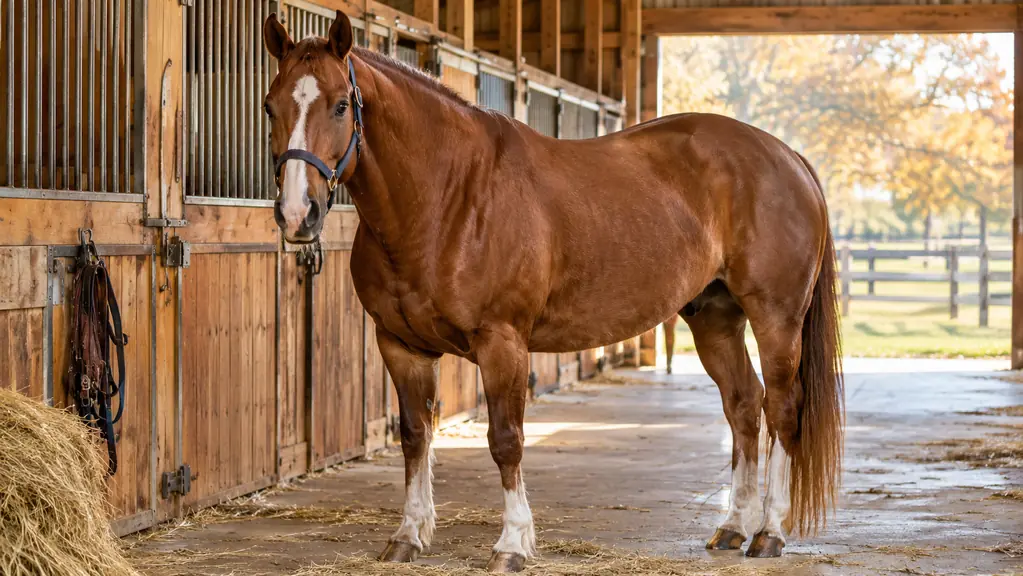
What I know now, after two years of paying attention instead of guessing: Sarge is a 16-year-old bay Quarter Horse gelding, 15.1 hands and about 1,100 pounds, and the halter on the hook outside his stall is the Weaver Equine padded nylon halter in the 1 inch Average Horse size. I bought it in the fall of 2024 and it has been on and off him every day since, for leading out to the yard, for tying at the trailer, and for holding him still for the farrier. It is well made. The nylon webbing has not frayed, the brass plated hardware has not rusted, and the PVC-coated foam rubber liner under the nose and over the poll still has its shape. But a good halter fitted badly is still fitted badly, and the fit is the part I control.
Here is the order I do it in now, every time I fit a halter to a horse I have not fitted before, and once a season on my own.
Two fingers under the noseband is the whole test
The Weaver Equine padded nylon halter in 1 inch Average Horse, adjustable, with a PVC-coated foam rubber liner and brass plated hardware. Two years of daily use on a 1,100 pound gelding and the webbing has not frayed.
Amazon Check Today's Price on Amazon →Step 1: Measure the Head Before You Touch a Buckle
You cannot adjust a halter to a horse you have not measured. I stand on the near side with a soft cloth tape, or a length of baling twine I can lay against a steel tape afterward, and I take three numbers. Nose circumference, measured at the spot where I want the noseband to sit, which is about two fingers below the point of the cheekbone. The distance from that spot up over the poll and down the other side. And the distance from behind the ears down the side of the face to where the noseband meets it.
Write them down. I keep a stub of pencil and a scrap of paper on the tack room shelf for exactly this, because I have measured Sarge three times and remembered the number wrong twice. If the horse will not stand still, have someone hold a bucket of feed or hand him a cookie and work quickly. The nose measurement is the one that matters most and the one that is easiest to take badly, because a horse's head is not a cylinder.
For Sarge, the head is broad across the forehead and narrow at the muzzle, which is a common Quarter Horse shape and a nuisance for halter fitting. A halter hung to fit one of those numbers sits loose on the other. That is why the Average Horse size works on him without drama but not without adjustment: the size gets me into the neighborhood and the cheek pieces do the rest. The Weaver Equine halter is listed for average-sized breeds like Quarter Horses, Thoroughbreds and Warmbloods, and at 1,100 pounds Sarge sits in that range. A draft cross or a pony does not, and forcing the size is how rubs start.
If you already own the halter, measure the halter too. Lay it flat and run the tape along the noseband end to end, then along the crownpiece. Knowing what the halter is before it goes on a horse saves you from chasing an adjustment that is not there.
Step 2: Set the Noseband Height First, Not Last
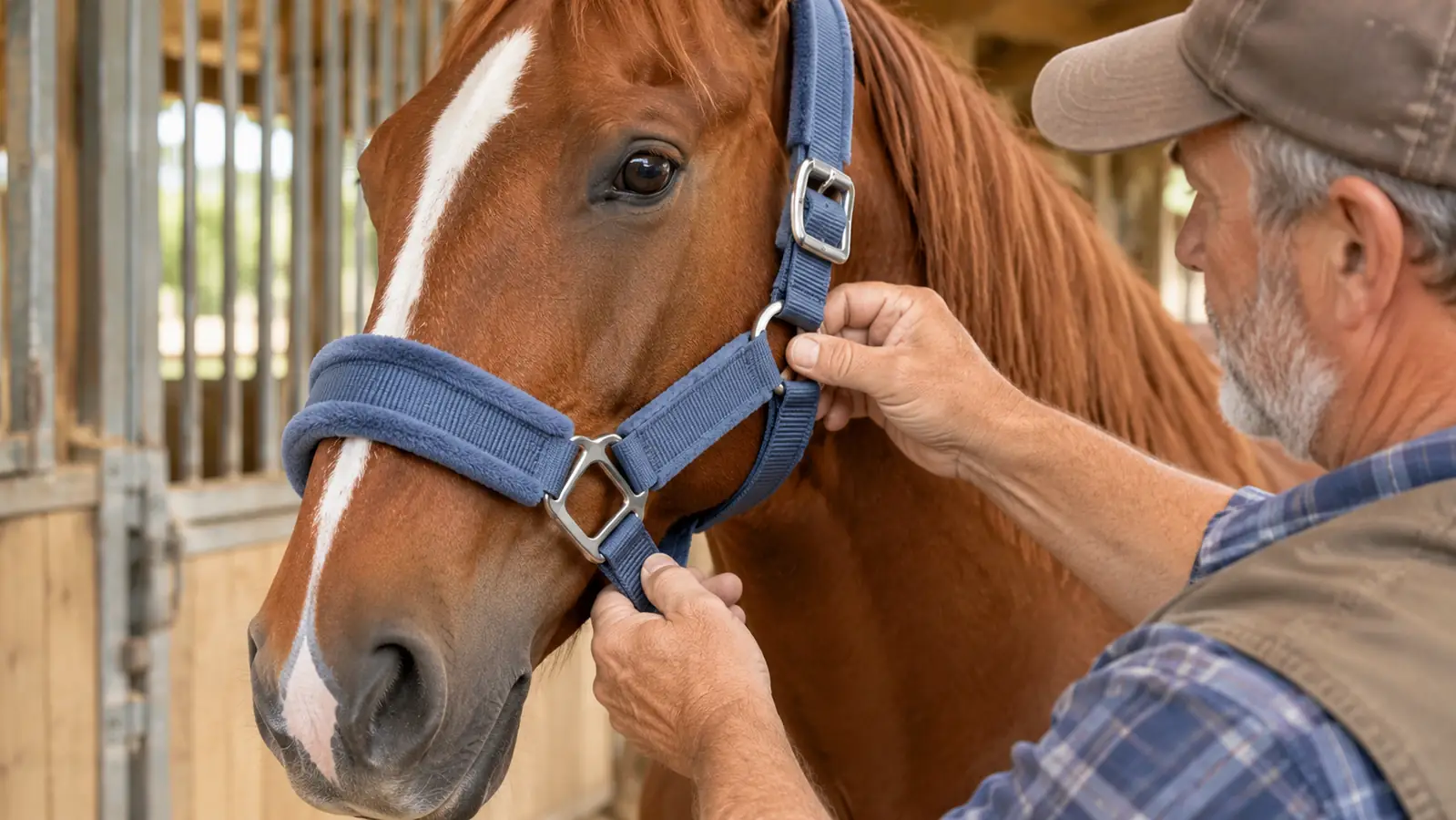
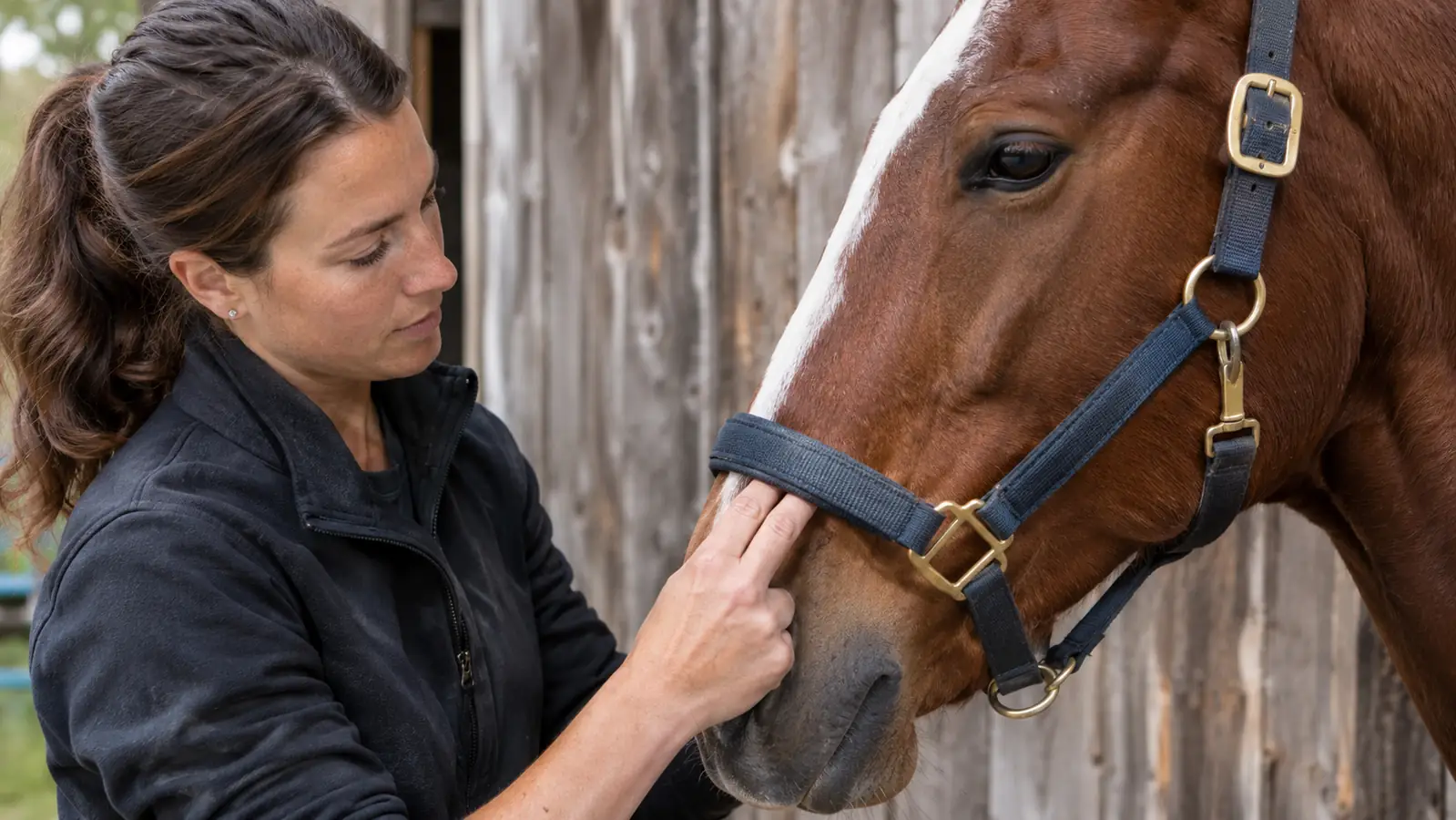
The noseband causes more trouble than any other piece on a halter, and it is the one most people adjust last. It belongs on the flat of the nasal bone, roughly two fingers below the point of the cheekbone and well clear of the nostrils. Set it lower and it settles onto the soft cartilage at the end of the nose, which is the last place a horse wants steady pressure.
I learned this the slow way. A couple of winters back, Sarge's noseband was sitting lower than it should have been, and by February there was a bare patch of hair under his left cheekbone about the size of my thumb. Nothing else about the halter had changed. The noseband had crept down, or I had moved it down while moving something else, and I did not catch it because the halter looked fine from the barn door.
Set the noseband with the halter on the horse, then bring the cheek pieces to it on both sides. When you are done, stand in front of the horse and look at the two sides against each other. Uneven cheek pieces pull the whole halter around to one side, and a halter that lists is a halter that rubs. I compare left against right on Sarge about once a month, because a buckle that creeps a hole on one side will not announce itself.
Step 3: Sit the Crownpiece Behind the Ears, Not Over Them
The crownpiece goes behind the ears and over the poll. It should not press on the base of the ears, and it should not sit so far back that it slides down the neck when the horse lowers his head to graze or to drink. Those two failures look different and both of them cause trouble.
Sarge tells me before I can see it. If the crownpiece is tight or too far forward, he drops his head and rubs his ear against my shoulder while I am leading him, every single time. When it is right, he walks out.
The padding earns its keep here more than it does at the nose, in my experience. The PVC-coated foam rubber liner on the Weaver Equine halter runs under the crownpiece as well as the noseband, and it spreads the pressure over a wider strip of skin than a bare nylon strap would. A bare strap on a thin-skinned horse will take the hair off the poll in a couple of weeks of hard use. The padded one gives you some margin on a day you set it slightly wrong, and there will be such a day.
The rub under Sarge's cheekbone came from a noseband two fingers too low. Nothing else about that halter changed. That is how much the height matters.
Step 4: Leave the Throat Area Loose
A halter is not a bridle and it is not a tie-down. The strap that runs under the throat needs room in it. I want a hand's width of slack, or at the very least four fingers laid flat, and I would rather be loose than tight.
Two reasons. A tight throat strap keeps a horse from lowering his head comfortably to cough or to drink, and a horse that cannot drop his head will fight the halter. And a tight throat strap does not keep a halter on. What keeps a halter on is a correct crownpiece and a noseband in the right place. If the halter slides off over the ears, the fix is the crownpiece, not the throat strap.
This is also the strap that gets left alone the longest. If a halter came off a bigger horse, or came out of the tack shop set to some middle position, it will not be right for yours. Set it last, after the noseband and the crownpiece are where they belong.
One more thing about the throat area, and this one is about tying rather than fitting. Tie with a quick-release knot, tie to something solid at about the horse's eye level or a little higher, and never tie to a rail or a ring that might pull loose. The snap closure on the Weaver Equine halter makes it quick to get off in one motion, which matters more than it sounds like it does. A halter you can remove in a second is a halter you will actually take off.
Step 5: Run the Two-Finger Check, Then Check It Again Next Week
With the halter on and every piece where it belongs, run the same four checks in the same order every time. Two fingers slide easily under the noseband. Two fingers slide under the crownpiece behind the ears. The throat area has a hand's width of slack. The two cheek pieces are set to the same length. That is the whole test, and it takes less time than reading this sentence.
Then leave it alone for a week and check again. Halters move. Nylon webbing settles with use and with weather, and a horse who rubs his head on a fence post will shift a crownpiece that was perfect the day before. I check Sarge's every Sunday whether it looks like it needs it or not, and I check it again after the farrier, because he rests his head on that man's shoulder for twenty minutes and it never goes back quite the same way.
Check for rubs with your bare fingers instead of your eyes. A thin patch of hair is much easier to feel than to see, and you will catch it a week earlier. Run your hand under the noseband, over the poll, and behind both ears, and pay attention to whether the horse leans away from your hand. Sarge leans before there is anything to look at.
And take the halter off when you are done with it. Mine hangs on a hook outside Sarge's stall and it stays off him in the pasture and in the stall. A halter left on a horse with nothing to do is how halters get caught on gate latches and bucket handles. I have seen the results of that at other people's barns and it is not worth the convenience of not having to put it on again.
What Else Helps
A few things that are not fitting steps but matter anyway. Wash the halter. Nylon picks up dirt and sweat and stiffens, and a stiff strap rubs harder than a clean one. I run Sarge's under a hose in the summer and wipe it with a damp rag in the winter, and I let it dry flat on the tack room shelf rather than out in the sun.
Understand the limit of the size. The Weaver Equine halter I use is built for average-sized breeds, and that is a real boundary rather than a marketing line. A draft cross, a pony, or a young horse still filling out will fight the average size no matter how careful you are, and a halter that fights you is a halter that rubs. Get the size that matches the head in front of you, and if you are between sizes, go and measure instead of guessing.
Last thing, and I mean it. If a rub has opened the skin, or a bare patch bigger than a coin has not grown back in a couple of weeks, call your vet. I am not one and I am not a trainer, just a woman with one horse and a lot of trail miles behind her. A rub that will not heal is sometimes about something other than the fit of a halter.
Sarge's halter went back on the hook this morning after I checked it, which took about twenty seconds and found nothing. That is most Sundays. The twenty seconds is the whole point.
Fit it once, check it every Sunday, and stop guessing
The Weaver Equine padded nylon halter in 1 inch Average Horse, adjustable, with a PVC-coated foam rubber liner and brass plated hardware. It has been on my gelding every day for two years and it is still the halter I reach for.
Amazon Check Today's Price on Amazon →