
I have dropped a rein on a trail ride exactly once, and once was enough. Sarge spooked at a grouse blowing out of the grass on a county trail, the leather split rein slid straight out of my hand, and I spent ninety seconds with my heart in my throat gathering a rein off his neck while he trotted a tight circle. Nothing bad happened. But I changed what I ride with because of it.
That is how I ended up on a loop rein, and it is why I pay attention to the small stuff now. I am Corinne Tollefson, 61, a retired school bus dispatcher on eleven acres outside Viroqua, Wisconsin, with one horse in the barn. Sarge is a 16-year-old bay Quarter Horse gelding, 15.1 hands, about 1,100 pounds, with withers wide enough that saddle fit is a permanent project around here. I ride three times a week from April to November, mostly the Kickapoo Valley Reserve and the county trails, and my longest regular ride is about four hours. I am not a trainer and I am not a vet. The rein on my bridle since summer 2025 is the Weaver Equine poly roper rein, 3/8 inch by 8 feet, one continuous loop with leather water loops and nickel plated scissor snaps.
One continuous loop, 8 feet long, between you and the rein you were about to drop
The Weaver Equine poly roper rein is 3/8 inch by 8 feet, with leather water loops laced at each end and nickel plated scissor snaps. It clips onto the bridle and comes off the same way. Mine has been on Sarge's bridle for fifteen months of three-rides-a-week Wisconsin weather.
Amazon Check Today's Price on Amazon →Here is the order I would work through if I were buying a rein for trail riding again, and the questions I would ask before I spent anything.
Step 1: Pick the style first, before you look at a single rein
Split reins are two separate straps, one per side, with nothing connecting them. A loop rein is one continuous length joined back on itself, so the two sides cannot come apart in your hand.
There are good reasons to ride split reins. If you rope, if you romal, if you want to drop one rein to the ground while you work a gate from the saddle, split reins do things a loop cannot. They also make it easier to pony another horse, because you can pass a rein over. I rode split reins for years and I liked the feel of them.
But that is the same quality that got me in trouble. Split reins come apart. Not often, and not on purpose, but a rein hanging loose over your horse's neck is one head toss away from sliding off, especially with leather that has been conditioned one time too many. A loop rein is closed. You can still lose your grip on one side, but the loop is still in your hand. On a trail with branches, dogs and deer, that closed loop is worth more to me than the extra feel of split leather. The honest trade is this: a closed loop needs managing when you get off. I will get to that in Step 4, because it is the one thing that catches people out.
Step 2: Match the width to your hands and the length to your horse
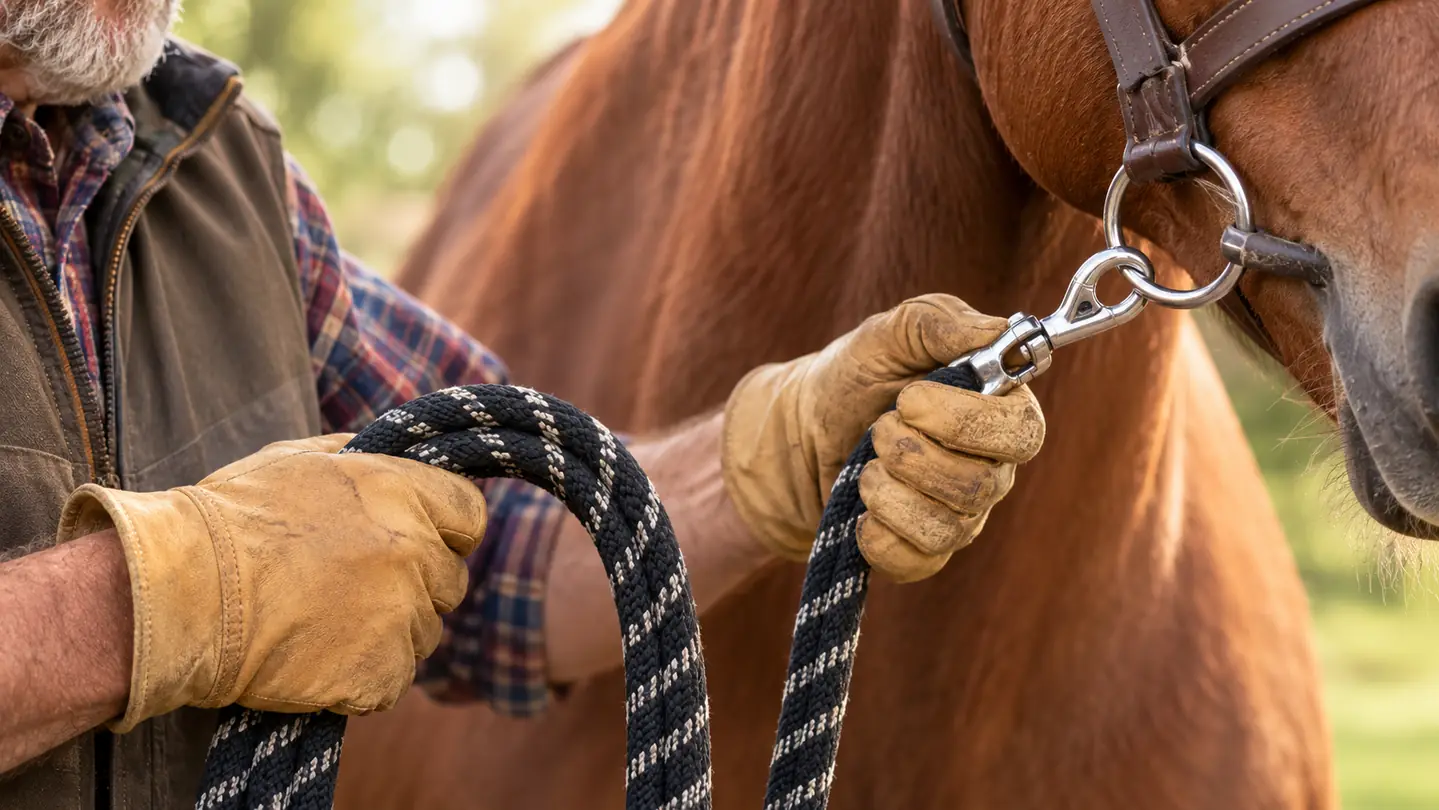
The Weaver Equine rein is 3/8 inch wide, which is on the substantial side. That matters for two reasons, and only one of them is about the horse.
First, your hands. I am 61 and my thumbs do not work the way they did at 40. A 3/8 inch rope sits in the hand with enough material to grip without pinching, and it does not disappear into a fist the way a thin rein will. If you ride in gloves, a heavier rein also fills the glove so you are not squeezing to keep contact. If your hands are strong and you want a lighter, more refined feel, a thinner rein is a legitimate choice and nobody should tell you otherwise.
Second, the horse. A heavier rein gives a slightly clearer signal, which I like on a horse that will test you at a gate or a water crossing. A lighter rein suits a horse that is already soft and does not need much. Sarge is honest but he is not dull, and I have never felt like the poly was too much rein for him. What I would not do is buy a heavy rein hoping it fixes a hard-mouthed horse. It will not, and if you are hauling on your horse's face every ride, the rein is not the problem.
Length is the part people guess at. This rein is 8 feet around the loop, or 96 inches end to end, which on a 15.1 hand horse with a normal neck puts the snaps about where I want them when my hand is where I actually ride. Sit in the saddle on a quiet day, put your hand out front at the height you carry it, and look at the drape. If the rein is hanging to your horse's knees with slack to spare, it is too long for the way you ride. If you have to reach forward to find contact, it is too short, and a short rein is the one that makes a horse brace.
Step 3: Read the ends and the hardware, because that is what wears out
Poly rope does not die. The leather ends do. The water loops on this rein are folded leather with leather laces holding the snap, and that junction is where every rein I have owned has eventually let go or come close to it.
Look at three things before you buy. The water loop should be folded with some body to it, not a thin strap that will stretch out in a season. The lace should be tight and finished, not a loose tag you will pick at with cold fingers in November. And the snaps should be scissor snaps, which is what these are, nickel plated and made in Mt. Hope, Ohio. A scissor snap is the right choice for a trail rider because it opens wide and closes on a bit ring with one hand, even in gloves.
When yours arrive, test the snap before you put it on the bridle. Open and close it a dozen times. It should close flush with no visible gap, and the trigger should spring back on its own. A snap with a gap can work its way off a ring, and that failure looks exactly like the dropped rein I described at the top of this page. I check mine before every long ride now, and I have not had one open on its own yet.
Poly rope does not die. The leather ends do, and that junction is where every rein I have owned has eventually let go.
Step 4: Check how it clips to your bridle, then learn the dismount habit
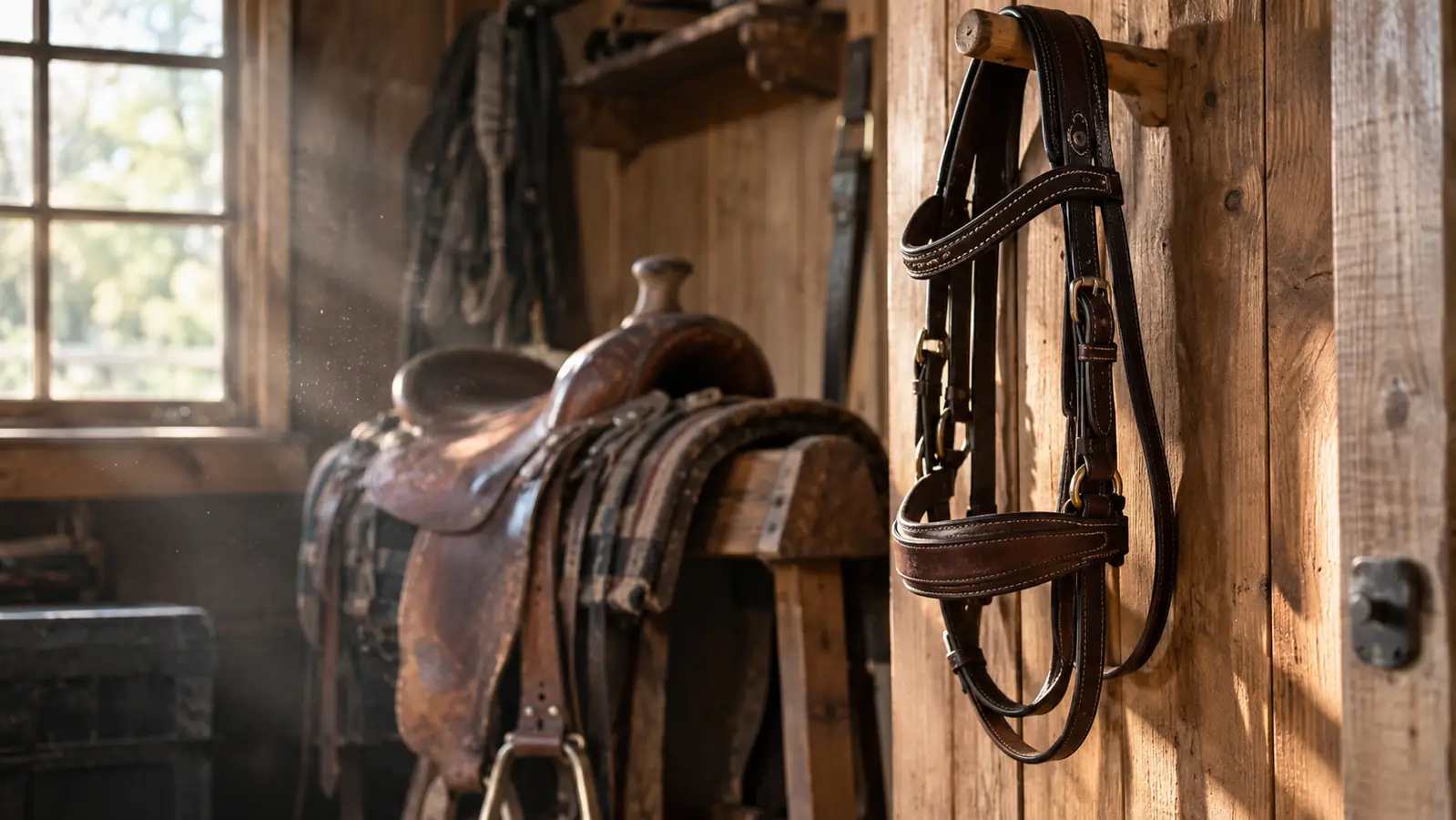
Most headstalls either have a bit ring you snap straight onto or a separate rein ring, and the snap needs enough room to swing on whichever one you have. Clip it on, lift the rein, and watch the snap. If it is jammed flat against the bit ring with no slack, it will bind and wear. I have not had that problem with mine, but I looked before I rode in it.
The habit that matters more is what you do with the loop when you get off. A closed loop is a closed loop. Step down with it hanging and it can catch on the horn, on a stirrup, on a fence rail, or on your own arm. I flip mine over the horn or up over my shoulder before I swing a leg, every single time, the same way I check my cinch. It took about a week to become automatic and now I do it without thinking about it.
Two rules I do not break. I do not lead a horse by the rein, and I do not tie with a bridle and rein. Those rules apply to split reins too, but a loop makes tying easy to do by accident, so say it out loud until it sticks. Halters are for leading and tying. Mine is a Weaver Equine padded nylon halter, size Average Horse, and it hangs on a hook outside Sarge's stall where I can reach it without thinking.
Step 5: Ride close to home for a month before you trust it
I put the new rein on for a week of arena work and short rides on our own property before I took it anywhere with a real trail on it. That is not caution for its own sake. It is how you find out where the loop hangs, whether the snap sits where your fingers expect it, and whether your horse objects to the weight of something new against his neck.
Expect the leather ends to soften over the first month of sweaty, dusty riding. Mine did. I wipe the poly with a damp rag and put a little conditioner on the leather ends every few weeks, and that is the whole routine. What I watch for is the lace drying out and the snap getting stiff. Both are quick to fix at the tack room bench and neither is quick to fix at a water crossing.
If something feels wrong after a month, change your hand before you change the rein. Nine times out of ten a rein feels too long or too short because of where you are carrying your hand, not because of the rein itself. And if your horse starts tossing his head or rubbing at his neck, get off and look at the fit of the bridle before you blame the reins. That is a bit and headstall question, and it is worth asking someone who fits bridles for a living.
What Else Helps
Reins are one piece of a system, and two other things affect your hands more than you would guess. The first is your saddle. My secondhand Western trail saddle has full Quarter Horse bars, and it fits Sarge well enough that I am not fighting it, but on a horse with wide withers, a saddle that rolls will have you grabbing the horn with your rein hand. A saddle fitter is worth the money, and that is not something I say about most purchases. Get the fit sorted and your hands get quieter for free.
The second is gloves. I ride in plain leather work gloves from April through November, and they change how a 3/8 inch rope feels more than any rein swap will. Buy a pair that fits snug across the palm, and try them in the arena before a long ride rather than on one.
One more thing worth doing: clean the leather on your rein when you clean your saddle. I use a tin of Fiebing's yellow saddle soap about once a month in riding season, a damp sponge and a light rub on the water loops and laces, then a separate conditioner if the leather feels dry. Soap cleans, conditioner feeds, and those are two different jobs. Fifteen months of that is why my snaps still sit tight and my laces still hold. It is a five minute habit and it is the difference between a rein that lasts and a rein that gets replaced every other spring.
Fifteen months, three rides a week, and I have not dropped a rein since
The Weaver Equine poly roper rein is 3/8 inch by 8 feet, one closed loop, with leather water loops and nickel plated scissor snaps. If you ride where a dropped rein would be a real problem, this is the simplest change I know of.
Amazon Check Today's Price on Amazon →