
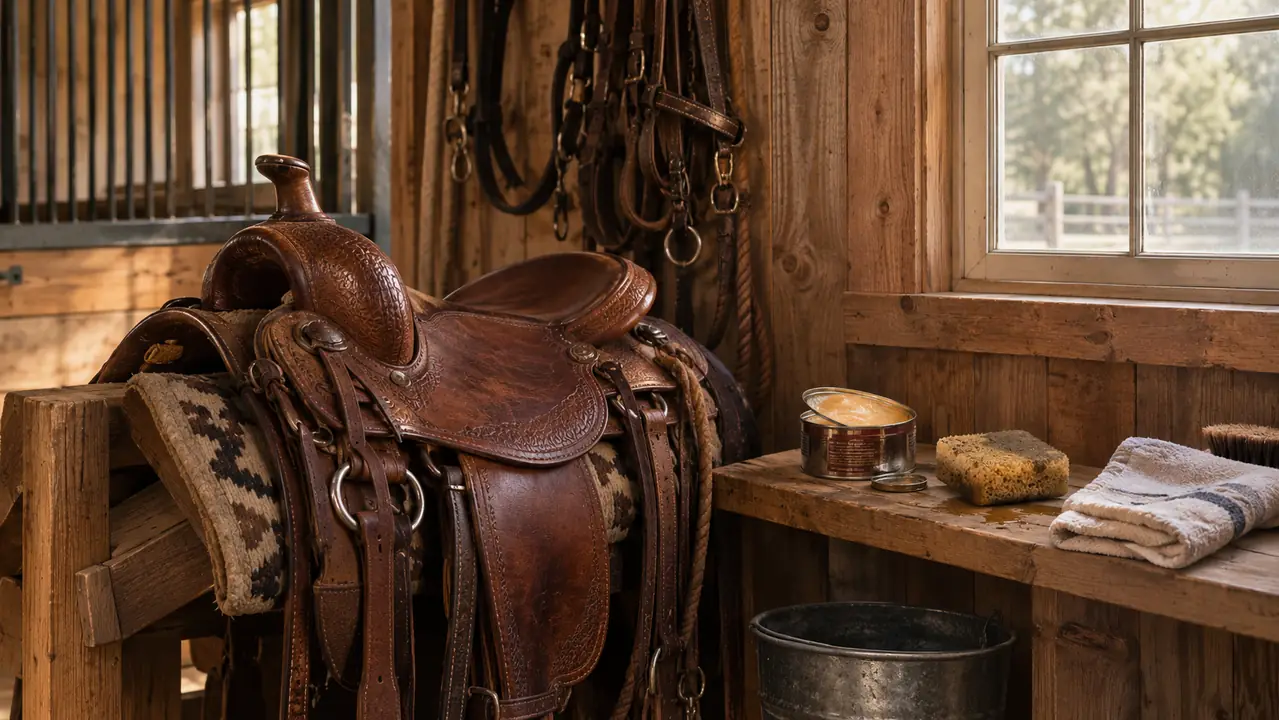
The first time I cleaned my secondhand Western trail saddle, I used too much soap and a sponge wet enough to wring out. The leather came up clean and then dried dull, with a stiff patch on one skirt that had not been there before. That was about twelve years ago, not long after I bought the saddle used. I have learned since to slow down, use less water, and reach for Fiebing's saddle soap in the 3.5 ounce tin. I am Corinne Tollefson, 61, and I ride trail and pleasure on eleven acres outside Viroqua, Wisconsin. I am not a trainer, farrier, or vet. I just keep one horse, a 16-year-old bay Quarter Horse gelding named Sarge, and I want my tack to last. I have kept that saddle going with a clean pad and a monthly wipe, not with a shelf full of products.
A Western saddle has a lot of places for grit to hide: under the skirts, along the fenders, around the horn, and in every cut line of tooling. Soap alone will not fix a saddle that has been left dirty, and too much soap will leave a sticky film that attracts dust. The goal is simple. Lift the dirt, feed the leather just enough, and let it dry slowly. That is the whole job. The rest is a matter of order and restraint.
The 3.5 ounce tin I keep on the tack room shelf
Fiebing's saddle soap is a paste, not a liquid, so a little goes a long way with a damp sponge. I use it about once a month in riding season. The tin is unscented and small enough to live on the shelf beside my sponge.
Amazon Check Today's Availability on Amazon →Step 1: Read the leather before you wet anything
Put the saddle on a rack in good light, not on the ground and not in direct sun. Run your hand over the seat, the fenders, the skirts, and the stirrup leathers. Look for cracks at the bend points, loose stitching, stretched holes, and white salt lines that mean dried sweat. If the leather feels hard or brittle, stop. Cleaning a dry saddle without conditioning it afterward can make the problem worse. A saddle that has been sitting in a tack room all winter will often feel stiffer than it did in November.
Check the tooling with your fingertips. Sharp edges, lifted stitches, and worn spots need a gentler touch. I use a soft brush and a damp sponge, both kept for tack only. A sponge that has held household cleaner will carry residue into the leather. Keep a small towel nearby too. The point of this pass is not to clean. It is to find the places that need less soap, not more.
If the saddle is muddy, let the mud dry first. Wet mud pushed around with a sponge grinds grit into the grain. Dry mud brushes off. This is also the moment to look at the cinch and the pad. A dirty cinch or a pad with dried sweat can rub a horse even when the saddle itself is clean. Sarge came up with a rub behind his left elbow from an old string cinch, and that had nothing to do with the leather. It taught me to check the whole rig, not just the pretty parts.
Step 2: Brush off the day's grit
Use a soft brush to lift dust, hay, and dried sweat from the seat, skirts, and fenders. Work from the top down. Pay attention to the seams and the carved areas where dust packs in. A toothbrush works for the tight spots if you keep one in the tack room. Do not use a wire brush or anything stiff enough to lift the finish. The leather is a surface, not a floor.
Turn the saddle over and brush the underside of the skirts if you can reach it. Grit collects there and then presses into the horse's back with every ride. If the fleece or the lining is dirty, clean that separately according to the maker's directions. Do not scrub the leather lining with saddle soap unless you know it is smooth leather. Roughout and suede need a different approach, and a damp sponge will mat them. If the lining is synthetic, use a damp cloth and let it air dry; do not work saddle soap into it.
Once the loose dirt is off, wipe the whole saddle with a dry cloth. This gives you a clean surface and lets you see what is left. If the cloth comes away black, that is dirt, not dye, unless the leather is new or has been oiled recently. A second dry wipe is cheaper than a second soap pass. I learned that the hard way on a set of fenders that took two days to stop feeling tacky. A clean cloth costs less than a new skirt, and it takes less time than cleaning the same spot twice.
Step 3: Load a damp sponge, not a wet one
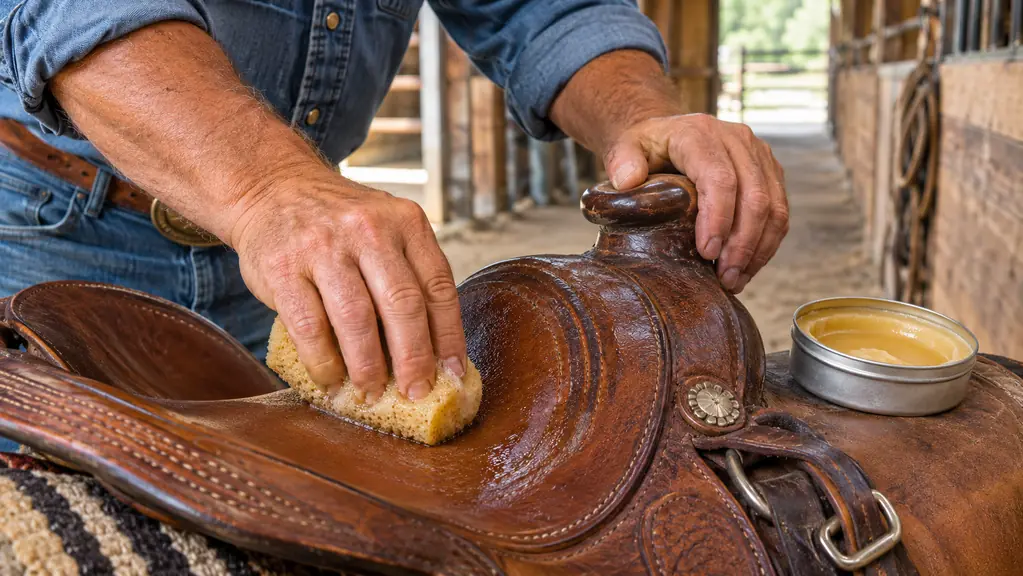
Wet the sponge and wring it out until it stops dripping. Then rub it over the surface of the Fiebing's saddle soap in the tin. You want a thin film of paste on the sponge, not a handful of suds. The soap is a paste in a 3.5 ounce tin, and the label describes it as a cleaner and conditioner for smooth leather. I still treat it as a cleaner first and follow with a separate conditioner when the leather feels dry. The first few times I used it, I loaded too much and spent twice as long wiping it back off.
Work the sponge in small circles on smooth leather. On tooling, use the soft brush or a corner of the sponge and let the soap do the work. Do not flood the leather. Water is the part that does damage. The soap is there to lift dirt, and a damp sponge is enough to carry it. If you see foam running down the skirt, you have too much. A sponge that is too wet will push dirty water into the seams, and the seams are where leather starts to fail.
Keep the tin closed when you are not loading the sponge. Dust and grit will settle in an open tin, and then you are rubbing grit into the leather. I set the tin on the shelf, load the sponge, close the tin, and then go to the saddle. It takes an extra second and keeps the product clean. The 3.5 ounce size is small enough to handle with one hand, which matters when the other hand is holding a fender out of the way.
Step 4: Work one section at a time
Start with the seat and the horn, then move to the cantle, the skirts, and the fenders. Do the stirrup leathers last, because they hang and drip. Use light pressure. The soap needs contact, not muscle. On smooth leather you should see a dull lather, then a clean surface under it. On tooling, go slow and let the brush pull the dirt out of the cuts.
Wipe each section with a clean damp cloth before you move on. Rinse the cloth often. If you wipe a dirty section and then wipe a clean one with the same cloth, you are just moving dirt around. Keep a second cloth dry for the final pass. The whole saddle should feel damp, not wet, when you are done. If water is standing in the tooling, you used too much. I keep one bucket of clean water and one bucket for the rinse cloth, which sounds fussy until you see how much grit comes out of a skirt.
Keep soap away from the stitching where you can. A little residue on the thread is not the end of the world, but repeated soaking will rot it. Pay attention to the latigo and the cinch straps, which take sweat and grit. If the leather there is cracked or worn thin, replace it. No soap will make a worn strap safe. This is also the point to check the stirrup leathers for stretch and the horn for looseness.
"I have used Fiebing's saddle soap about once a month for three riding seasons, and my old saddle is still supple, not sticky."
Step 5: Wipe clean and dry slowly
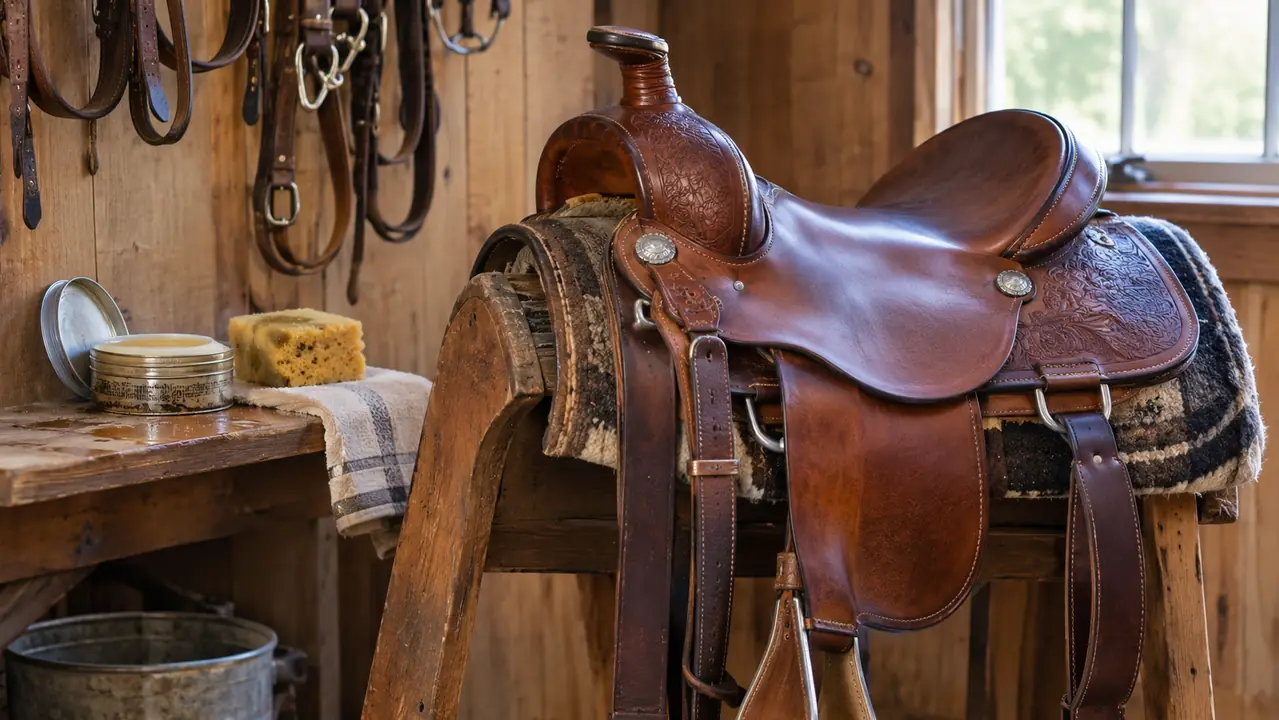
When the whole saddle has been wiped, go over it once more with a clean damp cloth to remove soap residue. Then wipe it dry with a towel. Do not put it in front of a heater, a wood stove, or direct sun. Leather dries from the outside in, and fast heat pulls moisture out unevenly. I hang mine on the rack in the tack room and let it sit overnight. The tack room is cool and out of the wind, which is about right.
Once the leather is dry, bend a fender and feel it. If it is stiff, apply a thin coat of leather conditioner. If it feels supple and looks clean, stop. More product is not better. Conditioner on clean leather is food. Conditioner on dirty leather is a trap. I use an unbranded conditioner when the saddle asks for it, usually after a run of wet rides or a long dry spell. Fiebing's does the cleaning. The conditioner does the feeding.
Check the saddle again the next day. Look for white residue in the tooling, which means you used too much soap and did not wipe it out. A soft brush and a slightly damp cloth will take it off. Then let it dry again. If the leather feels tacky, it needs less product, not more. I would rather clean a saddle twice with a light hand than try to rescue it after one heavy pass. The next morning, run your hand over the seat again; if it feels slick, wipe it with a dry cloth and leave it alone.
What Else Helps
Clean the cinch and the pad as often as you clean the saddle. A clean saddle on a dirty pad is a rub waiting to happen. Sarge's old cinch rub healed over about three weeks of rest, and it has not come back since I switched to a felt lined cinch and started brushing the felt after each ride. That is not a soap problem. It is a whole rig problem. If your horse has a sore, a swelling, or a change in attitude about being saddled, call your vet. If the saddle bridges or rocks, call a saddle fitter. Soap will not fix fit. A saddle fitter can check the bars and the flocking, and a vet can check a back that has changed shape.
Store the saddle on a rack, not on the ground and not on a windowsill. Keep it out of direct sun and away from mice. A cotton cover is enough. Check the leather every few months for cracks and the stitching for rot. Clean the saddle about once a month in riding season, and spot clean sweat marks after a hard ride. Sarge gets ridden about three times a week from April to November, with a four-hour ride now and then, and that schedule has been enough to keep the leather from drying out. If you live in a wet climate, dry the saddle thoroughly before you store it. If you live where the air is dry, condition a little more often. The leather will tell you. I write the date on the calendar when I clean it, because a monthly habit is easier to keep than a memory.
Clean leather lasts longer than dirty leather
Start with a 3.5 ounce tin of Fiebing's saddle soap, a damp sponge, and a soft brush. Use less than you think you need. Your saddle will tell you if you got it right.
Amazon Check Today's Availability on Amazon →