
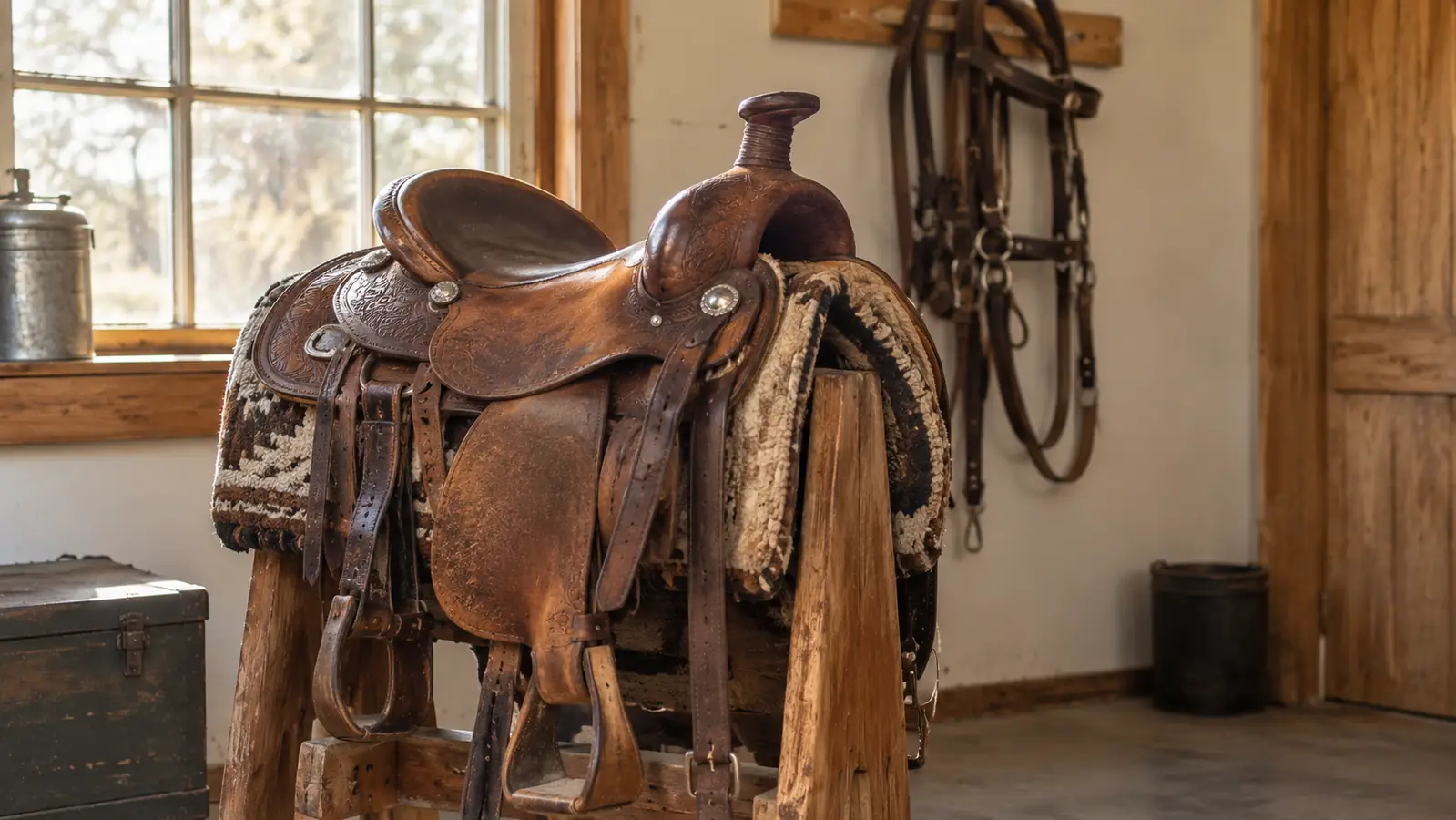
My saddle is secondhand. I bought it used about twelve years ago, one Western trail saddle with full Quarter Horse bars, and the leather was already dark and worn when it came to me. The first fall I owned it, the seat went dull and stiff and I started leaving it on the rack instead of carrying it out to the barn. I bought a tin of Fiebing's Saddle Soap at the feed store in Viroqua because it was the only leather soap on the shelf that did not come in a bottle. That was the fall of 2023, and I am on my third tin.
Ask five people at a barn how to clean leather and you get five answers, most of them delivered with a lot of confidence. One says saddle soap dries out leather and you should use oil. Another says oil rots the stitching and you should use only soap. A third says never put anything on it but a damp rag. Meanwhile the saddle sits there collecting dust, which is the one thing everybody agrees is bad for it. What I wanted was a plain answer about whether an ordinary tin of saddle soap is enough for a saddle that gets ridden three times a week. So I kept track for a year.
The Quick Verdict
Cleans dried sweat and trail grit without stripping the finish off the leather, and a tin holds up to a season of monthly use. It is a cleaner, not a conditioner, so dry leather still needs a second product.
Amazon Check Today's Price →The soap that has stayed on my shelf since 2023
Fiebing's Saddle Soap in the 3.5 ounce tin. About eight cleanings a season on one used Western saddle and one bridle, and the paste has never gone hard in an unheated tack room.
Amazon Check Today's Price on Amazon →How I've Used It
Sarge is a 16-year-old bay Quarter Horse gelding, 15.1 hands and about 1,100 pounds, with withers wide enough that saddle fit has always been a negotiation. We ride about three times a week from April into November, mostly the Kickapoo Valley Reserve and the county trails closer to home. A long ride for us is around four hours. That is a lot of sweat under a saddle, and dried sweat is what actually damages leather. I clean the saddle roughly once a month through the riding season, which works out to about eight cleanings a year.
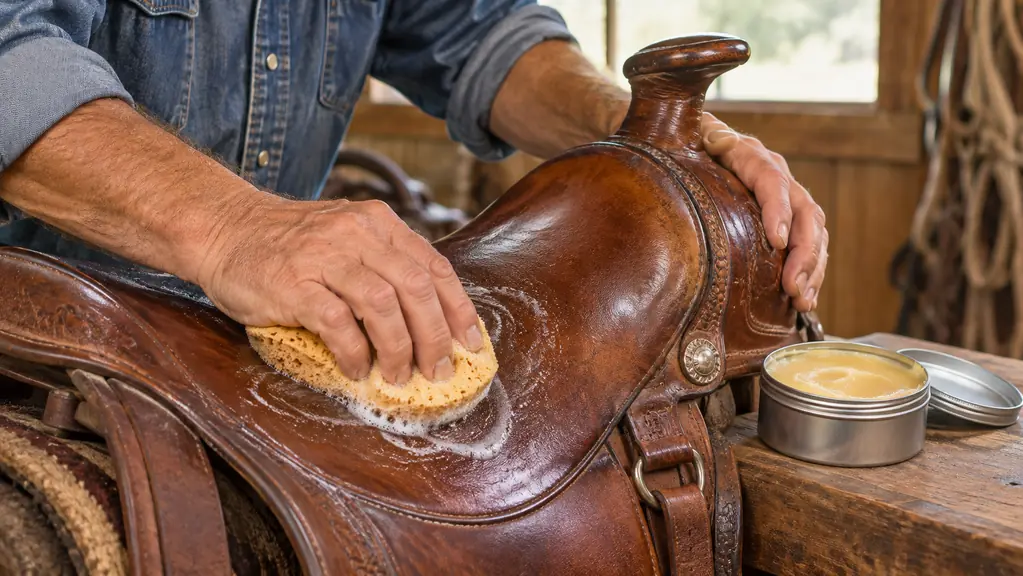
My method has not changed. I wet a sponge, wring it out until it is barely damp, and pick up a small amount of paste. Then I work it into the leather in small circles, one section at a time, and wipe the lather off with a dry cloth before it dries. Fenders first, then the seat and skirts, then the stirrup leathers. The saddle takes about twenty minutes and the bridle another ten. There is nothing to smell. The tin is unscented, so the tack room smells like leather and hay instead of a candle shop, and nobody at the barn has ever asked me what I am wearing.
A 3.5 ounce tin goes further than the size suggests. Each one has lasted close to a year of monthly cleanings on one saddle and one bridle, plus a few extra passes before the county fair and after the muddiest rides. There is no pump and no spray, so nothing runs down the side of the container and nothing gets wasted. You take what you need on the sponge and that is the whole transaction.
What's Actually in the Tin
Fiebing's sells this as a 3.5 ounce tin, which is 100 milliliters, and describes it as a paste. That word matters more than it sounds like it should. A paste stays on the sponge where you put it, so you can control the amount, and it does not soak the leather the way a wet bar of soap will if you are careless. The listing calls it unscented and water-resistant and says it is made with natural materials. It also lists it as gluten free, which is a strange thing to read on a tack room shelf until you remember that Fiebing's started in shoe and leather care and that plenty of people use this on boots, purses, and car seats. There is no warranty on the tin.
The caveat I would give anyone using a paste for the first time is to keep the sponge damp rather than wet. A sopping sponge builds too much lather, the lather works into the stitching and under the skirt, and then it dries there as a film you have to go back and lift out with a brush. Barely damp, small circles, wipe it off. That is the whole technique, and getting it wrong once is what convinces people that saddle soap is hard on leather.
A Year of Monthly Cleanings
The shape of the year is easy to remember even though my notes are bad. The saddle comes out of the tack room in April looking dull from the winter, and the first cleaning takes the longest because there is dust in every crease. Through June and July the leather collects sweat three times a week, and the monthly cleaning pulls off a surprising amount of grime. By October the saddle looks better than it did in spring. That is the entire argument for cleaning anything on a schedule, and it is not a complicated one.
What I notice most is the feel. A freshly cleaned saddle is matte and slightly tacky under the hand, not slick, and the leather at the fender creases bends instead of resisting. That lasts about a week of riding before the sweat and dust take over again. Which is why once a month is about right for me, and once a season would not be.
The stretch I let slide was the summer of 2024, when haying and a fence project ate two months. When I got back to it, the leather under the fenders felt stiff and the dried sweat had set into a crust that took two passes to lift. Nothing was ruined. But the difference between a saddle cleaned monthly and one cleaned when somebody remembers is obvious to the hand, even when it is not obvious to the eye.
The tin itself has held up better than I expected. It lives on an open shelf in a tack room that is not heated and not air conditioned, and it has been through three Wisconsin winters without going hard or growing a skin. The lid still seats. I have had bottles of liquid cleaner split at the seam in that same tack room, so this is not nothing.
One more thing about timing. I clean the saddle after a ride, not before, so the sweat has not had a night to dry into the leather. If the horse is wet and the saddle is wet, both get dried off first and the saddle goes on the rack with the skirts lifted. The soap waits until I have twenty minutes, which in riding season is usually a Sunday afternoon with the radio on in the tack room.
How It Compares to a Glycerine Bar
I have used a glycerine bar soap on the same saddle, and I still keep one in the trailer for the days when something needs a quick wipe. Glycerine is faster. You wet the bar, rub it on a damp cloth, and go. It leaves a slicker finish that some people like and that I find a little slippery on a fender when my hands are sweaty. It also tends to build up if you use it every single time, which is why I stopped using it as the regular soap and started using it as the touch up.
The Fiebing's paste takes a few minutes longer per cleaning and it wipes off cleaner. On a saddle that is genuinely dirty, which mine is by August, the paste pulls the grime out instead of pushing it around. On a saddle that is basically clean, the glycerine is easier and there is no arguing about it. I would not tell anyone to throw out a bar they already like. I would tell them the paste is the better tool for the once a month job.
What It Won't Do
Saddle soap cleans. It does not condition, and no amount of scrubbing will change that. If your leather is already dry and stiff, cleaning it and stopping there leaves it dry and stiff and now also cleaner. I follow every cleaning with a separate conditioner, an ordinary one from the same feed store, and I let the saddle hang overnight before it goes back on the rack. The soap takes off the dirt and the sweat so the conditioner can reach the leather instead of sitting on top of the grime.
It also will not fix damage. Cracks in the leather, a torn skirt, stitching that has given up: none of that is a cleaning problem, and no tin on the shelf is going to solve it. And it will not do anything about fit, which is the thing most likely to make a horse sore. Sarge has wide withers and one used saddle, and I have had a fitter out twice in twelve years to check the flocking and the clearance. If your horse flinches when you saddle up, put the soap down and call a fitter or your vet.
What I Do After the Soap
The routine after the soap is short. I wipe the lather off with a clean rag, let the leather dry while I put the bridle away, then work conditioner in with my fingers, thin, paying attention to the fenders and the stirrup leathers where the sweat collects. Then the saddle hangs on the rack overnight with the skirts lifted so air can move through. In the morning I buff it with a dry cloth. That is twenty minutes of actual work, and it is the difference between a twelve-year-old saddle that still fits well and one that has gone crisp at the seams.
In a wet year I will sometimes wipe the saddle down with a barely damp rag mid month and skip the soap until the next scheduled cleaning. Wisconsin summer humidity is enough to grow mold on a saddle blanket, and I have found it there, but never on the saddle, because the saddle gets cleaned and dried and put away properly. More soap would not help that. Drying it would.
What I Liked
- Lifts dried sweat and trail grit without stripping the finish off the leather
- Paste form means you take what you need and nothing runs down the side of the container
- Unscented, so the tack room does not smell like a candle shop
- A 3.5 ounce tin lasts about a season of monthly cleanings on one saddle and one bridle
- Still soft and usable after three winters on an unheated tack room shelf
Where It Falls Short
- It is a cleaner only, so dry leather still needs a separate conditioner
- Too much lather leaves a film in the stitching if you use a wet sponge
- The 3.5 ounce tin is small if you are cleaning several saddles or a whole barn's tack
- No warranty on the tin
- Will not rescue leather that has already cracked or dried out
Eight cleanings a season, three seasons, three tins. The soap has never been the thing that let my saddle down. The two months I skipped did that.
Who This Is For
If you keep one or two horses at home or at a small boarding barn and you ride a few times a week, this is the right size and the right product. It suits a used saddle that has gone dull, a bridle that has been on a sweaty horse all summer, and anyone who wants a tin on the shelf that will still be usable next spring. It is also a forgiving first leather soap, because you would have to work at it to do real harm in one cleaning.
It is a good fit for the rider who has been told that saddle soap ruins leather and wants to see for herself. Clean one small hidden panel first, under a skirt or behind a fender, and look at it the next day with good light on it. That is a better test than any argument at the hitching post, and it costs you ten minutes and a spot nobody will see.
Who Should Skip It
Skip it if your leather is already cracked or dried out, because cleaning it will not bring it back and you will blame the soap for a problem that started years earlier. Skip it if you are cleaning tack for a whole barn, since a 3.5 ounce tin is not sized for eight saddles. Skip it if you want one product that cleans and conditions in a single step, because this is not that product and it does not pretend to be. And if your horse is sore or flinching under saddle, skip the cleaning aisle entirely and get a fitter or a vet out. No tin fixes a fit problem.
Three seasons, three tins, one saddle
The soap I keep buying is the 3.5 ounce tin of Fiebing's Saddle Soap. Pair it with a separate conditioner, a dry cloth, and twenty minutes on a Sunday, and your leather will outlast the argument about whether to use soap at all.
Amazon Check Today's Price on Amazon →